
Nepal Himalayan Flood Disaster 2026: Missing American Tourists and Infrastructure Collapse Trigger Safety Crisis
Devastating floods and landslides in Nepal's Himalayan region have left hundreds dead and over 1,000 missing, including American nationals, severely disrupting key tourism corridors and border routes.

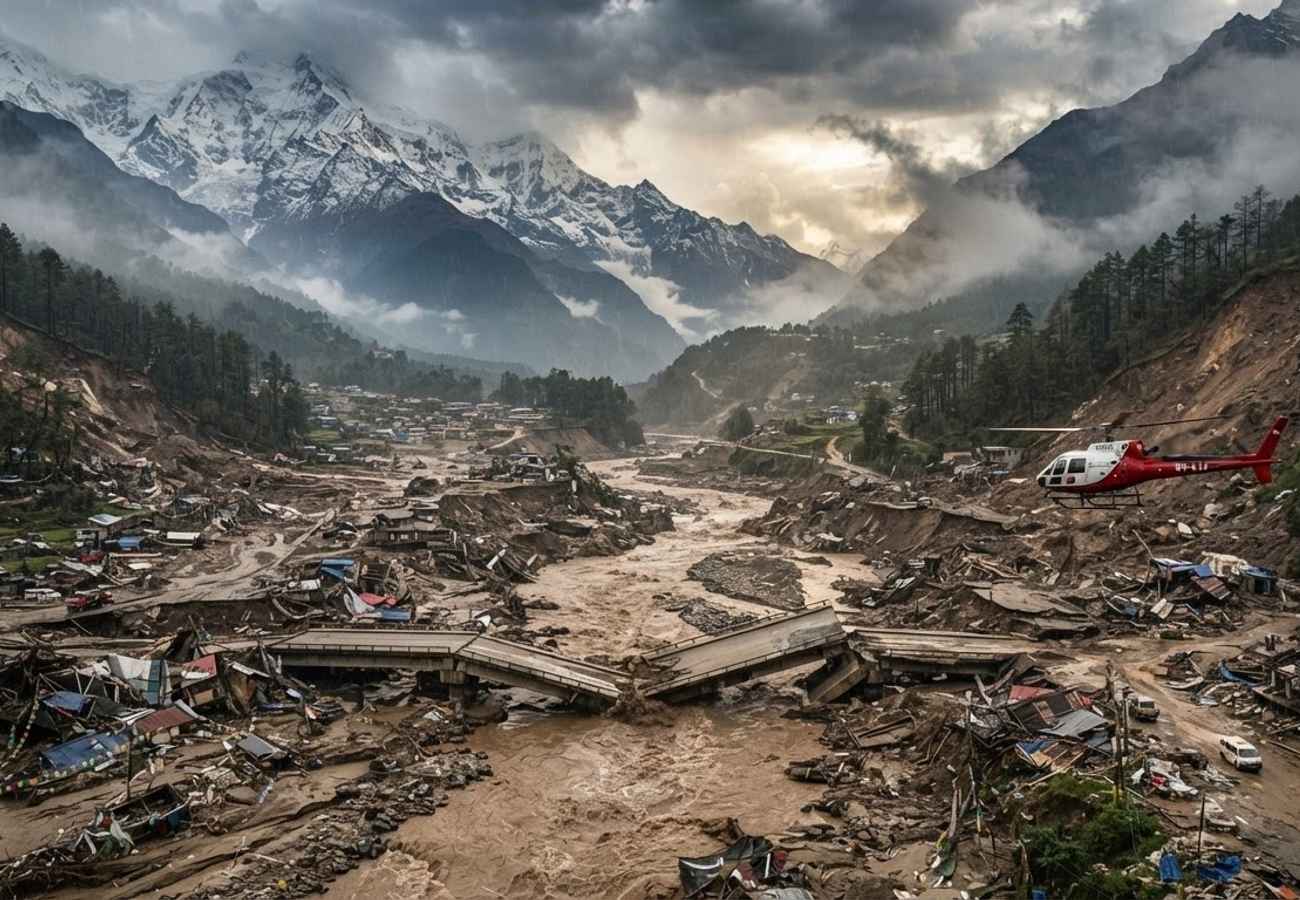
Image generated by AI
Catastrophic flooding and landslides across the Himalayan region have left hundreds dead and more than 1,000 people missing, sparking an international safety crisis for travelers in Nepal. The disaster has crippled essential transport arteries near the Nepal-China border, trapping pilgrims and adventure tourists in some of Asia's most treacherous terrain.
The scale of the devastation has triggered urgent diplomatic concerns, as reports confirm that foreign nationals, including citizens of the United States, are among those missing. Rescue operations are currently battling unstable slopes and erratic weather patterns to reach isolated communities and stranded visitors.
Critical Damage to Himalayan Tourism Corridors
The disaster struck with extreme force near Nepal’s northern frontier, where massive surges of mud, debris, and water decimated valley settlements. The districts of Rasuwa and Nuwakot have been identified as primary impact zones, areas that serve as vital gateways for those heading toward high-altitude trekking circuits and spiritual sites.
These corridors are not merely local roads but are strategic lifelines for the international tourism economy. The flooding has resulted in the total collapse of several bridges, the severing of highway connections, and the complete failure of communication networks in remote sectors.
Because ground access is currently impossible in many zones, emergency response teams are relying almost exclusively on helicopter sorties. These aircraft are tasked with the dual mission of delivering urgent medical supplies to cut-off villages and evacuating survivors from the debris fields.
According to data from official Nepal government tourism agencies, the mountain sector is a primary economic driver, fueling the livelihoods of thousands through Everest expeditions, Annapurna treks, and cultural exploration. This event underscores the fragility of these economic assets when faced with extreme meteorological volatility.
International Search Efforts for Missing Foreign Nationals
The disappearance of foreign travelers has elevated the disaster from a regional tragedy to a global concern. The inclusion of American citizens on the missing persons list has prompted heightened monitoring by international embassies and travel insurance providers.
Particular concern is focused on the routes leading toward Tibet. These paths are essential for pilgrims journeying toward Mount Kailash, one of the most significant spiritual landmarks in Asia. The intersection of religious pilgrimage and extreme environmental risk has created a complex rescue scenario.
Nepal typically attracts millions of visitors through a diverse portfolio of offerings:
- High-altitude climbing in the Everest region.
- Trekking through the Annapurna circuit.
- Cultural heritage tours in the Kathmandu Valley.
- Buddhist and Hindu spiritual journeys.
- Wildlife safaris in the lowland jungles.
For the modern traveler, this incident serves as a stark warning regarding the necessity of rigorous pre-trip preparation. Industry experts are urging visitors to utilize only certified local operators and to maintain a flexible itinerary that allows for immediate evacuation during weather shifts.
Climate Volatility and the Risk of Glacial Lake Outbursts
Environmental analysts suggest the flooding may have been triggered by a glacier-related event, potentially a Glacial Lake Outburst Flood (GLOF). Such events release immense volumes of ice and water instantaneously, creating high-velocity waves capable of erasing entire villages in minutes.
The Himalayas are increasingly viewed as a "climate hotspot." Rising global temperatures are accelerating glacial melt and destabilizing mountain slopes, making unpredictable weather patterns the new norm rather than the exception.
For the tourism industry, this creates a paradoxical challenge: the very natural beauty that attracts millions is becoming a source of extreme danger. There is now an urgent push from government bodies to implement:
- Advanced early warning systems for remote valleys.
- Climate-resilient infrastructure for bridges and roads.
- Strict sustainable travel protocols to minimize further environmental stress.
Economic Strain on Nepal's Travel Infrastructure
The financial ripples of the disaster are being felt across the entire hospitality chain. From luxury hotels in Kathmandu and Pokhara to small teahouses in the mountains, the uncertainty is palpable.
Many trekking agencies and pilgrimage coordinators are facing a wave of cancellations and forced rescheduling. While the primary hubs of Kathmandu and Pokhara remain operational, the disruption of the "last mile" connectivity to the mountains has paralyzed a significant portion of the adventure travel market.
The Nepal Tourism Board is now tasked with a difficult balancing act: restoring the confidence of international markets while honestly communicating the heightened risks of mountain travel. Short-term expectations include a dip in bookings and a surge in demand for comprehensive travel insurance and safety certifications.
Cross-Border Rescue Operations at Gyirong Port
Search and rescue efforts have evolved into a bilateral operation, with military and emergency personnel from both Nepal and China coordinating their efforts. A major focal point of these operations is the area surrounding Gyirong Port, the critical border crossing used for both international trade and tourist transit.
The destruction of roads near the port has significantly slowed the movement of heavy rescue equipment. The complexity of the terrain, combined with the loss of communication arrays, means that some teams are operating "blind" in high-risk zones.
International governments are maintaining constant communication with Nepalese authorities to track their citizens. The primary objective remains the location of the missing and the establishment of reliable communication channels with the families of the victims.
Why This Matters: The New Reality of Mountain Travel
For the global traveler, the 2026 Nepal disaster marks a shift in how high-altitude adventure must be approached. It is no longer sufficient to rely on historical weather patterns or traditional guide knowledge.
From a logistical standpoint, this disaster proves that "remote" now means "vulnerable." Travelers must realize that a single glacial event can erase the only exit route from a valley. The reliance on helicopter evacuations—which are weather-dependent and prohibitively expensive—highlights a systemic gap in mountain safety.
For those planning trips to the Himalayas, this means:
- Insurance is Mandatory: Standard travel insurance may not cover GLOF-related evacuations; specialized high-altitude rescue riders are essential.
- Communication Redundancy: Relying on local SIM cards is insufficient. Satellite communication devices (like Garmin InReach) are becoming a necessity for survival.
- Operator Vetting: Travelers must demand proof of emergency evacuation protocols from their trekking agencies.
The breathtaking vistas of the Himalayas remain a global draw, but the cost of entry is now a heightened requirement for vigilance and resilience.
Related Travel Guides
Disclaimer
This article is for informational and educational purposes only. It does not constitute legal, financial, or professional advice. While we strive to provide accurate and up-to-date information, travel policies, regulations, and conditions change rapidly. Always verify information with official sources before making travel decisions. Nomad Lawyer makes no representations about the accuracy, reliability, completeness, or suitability of the information provided. Readers should consult qualified professionals for advice specific to their circumstances. The views expressed in this article are those of the author and do not necessarily reflect the views of Nomad Lawyer.
Preeti Gunjan
Contributor & Community Manager
A passionate traveller and community builder. Preeti helps grow the Nomad Lawyer community, fostering engagement and bringing the reader experience to life.
Learn more about our team →