
Hawaiian Airlines Cancels 77 Flights as Hurricane Lala Disrupts Hawaii Travel in 2026
Hurricane Lala forces Hawaiian Airlines to scrub over 77 flights, disrupting critical inter-island and transpacific connections across the archipelago during the peak summer season.

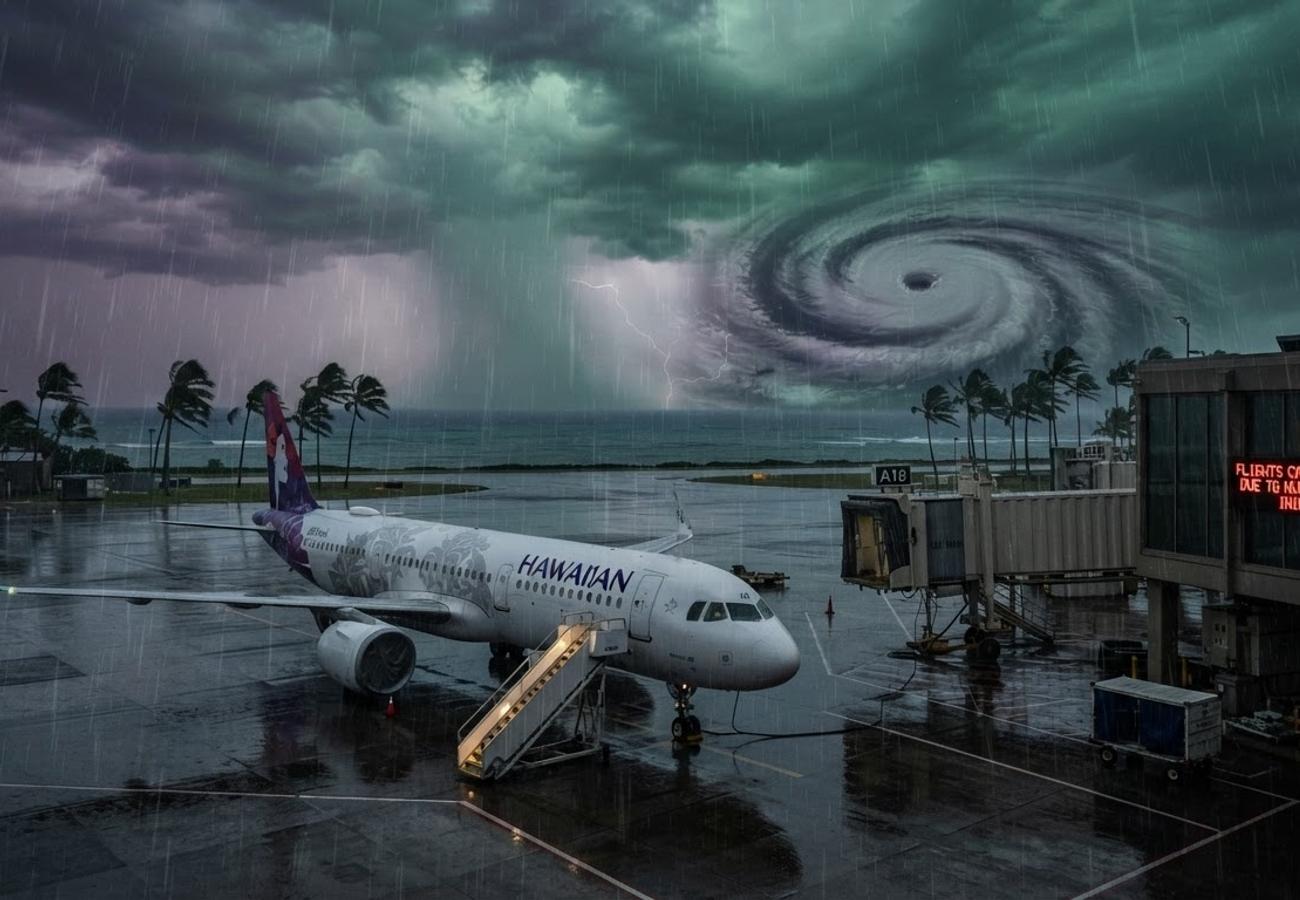
Image generated by AI
Hurricane Lala has forced Hawaiian Airlines to cancel more than 77 flights, stranding passengers and severing critical transport links between the mainland and the islands during the height of the summer travel peak.
The Aviation Crisis Triggered by Hurricane Lala
The volatility of the Pacific weather system has created a logistical bottleneck for Hawaii's primary carrier. According to operational data, Hawaiian Airlines scrubbed at least 59 neighbor island flights and 18 transpacific services on Saturday, August 15, as the storm passed south of the state. The disruption extended into Sunday, August 16, with proactive cancellations pushing the total number of affected departures and arrivals beyond 77.
The impact was not uniform across the archipelago. The most severe operational shutdowns occurred on Hawaii Island and Maui, where services at Hilo and Kona were suspended for the majority of Saturday. Kahului experienced a sharply reduced schedule, and Lihue on Kauai saw significant cuts. Honolulu remained the most stable hub, though operations there were closely monitored due to the storm's wide wind field.
For the traveler, the experience has been one of unpredictability. Rolling changes occurred in short windows as the storm moved westward, leading to sudden rebookings within hours of scheduled departures. This pattern is typical of tropical systems where low cloud ceilings and dangerous crosswinds create narrow, fluctuating windows for safe takeoff and landing.
Cultural and Environmental Value: The Island Vulnerability
The current crisis underscores a fundamental reality of Pacific tourism: the extreme dependence on a fragile aviation network. In Hawaii, air travel is not a luxury but the primary mode of inter-island transit for medical appointments, essential services, and business. When a storm like Lala hits, the ripple effect extends far beyond tourism, impacting the daily lives of local residents.
The environmental reality of "wide wind fields" means that even without a direct landfall, a storm can paralyze multiple islands simultaneously. This removes the possibility of using one island airport as a diversion point for another, creating a cascade of cancellations. From a regional perspective, this event highlights the need for more resilient infrastructure and coordinated emergency management between the Hawaii Department of Transportation and regional carriers.
Visitor Insider Tips for Storm-Season Travel
Navigating the islands during the hurricane season (June through November) requires a different strategy than standard vacation planning.
- The Digital-First Rule: During major disruptions, phone centers are overwhelmed. Use the Hawaiian Airlines app or official digital portals for rebooking. These systems update faster than customer service agents can relay information.
- Strategic Buffering: If your itinerary involves multiple islands (e.g., Honolulu to Maui to Kauai), always leave a 24-hour buffer between flights during August. A single cancellation on a "neighbor island" hop can derail an entire multi-leg trip.
- Local Transit Alternatives: While air is primary, familiarize yourself with local ferry options (where available) or maintain flexible hotel bookings that allow for last-minute changes due to "Act of God" weather events.
- Airport Access: In the event of heavy rain, roads leading to Hilo and Kona airports are prone to localized flooding. Allow an extra 90 minutes for airport transit, regardless of flight status.
Tourism Outlook and Recovery
As Hurricane Lala weakens into a tropical storm and moves further into the Pacific, the focus shifts to recovery logistics. The immediate challenge is the repositioning of aircraft and crews, who were left out of position by the weekend's chaos.
Long-term, this event serves as a case study for the aviation industry on how to manage "cluster cancellations." Industry analysts suggest that while forecasting technology has improved, the physical constraints of short runways and exposed approaches on neighbor islands remain a permanent risk. The economic impact of a lost weekend during the peak summer window is significant for local tourism businesses, emphasizing the need for comprehensive travel insurance that specifically covers weather-related regional disruptions.
Recovery is now underway as the islands transition from emergency safety protocols back to standard operational schedules.
Related Travel Guides
Disclaimer
This article is for informational and educational purposes only. It does not constitute legal, financial, or professional advice. While we strive to provide accurate and up-to-date information, travel policies, regulations, and conditions change rapidly. Always verify information with official sources before making travel decisions. Nomad Lawyer makes no representations about the accuracy, reliability, completeness, or suitability of the information provided. Readers should consult qualified professionals for advice specific to their circumstances. The views expressed in this article are those of the author and do not necessarily reflect the views of Nomad Lawyer.
Kunal K Choudhary
Co-Founder & Contributor
A passionate traveller and tech enthusiast. Kunal contributes to the vision and growth of Nomad Lawyer, bringing fresh perspectives and driving the community forward.
Learn more about our team →