
Navy Aircraft Carrier Fleet Stretched Across Three Global Theaters in 2026
The U.S. Navy's aircraft carrier fleet faces critical operational strain in 2026 as 7-8 supercarriers undergo maintenance while simultaneous global tensions demand presence in Central Command, Europe, and East Asia.

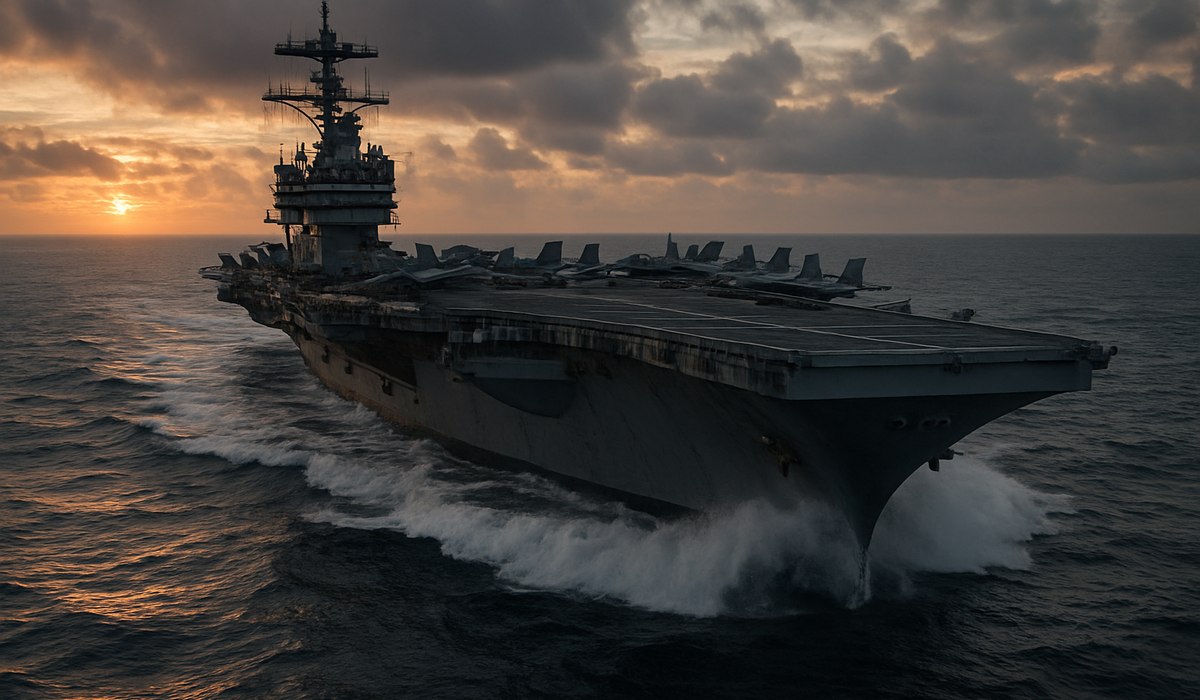
Image generated by AI
The U.S. Navy's Fleet Faces Unprecedented Operational Strain Across Three Critical Theaters
The U.S. Navy's aircraft carrier force is experiencing unprecedented demand-supply imbalance in early 2026. Seven to eight Nimitz-class and Ford-class supercarriers remain in lengthy maintenance cycles while geopolitical tensions simultaneously require naval presence across the Central Command region, European theater, and East Asia-Pacific zone. The Navy maintains an authorized force of 11 active carriers, yet maintenance bottlenecks and extended refueling cycles leave fewer than half available for immediate deployment, creating cascading pressure on operational crews and readiness timelines.
The Numbers Problem: Why 11 Carriers Aren't Enough
By federal law, the U.S. Navy must maintain 11 operational aircraft carriers on active duty. However, the mathematics of global strategy don't align with maintenance reality. Strategic command requirements demand at least two carriers permanently stationed in Central Command to counter Iranian regional threats. The ongoing Russo-Ukrainian conflict necessitates persistent European naval presence to reassure NATO allies. Simultaneously, Chinese military aggression toward Taiwan requires U.S. naval deterrence in the Indo-Pacific. These three simultaneous commitments consume six carriers minimum, leaving only five for training cycles, crew rotation, and operational contingencies.
The arithmetic becomes clearer when examining actual fleet readiness: seven to eight supercarriers currently undergo Refueling and Complex Overhaul (RCOH) procedures, reducing available assets to three to four actively deployed vessels. Naval analysts warn that this operational tempo strains sailor morale and accelerates equipment degradation across the fleet. The maintenance backlog directly translates to extended deployments for active crews, forcing families to endure separation periods exceeding conventional nine-month cycles. Extended deployments increase accident rates, reduce training effectiveness, and compromise the long-term recruitment advantages necessary for sustaining a professional naval force.
Where Are the Ships: Current Maintenance Backlog Details
The USS John Stennis has occupied the Huntington Ingalls Newport News shipyard since 2021, completing only preliminary phases of its RCOH cycle. The USS Harry Truman recently entered preparatory maintenance stages ahead of its expected four-to-five-year overhaul period. The USS Dwight D. Eisenhower, USS Ronald Reagan, and USS Carl Vinson occupy repair docks for incremental maintenance and modernization work. The aging USS Nimitz, originally scheduled for retirement in 2026, received a life-cycle extension through 2027 to maintain fleet numbers until the USS John F. Kennedy achieves operational status.
A critical vulnerability concentrates all RCOH work at a single private shipyard facility: Huntington Ingalls Newport News in Virginia. This monopoly creates schedule delays and cost overruns. The USS George Washington experienced a six-year RCOH period, double the planned four-year timeline. The John C. Stennis exceeded its original schedule by 14 months. This dependency on a single contractor limits the Navy's flexibility when geopolitical crises demand rapid vessel availability. Naval leadership continues advocating for a second RCOH-capable facility to distribute maintenance workload and reduce single-point-of-failure vulnerability.
The Abraham Lincoln's Heavy Load: Operations Amid Fleet Constraints
The USS Abraham Lincoln emerged as the primary U.S. Navy response platform for Operation Epic Fury, targeting Iranian military infrastructure and proxy forces across the Persian Gulf. The carrier and its air wing executed sustained combat operations while the broader fleet remained constrained by maintenance cycles. Sailors aboard the Abraham Lincoln worked extended shifts coordinating F/A-18 Super Hornet operations, conducting strike missions, and maintaining constant vigilance against Iranian naval and unmanned threats. Crew members reported operational satisfaction despite exhaustion, recognizing the historical significance of their deployments during heightened regional tensions.
However, the Abraham Lincoln's extended operational focus exposed maintenance challenges throughout the carrier strike group. Aircraft required more frequent depot-level repairs. Berthing spaces showed increased wear from sustained occupancy. Ammunition handling systems experienced accelerated degradation. The extended deployment pattern prevented proper crew rotation schedules, forcing sailors to extend their tours beyond contractual expectations. Naval personnel management faced retention challenges as word spread throughout the fleet about burnout conditions aboard actively deployed vessels.
The Gerald R. Ford's Troubled Debut: Systems Integration Challenges
The USS Gerald R. Ford, representing the Navy's newest generation supercarrier design, encountered multiple significant mechanical failures during its Middle East deployment. The ship's revolutionary Advanced Wastewater Treatment System repeatedly malfunctioned, creating sanitation emergencies aboard the vessel. Multiple toilet overflow incidents forced the Navy to acknowledge long-standing design defects. A fire in the aft laundry compartment injured three sailors, destroyed multiple berthing areas, and sickened approximately 200 crew members who inhaled smoke from the incident.
The Gerald R. Ford transited to Souda Bay in Crete and subsequently to Croatian shipyard facilities for extended repair assessments. Naval engineers determined that corrective work would require several months of intensive reconstruction. The vessel remained technically operational throughout these periods, though combat effectiveness suffered significantly. The Ford-class carrier design featured innovative Electromagnetic Aircraft Launch Systems (EMALS) and Advanced Arresting Gear (AAG), technologies that promised operational advantages but demonstrated teething problems during actual deployment. The Gerald R. Ford's struggles raised questions about whether subsequent Ford-class carriers would encounter similar issues or benefit from design refinements.
Why Extended Deployments Cost Lives and Readiness Metrics
Naval leadership faces mounting evidence that prolonged carrier deployments degrade force readiness while increasing accident risk. Sailors working extended shifts experience fatigue-related performance degradation comparable to intoxication. Decision-making accuracy decreases, equipment maintenance quality suffers, and interpersonal conflicts increase among stressed crew members. Medical personnel aboard carriers report elevated depression, anxiety, and behavioral health crises. Families of deployed sailors face extended separation periods, increasing divorce rates and reducing recruitment effectiveness when separation impacts family stability.
Extended operational tempos also accelerate aircraft retirement timelines. Flight crews working continuous operations schedule additional combat sortie demands beyond peacetime training cycles. Aircraft component fatigue accelerates, requiring earlier depot-level overhauls and replacement schedules. The combination of extended deployments and compressed maintenance windows creates a vicious cycle: fewer carriers available for deployment means remaining ships work harder, degrade faster, and require lengthier repairs, further reducing fleet availability.
Data Table: Fleet Status and Maintenance Timeline
| Vessel Name | Class | Status | Current Activity | Estimated Availability |
|---|---|---|---|---|
| USS George Washington | Nimitz | Maintenance | Completing RCOH | 2027 Q2 |
| USS John C. Stennis | Nimitz | Maintenance | RCOH progress | 2028 Q1 |
| USS Harry S. Truman | Nimitz | Pre-maintenance | Preparation phase | 2030 Q3 |
| USS Dwight D. Eisenhower | Nimitz | Maintenance | Incremental repairs | 2026 Q3 |
| USS Ronald Reagan | Nimitz | Maintenance | Incremental repairs | 2026 Q4 |
| USS Carl Vinson | Nimitz | Maintenance | Incremental repairs | 2026 Q2 |
| USS Nimitz | Nimitz | Active | Limited operations | 2027 (Retirement) |
| USS Abraham Lincoln | Nimitz | Deployed | Combat operations | 2027 Q1 |
| USS Gerald R. Ford | Ford | Deployed | Emergency repairs | 2026 Q4 |
| USS John F. Kennedy | Ford | Activation | Pre-deployment workup | 2026 Q4 |
| USS Enterprise | Ford | Under construction | Manufacturing | 2030 |
| USS Doris Miller | Ford | Under construction | Manufacturing | 2032 |
What This Means for Travelers: Impact on Naval Port Access
Kunal K Choudhary
Co-Founder & Contributor
A passionate traveller and tech enthusiast. Kunal contributes to the vision and growth of Nomad Lawyer, bringing fresh perspectives and driving the community forward.
Learn more about our team →