
F-35A Japan China Military: Pentagon Deploys Stealth Fighters to Misawa
The U.S. Pentagon deployed F-35A stealth fighters to Japan's Misawa Air Base in March 2026, marking a major military escalation in the Indo-Pacific region near China and North Korea. This strategic pivot underscores America's commitment to regional defense partnerships.

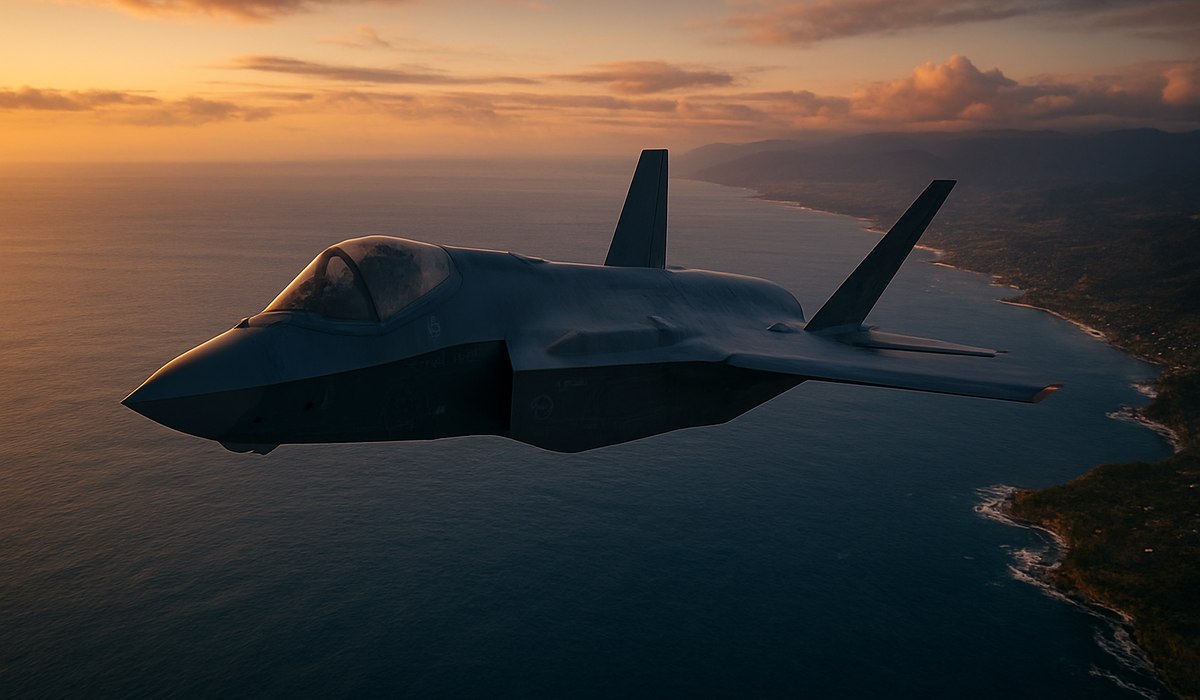
Image generated by AI
The Pentagon's Fifth-Generation Fighter Arrives in Northern Japan
The U.S. Air Force officially stationed its first F-35A Lightning II stealth fighters at Misawa Air Base in northern Japan on March 31, 2026. The deployment marks a watershed moment for American military presence in the Indo-Pacific, establishing the 14th U.S. base globally to host fifth-generation combat aircraft. According to Pentagon announcements, the 13th Fighter Squadron will operate the advanced stealth platform, replacing aging F-16 Fighting Falcons previously stationed at the facility. Colonel Paul Davidson, commander of the 35th Fighter Wing, emphasized the strategic significance: "Bringing the F-35 to Misawa underscores our long-standing commitment to Japan and the region." The aircraft's arrival comes amid escalating tensions with China and North Korea, positioning American military assets within striking distance of both nations.
Pentagon Advances Fifth-Generation Air Power in Japan
The introduction of F-35A fighters to Misawa represents a fundamental shift in U.S. force posturing across the Pacific theater. The Air Force F-35A Lightning II platform boasts advanced stealth capabilities, sensor fusion technology, and network-centric warfare integration unavailable in previous-generation aircraft. This deployment directly follows the Pentagon's "Modernization Plan for Tactical Aircraft Based in Japan" announced in summer 2024. The comprehensive strategy involves modernizing multiple bases simultaneously. Beyond Misawa, the F-15EX Eagle II fighters are being positioned on Okinawa, while Marine Corps Air Station Iwakuni will receive F-35C variants to replace aging F/A-18 Super Hornets. Together, these deployments transform Japan into a hub for cutting-edge American air power, fundamentally altering the military balance across the Indo-Pacific region.
Strategic Positioning Against China and North Korea
The F-35A Japan China military deployment carries significant geopolitical implications. Misawa Air Base sits roughly 300 kilometers from the North Korean border and 800 kilometers from major Chinese military installations. The stealth fighters' advanced range, reduced radar signature, and real-time intelligence capabilities enhance U.S. and Japanese defensive posture against both threats. China's military modernization program, particularly its developing stealth fighter fleet, prompted this accelerated deployment timeline. North Korea's expanding ballistic missile arsenal and weapons testing further justify the Pentagon's strategic realignment. The F-35A's integration with Japan's air defense systems creates seamless interoperability between American and Japanese forces. This coalition-based approach strengthens deterrence while signaling unwavering American commitment to maintaining the rules-based international order in the world's most economically vital region.
Broader U.S. Force Realignment Across Indo-Pacific Bases
The Misawa deployment exemplifies a sweeping Pentagon strategy to consolidate advanced capabilities throughout the Pacific theater. Scheduled F-35A arrivals at Barnes Air National Guard Base in Massachusetts and Kingsley Field in Oregon continue this modernization arc. Moody Air Force Base in Georgia will receive aircraft by 2030, positioning strategic depth across multiple regions. This phased approach distributes risk while maintaining operational flexibility. Japan participates in the F-35 Foreign Military Sales program as one of the few non-NATO countries in the initiative. The Japan Air Self-Defense Force has operated F-35A aircraft at Misawa for eight years, creating existing expertise and maintenance infrastructure. Japan operates a final assembly and checkout facility in Nagoya, deepening technological integration. This partnership model maximizes efficiency while building regional security capacity aligned with American interests across the Indo-Pacific.
Japan's Growing Military Modernization Partnership with U.S.
Japan's strategic relationship with the United States has intensified through defense modernization initiatives unprecedented since the Cold War era. The F-35A Japan China military framework reflects Tokyo's recognition that autonomous regional deterrence requires advanced technological parity. Japanese defense planners have accelerated procurement timelines and expanded military budgets in response to Chinese assertiveness in the East China Sea. The Quad alliance—comprising the United States, Japan, India, and Australia—coordinates increasingly sophisticated defense policies targeting Beijing's regional ambitions. Japan's participation in F-35 development and manufacturing demonstrates Tokyo's commitment to technological sovereignty within allied frameworks. Beyond fighters, Japan invests heavily in advanced radar systems, naval capabilities, and cyber defense infrastructure. This comprehensive modernization portfolio positions Japan as Washington's primary security partner in Asia, creating layered deterrence against simultaneous threats from Beijing and Pyongyang while maintaining economic engagement with China.
Key Military Deployment Data
| Deployment Detail | Specification |
|---|---|
| Aircraft Type | F-35A Lightning II Stealth Fighter |
| Operating Unit | 13th Fighter Squadron, 35th Fighter Wing |
| Base Location | Misawa Air Base, Northern Honshu, Japan |
| Deployment Date | March 31, 2026 |
| Previous Aircraft | F-16 Fighting Falcons |
| Global Base Count | 14th U.S. installation hosting F-35s |
| Range (Operational) | 2,240 km with internal fuel |
| Stealth Capability | Reduced radar cross-section technology |
| Regional Threats | China, North Korea |
| Distance to North Korea | Approximately 300 kilometers |
| Japan FACO Facility | Nagoya assembly and checkout operations |
| Okinawa Deployment | F-15EX Eagle II fighters |
| Iwakuni Replacement | F-35C variants replacing F/A-18 Super Hornets |
What This Means for Travelers
Travelers planning trips to Japan, particularly those visiting areas near Misawa Air Base in northern Honshu, should understand how military developments may affect their itinerary and regional operations.
Actionable Takeaways for Nomadic Professionals and Travelers:
-
Flight Disruptions: Regional airspace restrictions around Misawa may occasionally impact commercial flight schedules. Monitor aviation bulletins before booking connections through Aomori Prefecture.
-
Regional Stability: Enhanced U.S. military presence generally strengthens Japan's security infrastructure, improving overall safety for international travelers throughout the country.
-
Base Area Access: Military installation perimeters remain off-limits to civilian visitors. Plan tourism around designated public areas in Misawa and surrounding communities.
-
Travel Insurance: Consider comprehensive travel insurance covering geopolitical disruptions, given escalating regional tensions involving China and North Korea.
-
Hotel Availability: Increased military personnel may create temporary accommodation demand near bases. Book lodging in advance when traveling to northern Honshu during peak deployment periods.
-
Ground Transportation: Military convoy movements occasionally affect highway traffic near bases. Allow extra time for overland travel through affected regions.
-
Communication Updates: Register with your embassy and subscribe to regional security updates before traveling near military installations.
Frequently Asked Questions
What exactly is the F-35A Lightning II aircraft?
The F-35A Lightning II represents fifth-generation stealth fighter technology developed through multinational partnerships. It features advanced sensor fusion, reduced radar signature, and network-centric warfare capabilities. The aircraft serves multiple air forces including the U.S., Japan, NATO members, and allied nations, making it the world's most advanced operational fighter platform.
How does the F-35A Japan China military deployment affect regional tensions?
The deployment significantly enhances America's defensive posture against Chinese military expansion and North Korean weapons development. The stealth fighters' advanced capabilities provide real-time intelligence, rapid response capacity, and integrated air defense coordination, strengthening deterrence while potentially escalating regional arms competition and diplomatic tensions.
**Will Japan's Misawa base deployment lead
Preeti Gunjan
Contributor & Community Manager
A passionate traveller and community builder. Preeti helps grow the Nomad Lawyer community, fostering engagement and bringing the reader experience to life.
Learn more about our team →