
Navigating Complex Accident Claims in Coastal Texas: A Guide for Injured Drivers
Motor vehicle collisions in coastal Texas involve unique traffic patterns, bridge corridors, and commercial routes. Learn how to protect your legal claim after a crash.

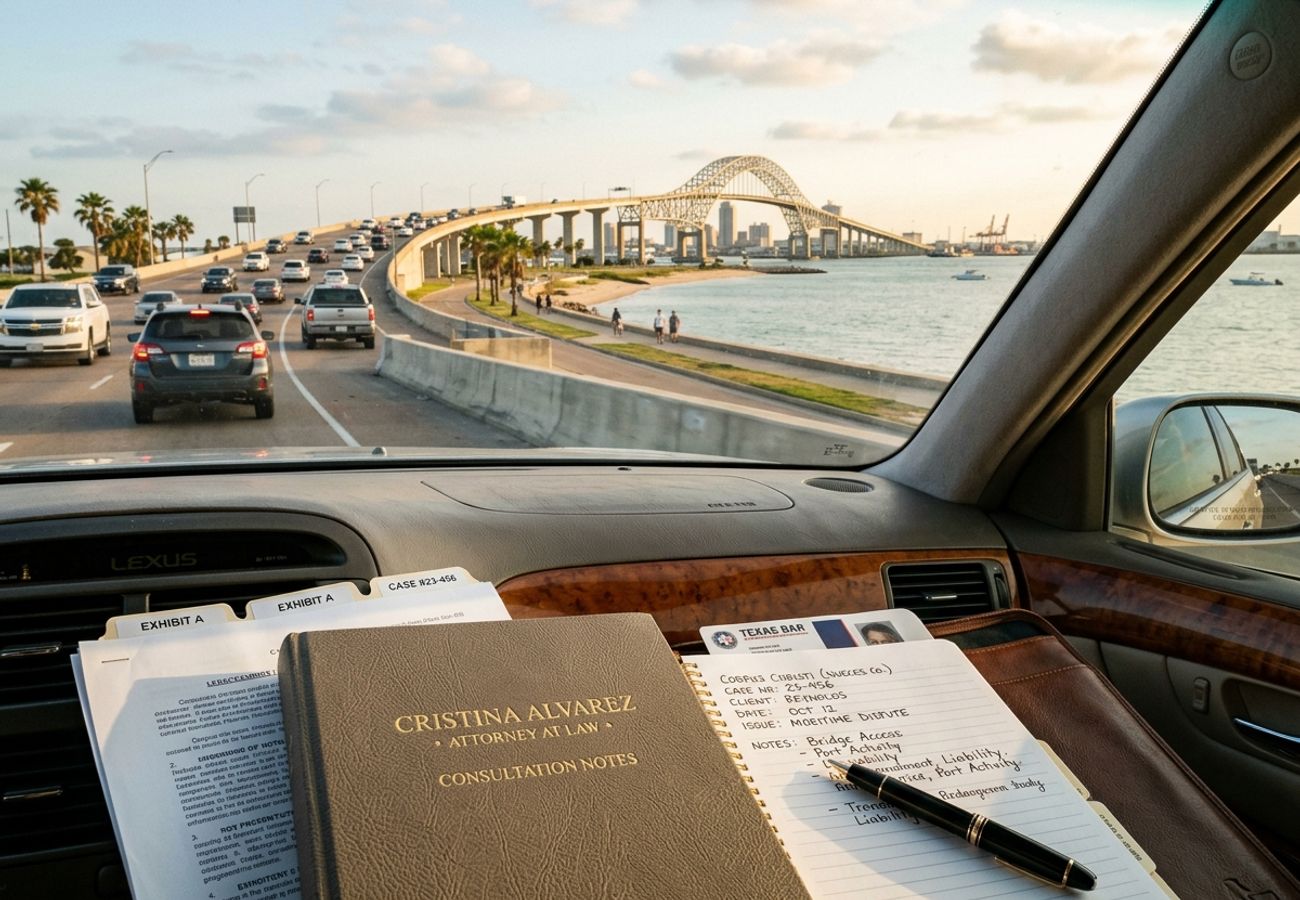
Photo by Nomad Lawyer Legal Desk / Navigating motor vehicle collision claims across Coastal Bend corridors
Coastal highway corridors present driving conditions unlike anywhere else in Texas. Between shifting Gulf fog, heavy industrial trucking supporting energy terminals, and dense tourist traffic crossing causeways to Padre Island, a routine commute across the Coastal Bend can turn hazardous in seconds.
When a collision occurs along major arteries such as Interstate 37, Highway 181, or the Crosstown Expressway, the physical aftermath is often complicated by severe vehicle damage, disputed liability, and aggressive insurance adjusters. Knowing what steps to take in the crucial hours and weeks following a crash can make the difference between an undervalued settlement and full compensation for medical expenses and lost wages.
Unique Risk Factors on Coastal Bend Roadways
Driving in coastal South Texas involves navigating corridors where commercial commerce and leisure travel constantly intersect. Heavy tanker trucks transport petroleum products and equipment to and from port facilities, while seasonal visitors unfamiliar with local interchanges add unpredictability to highway traffic.
Sudden weather shifts also contribute significantly to regional collision rates. Morning sea fog dramatically reduces visibility across low-lying bridges and causeways, while sudden tropical squalls create hydroplaning conditions on slick asphalt. When motorists fail to reduce speeds to account for poor visibility or wet surfaces, multi-vehicle pileups and rear-end collisions frequently result.
Critical Evidence to Preserve at the Scene
Building a viable injury claim requires establishing a clear, incontrovertible chain of events before scene evidence disappears or memories fade.
- Law Enforcement Collision Reports: Always request local police or Texas Department of Public Safety (DPS) troopers to document the crash. The official Texas Peace Officer’s Crash Report (CR-3) records vital initial findings, road conditions, and officer assessments of contributing factors.
- Comprehensive Photographic Documentation: Photograph the positions of all involved vehicles, tire skid marks, debris fields, traffic signal alignments, and property damage from several angles before vehicles are moved from the roadway.
- Witness Details: Independent bystanders, other motorists, or dockworkers who saw the impact often provide the most objective accounts of driver behavior.
- Immediate Medical Evaluation: Adrenaline often masks internal injuries, neck strains, and concussions. Visiting an emergency room or urgent care center establishes an unbroken medical record linking your injuries directly to the crash.
Retaining an experienced corpus christi injury attorney helps ensure that time-sensitive electronic records—such as commercial vehicle event data recorders (black boxes) and nearby highway camera footage—are formally subpoenaed before being routinely overwritten.
Texas Comparative Fault and Your Financial Recovery
Texas operates under a modified comparative fault rule governed by Chapter 33 of the Texas Civil Practice and Remedies Code, commonly referred to as the 51 percent proportionate responsibility bar.
Under this legal framework, an injured party may recover damages as long as their share of responsibility for the accident does not exceed 50 percent. However, the total financial award is reduced in direct proportion to that assigned percentage. For example, if total damages equal $100,000 and the plaintiff is deemed 20 percent at fault, the recoverable compensation becomes $80,000. If an injured driver is found 51 percent or more at fault, they are completely barred from recovering compensation from other parties.
Insurance carriers frequently leverage this standard by attempting to shift disproportionate blame onto injured motorists during initial recorded statements. Having legal counsel manage all carrier correspondence shields claimants from damaging traps designed to reduce insurer payout obligations.
Calculating the Full Scope of Collision Damages
A personal injury claim must account not only for immediate emergency medical bills, but also for long-term health and financial impacts:
- Past and Future Medical Expenses: Surgeries, physical therapy, prescription medication, and ongoing specialized care.
- Lost Earnings and Diminished Earning Capacity: Compensation for missed work hours and any permanent disability that prevents returning to one's previous occupation.
- Physical Pain and Mental Anguish: Non-economic compensation reflecting chronic physical discomfort, sleep disruption, and post-traumatic stress.
- Property Repair or Total Loss: Vehicle fair market replacement value and reimbursement for damaged personal items.
Protecting Your Legal Standing
Under Texas Civil Practice and Remedies Code Section 16.003, the statute of limitations for personal injury lawsuits in Texas is generally two years from the date of the incident. While two years may seem generous, thorough investigations, medical stabilization, expert liability analyses, and formal demand negotiations require substantial preparation time. Taking proactive steps early guarantees that your rights remain safeguarded throughout the recovery journey.
Related Travel Guides
Disclaimer
This article is for informational and educational purposes only. It does not constitute legal, financial, or professional advice. While we strive to provide accurate and up-to-date information, travel policies, regulations, and conditions change rapidly. Always verify information with official sources before making travel decisions. Nomad Lawyer makes no representations about the accuracy, reliability, completeness, or suitability of the information provided. Readers should consult qualified professionals for advice specific to their circumstances. The views expressed in this article are those of the author and do not necessarily reflect the views of Nomad Lawyer.
Raushan Kumar
Founder & Lead Developer
Full-stack developer with 11+ years of experience and a passionate traveller. Raushan built Nomad Lawyer from the ground up with a vision to create the best travel and law experience on the web.
Learn more about our team →