
Documents To Gather Before Reaching Out to a Medical Malpractice Attorney
Medical malpractice cases hinge on evidence. Discover the essential medical records, symptoms journals, billing files, and correspondence to gather.

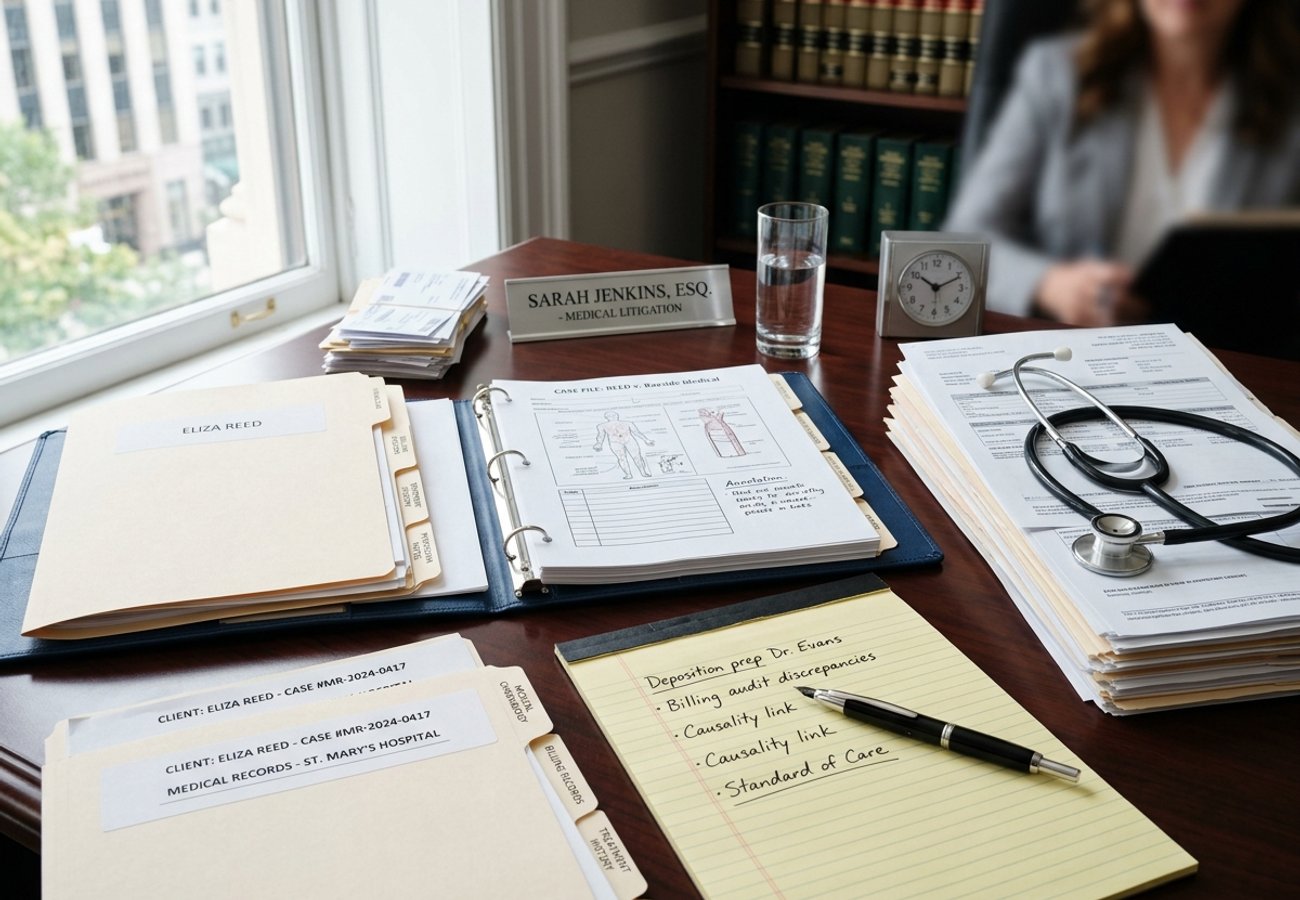
Photo by Nomad Lawyer Legal Desk / Essential documentation needed for a medical malpractice consultation
Medical malpractice cases hinge on evidence. If you believe you are a victim of malpractice, it is wise to gather all documents relevant to the case, including your medical records, correspondence, and medical bills. In addition, keep your own documentation, including notes and emails, to help establish what happened.
"These records are invaluable for building our understanding of what happened and who's at fault. The more of these you have, the better," notes Connecticut medical malpractice lawyer Russell Berkowitz, partner at Berkowitz Hanna Malpractice & Injury Lawyers.
Here is the list of documents and information patients need to provide to their attorneys when they consult them about malpractice.
Detailed Medical Records
Your medical records are the main source of evidence. They contain all of the information related to your condition, the results of your tests, the surgical procedures performed, prescribed medications, and other things.
They also contain all the information necessary to prove whether a health care provider followed medical protocols and standard practices during treatment. Comprehensive, well-dated records allow attorneys to re-create the events in question and to obtain professional evaluations of your situation by independent medical professionals.
Symptoms Journal and Timeline
It would be beneficial to create a symptom journal where you document your experience in detail. Write down your symptoms, treatments, and your interactions with health care professionals. Note the dates, the names of people you interacted with, and the most notable information, quoting what was said by providers whenever possible.
Writing this journal helps to create an accurate timeline and provides your lawyer with detailed insight into how the medical malpractice affected your quality of life.
Keep it factual. Do not include any emotional descriptions. The only purpose of the document is to serve as a means of identifying gaps between your medical records and real-life events.
Financial and Billing Records
Malpractice always entails significant financial implications, so it is crucial to keep all bills, insurance company statements, and receipts received during treatment. Also, keep a detailed account of follow-up costs, travel expenses, days off, and any other expenses arising from the accident.
Such paperwork would help calculate the sum of your losses resulting directly from medical negligence. Moreover, your lawyer will use these documents to evaluate the extent of all financial losses suffered. Together with the documentation of your medical condition, they will show a comprehensive picture of the effects of malpractice.
Communication and Correspondence Papers
You must keep every correspondence with medical institutions, as it will help clarify what advice you received, what response time was needed, and whether the medical staff ignored your health complaints and concerns. This type of information is especially useful in proving negligence, as it demonstrates that the defendant failed to inform the client of the potential risks associated with the procedure.
Apart from emails and letters from medical facilities, do not forget to save records of all calls and appointment reminders on online patient portals. Even letters containing only minor information you may have forgotten might come in handy when developing a malpractice claim. It is your lawyer who decides which of the documents are significant to your case.
Working With a Medical Malpractice Attorney
Once you have collected the necessary documentation, the next task is to hire a medical malpractice lawyer. Medical malpractice cases are especially complicated since they require solving many complex questions and addressing multiple issues. A single mistake on your part might ruin your chances of winning the case. So, you need to find a lawyer who can work with you under Connecticut law.
The attorney must have enough knowledge to identify the most efficient way to prove malpractice and involve the right set of expert witnesses.
Related Travel Guides
Disclaimer
This article is for informational and educational purposes only. It does not constitute legal, financial, or professional advice. While we strive to provide accurate and up-to-date information, travel policies, regulations, and conditions change rapidly. Always verify information with official sources before making travel decisions. Nomad Lawyer makes no representations about the accuracy, reliability, completeness, or suitability of the information provided. Readers should consult qualified professionals for advice specific to their circumstances. The views expressed in this article are those of the author and do not necessarily reflect the views of Nomad Lawyer.
Preeti Gunjan
Contributor & Community Manager
A passionate traveller and community builder. Preeti helps grow the Nomad Lawyer community, fostering engagement and bringing the reader experience to life.
Learn more about our team →