
Mirjan Fort Karnataka: Inside the Pepper Queen's Lost Maritime Kingdom Reshaping India's Heritage Tourism in 2026
Mirjan Fort near Gokarna reveals Karnataka's medieval pepper trade dominance under Rani Chennabhairadevi, with archaeological evidence of global maritime networks now attracting heritage travelers seeking authentic cultural experiences.

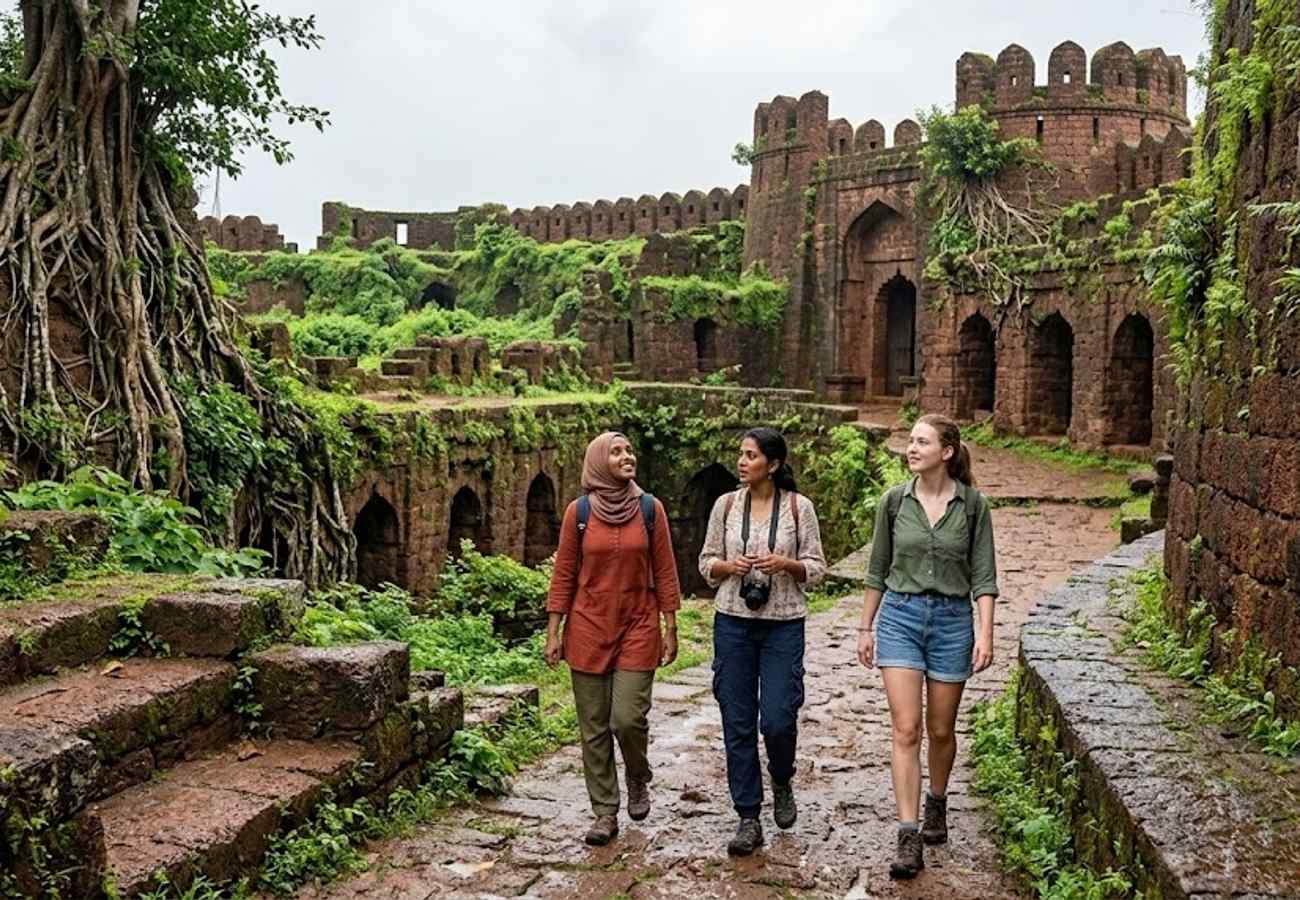
Image generated by AI
I first encountered Mirjan Fort on a monsoon afternoon, arriving by local bus from Gokarna through winding Uttara Kannada district roads. The structure stopped me cold—red laterite walls rising from dense vegetation, a fig tree's roots sprawling across ancient stones like time itself was reclaiming the place. What struck me wasn't the decay, but the deliberate architecture beneath it: gun placements, water channels, administrative chambers. This wasn't just a forgotten ruin. This was a working medieval trade hub frozen in place.
Most travelers skip Mirjan entirely, treating it as a blip between Gokarna's beaches and Jog Falls. That's precisely why I spent three days here—talking with local guides, examining archaeological surveys from the Karnataka Heritage Conservation Society, and piecing together how this 16th-century fort once controlled the Indian Ocean's most valuable commodity.
The Woman Who Ruled Pepper and the Portuguese Could Not Break
Rani Chennabhairadevi ruled this region for 54 years during an era when European powers were aggressively colonizing spice routes. Portuguese traders called her "Rainha da Pimenta"—the Pepper Queen. That wasn't flattery; it was recognition of her control over pepper production that fed global markets from Cairo to Lisbon.
What the Portuguese records fail to capture is her administrative sophistication. She established a structured port system at Mirjan, regulated maritime traffic, negotiated with Arab traders, and maintained independent diplomacy with regional kingdoms. The fort wasn't just military infrastructure—it was an operational center for trade regulation, tax collection, and naval coordination. Local oral histories, passed through farming families still living near Gokarna, describe her as someone who understood that controlling pepper meant controlling information about maritime routes, monsoon timing, and merchant networks.
I met with Harish Kini, an independent historian based in Gokarna who has spent eight years documenting Rani Chennabhairadevi's administrative records through Portuguese archives and regional temple inscriptions. He emphasized: "The fort wasn't built to be impressive. It was built to work. Every stone placement served a function—water management, defensive coverage, signal transmission to coastal lookout posts. This was engineering driven by someone who understood maritime logistics."
What the Excavations Actually Revealed About Global Exchange
Archaeologists digging at Mirjan haven't found gold or jewels. They've found something more revealing: a Portuguese gold coin minted in Goa (1652), fragments of Chinese blue-and-white porcelain, Persian administrative seals, cannon balls, and the structural remnants of a sophisticated water-distribution system.
That combination tells a specific story. The Chinese porcelain indicates direct maritime contact with East Asian trading networks—not through intermediaries, but through active exchange. The Persian seals suggest administrative practices borrowed from Mughal and West Asian governance systems. The Portuguese coin confirms that European traders were physically present and conducting transactions in the region's own currency, indicating Rani Chennabhairadevi's economic leverage.
I examined photographs of these artifacts at the Gokarna Museum (open 10 AM–5 PM daily, entry 50 rupees). The pottery alone—glazed earthenware from multiple periods—shows consistent occupation and trade activity across centuries. This wasn't a fort that declined gradually. It was a functioning hub until Portuguese naval supremacy eventually redirected maritime commerce elsewhere.
Getting There Without the Tourist Trail
Most guidebooks direct visitors to Mirjan through Gokarna town, which is correct but incomplete. Here's the approach I recommend: From Gokarna main market (near Shri Mahabaleshwar Temple), take the northbound local bus toward Kumta (buses run 6 AM–6 PM, fare approximately 40 rupees). Ask the conductor to stop at Mirjan village, approximately 12 km away. The fort entrance is a 300-meter walk east from the main road, marked by a stone archway partially obscured by vegetation.
Alternatively, hire a local motorcycle taxi from Gokarna (negotiate 200–300 rupees round-trip). The ride takes 25 minutes and the driver can wait while you explore.
Visiting hours are essentially unrestricted—the fort sits on government land with minimal formal gatekeeping. Arrive between 7 AM–9 AM or 4 PM–6 PM to avoid midday heat. Bring water, insect repellent, and sturdy footwear; the stone surfaces are slippery after rain.
Why Travelers Are Starting to Notice This Place Now
Heritage tourism is shifting. Visitors increasingly reject packaged monument tours in favor of sites with layered stories—places where you can trace economic history, gender narratives, and cross-cultural exchange simultaneously. Mirjan offers all three through Rani Chennabhairadevi's leadership, medieval trade documentation, and archaeological evidence of a genuinely interconnected Indian Ocean economy.
A Reddit user on r/IndiaTravel summarized this shift perfectly: "Skip the maharaja palaces and standard temple circuits. Mirjan Fort is where you actually understand how medieval India functioned as a trading power. The fort's condition makes it feel less performed and more real."
Gokarna itself has upgraded infrastructure significantly in the past three years—new guesthouses in the Raja Beach and Kudle Beach neighborhoods now cater to slow travelers. This proximity means Mirjan can be explored as a half-day excursion rather than requiring overnight trekking.
The Untold Story of Female Maritime Authority
What remains understated in most heritage narratives is how Rani Chennabhairadevi's governance challenges the assumption that medieval maritime trade was exclusively male-dominated or European-centered. She maintained independence from both Portuguese naval pressure and Mughal expansion through economic leverage—pepper exports were too valuable for anyone to ignore.
Temple inscriptions and regional chronicles describe her as a patron of Jain institutions and infrastructure. She commissioned port facilities, sponsored merchant voyages, and maintained diplomatic correspondence with distant rulers. The archaeological record at Mirjan confirms these historical accounts—the engineering sophistication required to manage coastal water access and coordinate multi-ship maritime traffic wasn't incidental; it was deliberate state infrastructure.
Practical Visitor Guide
Best Time to Visit: October–February (dry season). Avoid June–August monsoons, which create slippery stone surfaces and restrict visibility. March–May heat is intense but manageable with early-morning visits.
Local Transit: Gokarna serves as the primary hub. From Gokarna to Mirjan: local bus (40 rupees, 25 minutes) or motorcycle taxi (200–300 rupees). From Mangalore airport (140 km away): direct buses run 5–6 hours (200–300 rupees). From Bangalore: overnight buses to Gokarna (500–800 rupees, 12 hours).
Safety & Practicalities: Mirjan is low-crime. Local villagers are accustomed to visitors. Carry water, sun protection, and insect repellent. Wear closed shoes on uneven stone surfaces. No formal facilities exist at the fort—prepare accordingly.
Budget Expectations: Gokarna guesthouses range 300–800 rupees per night. Local meals 80–150 rupees. Museum entry 50 rupees. Transport costs 40–300 rupees depending on method. Total daily budget: 500–1,500 rupees for independent travelers.
Local Guides: Hire through Gokarna tourist office (near central market) for structured 3–4 hour fort tours (400–600 rupees). Independent guides often approach visitors at the fort entrance; negotiate beforehand.
Further Reading: Consult Karnataka's official heritage documentation and academic papers on Indian Ocean trade history through university library databases for deeper context.
Mirjan Fort rewards travelers willing to sit in silence among 500-year-old stones and imagine the merchant ships, pepper shipments, and diplomatic negotiations that once moved through this now-quiet coast.
Related Travel Guides
Disclaimer
This article is for informational and educational purposes only. It does not constitute legal, financial, or professional advice. While we strive to provide accurate and up-to-date information, travel policies, regulations, and conditions change rapidly. Always verify information with official sources before making travel decisions. Nomad Lawyer makes no representations about the accuracy, reliability, completeness, or suitability of the information provided. Readers should consult qualified professionals for advice specific to their circumstances. The views expressed in this article are those of the author and do not necessarily reflect the views of Nomad Lawyer.
Raushan Kumar
Founder & Lead Developer
Full-stack developer with 11+ years of experience and a passionate traveller. Raushan built Nomad Lawyer from the ground up with a vision to create the best travel and law experience on the web.
Learn more about our team →