
NTSB Launches Miami Runway Crash Probe as Cancellations Surpass 160 Flights

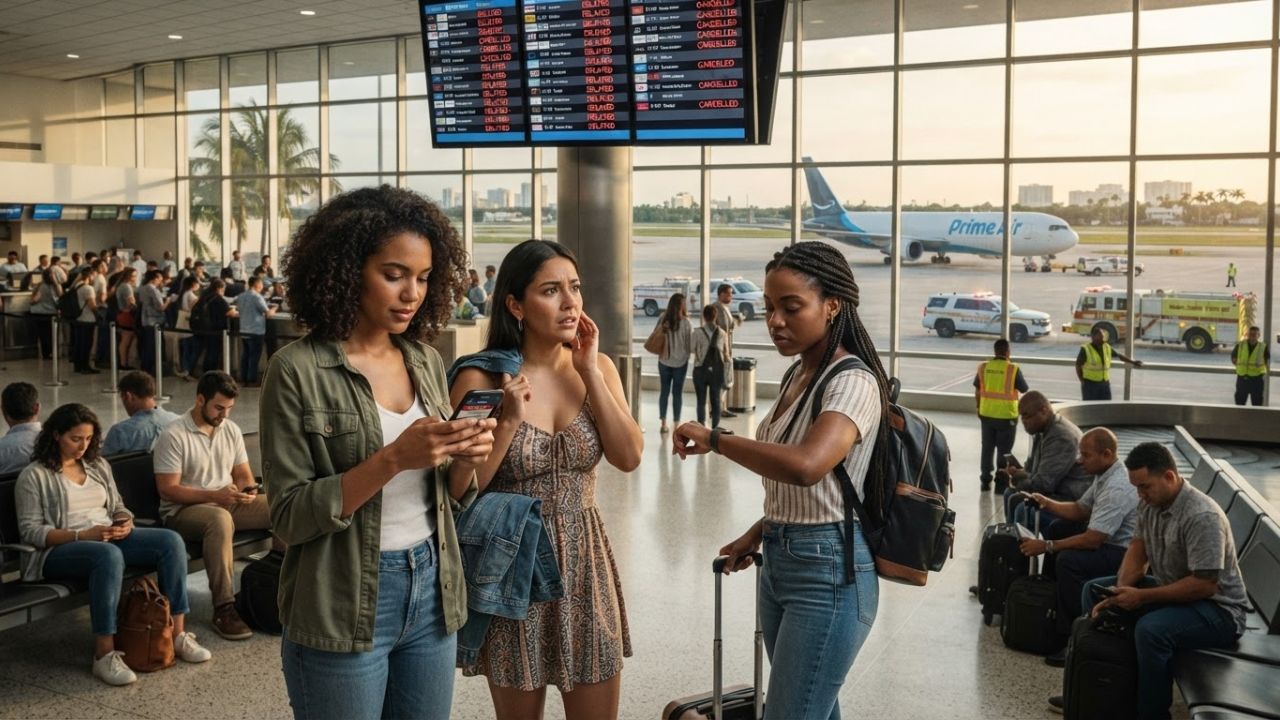
Federal investigators from the National Transportation Safety Board have initiated an inquiry at Miami International Airport after an Amazon Prime Air Boeing 767-300 freighter overran the runway upon landing from San Juan, triggering a fatal crash that led to more than 160 flight cancellations and around 325 flight delays. The multi-agency emergency response and subsequent runway restrictions have disrupted intercontinental connections linking North America, Latin America, and Caribbean cruise departures.
The accident, involving an aircraft operated by cargo carrier 21 Air, prompted a temporary Federal Aviation Administration (FAA) ground stop. Although airport facilities did not permanently close, reduced operational runway capacity generated severe backlogs across passenger concourses, heavily impacting hub carrier American Airlines and thousands of travelers transferring through South Florida.
Scale of Flight Disruptions Across Miami's Aviation Network
Miami International Airport (MIA) functions as the primary aviation bridge connecting the United States with Central America, South America, and the Caribbean. The sudden reduction in available airfield surfaces created cascading schedule adjustments across several geographic sectors:
- Flight Irregularity Metrics: More than 160 commercial flights were cancelled, and around 325 flights experienced major delays as airfield emergency teams secured the accident zone.
- Domestic Feeder Corridors: Heavy schedule adjustments rippled through Florida intrastate routes (Orlando, Tampa, Fort Lauderdale), Northeast business hubs (New York, Boston, Washington), Midwestern gateways (Chicago, Dallas, Atlanta), and West Coast links (Los Angeles, San Francisco, Seattle).
- International Transfer Exposure: Passengers connecting through Miami to Caribbean islands, South American capitals, and European destinations faced missed connections and overnight layovers due to limited replacement aircraft availability.
- Airline Support Measures: American Airlines introduced emergency passenger protections, including ticket change-fee waivers and complimentary rebooking options for travelers whose itineraries crossed the disruption window.
Focus Areas of the Federal Safety Investigation
The National Transportation Safety Board (NTSB) is leading the technical accident investigation with active assistance from the FAA, focusing on the mechanics of the runway overrun:
- Flight Data and Cockpit Audio: Technicians are recovering and analyzing the digital flight data recorder (FDR) and cockpit voice recorder (CVR) to assess airspeed, thrust settings, and braking inputs.
- Runway Surface Conditions and Weather: Investigators are reviewing meteorological data, wind shear reports, and runway friction coefficients at the time the aircraft touched down from Puerto Rico.
- Aircraft Systems and Maintenance Audits: Scrutiny centers on thrust reverser deployment, spoiler activation, hydraulic pressure, and airworthiness logs managed by contract operator 21 Air.
- Air Traffic Control Communications: Reviewing tactical approach instructions and runway assignment decisions between Miami tower controllers and the flight crew.
Environmental Containment and Airfield Ecology
Handling a major cargo aircraft emergency on an active airfield requires rapid environmental stewardship:
- Protecting Regional Waterways: The Miami-Dade Aviation Department and environmental containment teams deployed hazardous material booms along drainage canals flanking the airfield perimeter, preventing unburned aviation fuel and firefighting foam runoff from infiltrating Biscayne Bay aquatic sanctuaries.
- Airfield Debris Clearance: Foreign object debris (FOD) sweeps along adjacent operational runways ensured that secondary jet operations could resume safely without risk of engine ingestion.
Local Insider Tips for Navigating Miami Airport Delays
Travelers facing cancellations, missed connections, or extended layovers at Miami International Airport can minimize stress with practical local advice:
- Cruise Departure Contingency at PortMiami: If connecting through MIA for a cruise departure from PortMiami, contact your cruise line's emergency travel desk immediately. Major operators (Royal Caribbean, Carnival, Norwegian) can coordinate delayed boarding windows or arrange transfers to the ship's first port of call. Never travel to a cruise port on the morning of embarkation without at least a 6-hour buffer.
- Alternative South Florida Gateways: If rebooking options out of MIA are exhausted, ask airline customer agents to re-route your departure through Fort Lauderdale-Hollywood International Airport (FLL), located approximately 30 miles north, or Palm Beach International (PBI), 70 miles north. The high-speed Brightline rail service or commuter Tri-Rail connects downtown Miami directly with Fort Lauderdale and West Palm Beach stations.
- Use the MIA Mover for Rail Transit: Avoid surface gridlock outside the terminal. Take the automated MIA Mover train from the 3rd level between the Flamingo and Dolphin garages to the Miami Intermodal Center (MIC). From there, board the Metrorail Orange Line directly to downtown Miami and Brickell in 15 minutes.
- Explore Cultural Enclaves During Long Delays: If stranded overnight, take a rideshare to nearby Little Havana (Calle Ocho). Re-energize with a traditional Cuban cafecito (sweetened espresso) and savory ropa vieja (shredded flank steak with plantains) at the historic Versailles Restaurant.
- Digital Self-Service Rebooking: Bypass multi-hour terminal customer service queues by using airline mobile applications or official messaging channels to select alternative seat inventory before counter agents reassign available seats.
Tourism Outlook for the South Florida Gateway
Miami’s tourism infrastructure relies heavily on the uninterrupted throughput of its primary international airport. As federal investigators continue on-site evidentiary reviews, the rapid restoration of commercial operations demonstrates the resilience of South Florida's travel network, ensuring that vital trade and leisure corridors remain functional throughout 2026.
Related Travel Guides
Disclaimer
This article is for informational and educational purposes only. It does not constitute legal, financial, or professional advice. While we strive to provide accurate and up-to-date information, travel policies, regulations, and conditions change rapidly. Always verify information with official sources before making travel decisions. Nomad Lawyer makes no representations about the accuracy, reliability, completeness, or suitability of the information provided. Readers should consult qualified professionals for advice specific to their circumstances. The views expressed in this article are those of the author and do not necessarily reflect the views of Nomad Lawyer.
Raushan Kumar
Founder & Lead Developer
Full-stack developer with 11+ years of experience and a passionate traveller. Raushan built Nomad Lawyer from the ground up with a vision to create the best travel and law experience on the web.
Learn more about our team →