
US Flight Alert: 2,331 Delays and 149 Cancellations Disrupt Major Hubs
Airlines report 2,331 delays and 149 cancellations across the US, with Boston Logan, DFW, Reagan National, and JFK seeing widespread schedule impacts.

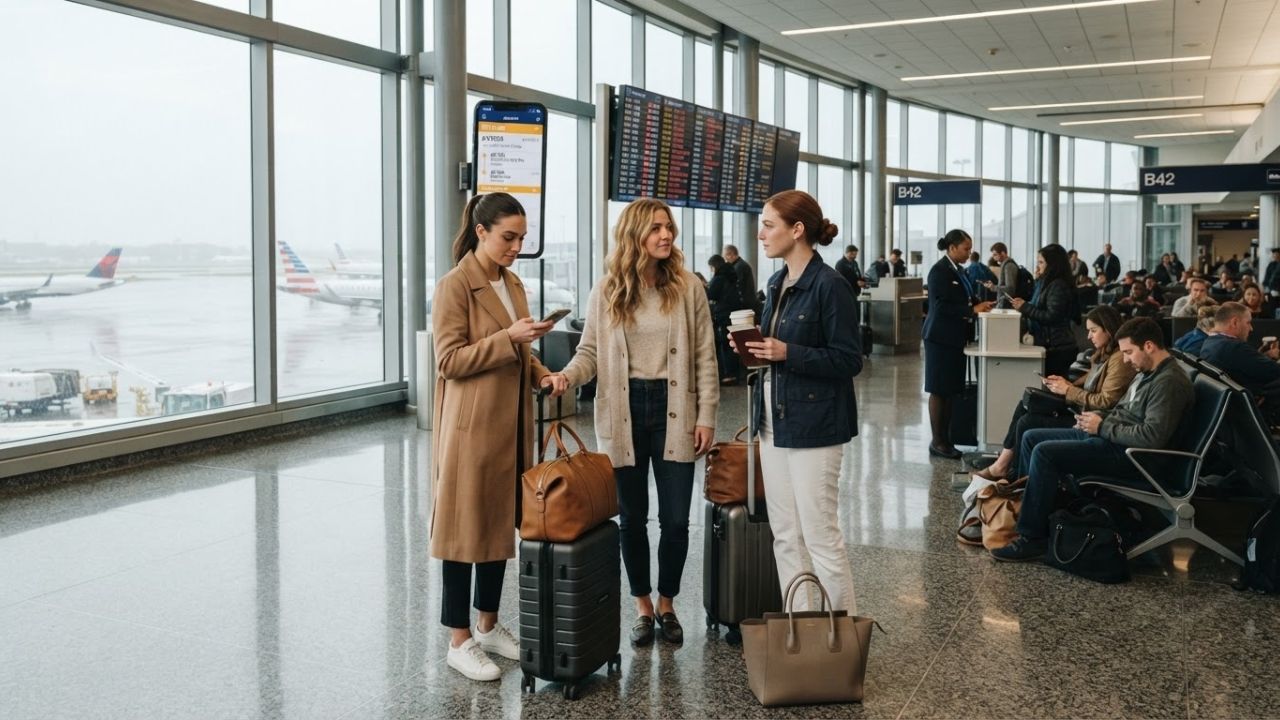
Image generated by AI
Commercial air travel across the United States suffered widespread disruption with 2,331 delays and 149 cancellations reported, as heavy bottlenecks snarled operations across Boston Logan, Dallas-Fort Worth, and regional East Coast corridors.
WASHINGTON — Commercial air travel networks across the United States faced severe schedule disruptions on September 5, 2026, as cascading operational bottlenecks produced 2,331 flight delays and 149 cancellations nationwide. Real-time aviation tracking data logged at 2:46 PM ET revealed that high-density passenger hubs across the Northeast and South central corridors bore the brunt of the schedule unraveling, forcing thousands of passengers into extended terminal layovers and missed connections.
Among major domestic carriers, American Airlines and Southwest Airlines logged the highest aggregate delay counts, while regional feeder airlines and leisure operators—including JetBlue and PSA Airlines—recorded disproportionate cancellation rates. The disruptions impacted major international transfer facilities, regional commuter routes, and coastal island airstrips, highlighting how minor initial weather holds and flow control restrictions quickly compound across interconnected flight rotations.
The Local Trend Revealed: Major Hubs and Regional Gateways Under Pressure
The flight disruption data reveals concentrated operational friction points spanning major metropolitan airports and regional island gateways across the eastern seaboard and central states:
Hub-by-Hub Disruption Breakdown
- Boston Logan International (BOS): Handled the heaviest overall delay volume among East Coast hubs, recording 183 delays and 16 cancellations. The airport posted an 8% delay rate and 1% cancellation rate on departures, while arriving flights suffered an intense 22% delay rate and 1% cancellation rate, indicating acute airborne holding patterns over New England airspace.
- Dallas-Fort Worth International (DFW): Experienced 169 delays and 6 cancellations. As a primary north-south connecting hub, arriving flights recorded a 10% delay rate alongside a 6% delay rate on departures.
- Reagan National (DCA): The perimeter-restricted Washington gateway logged 130 delays and 13 cancellations, reflecting a 17% departure delay rate and a 20% arrival delay rate.
- New York John F. Kennedy International (JFK): Logged 99 delays and 20 cancellations, with 6% of departures and 8% of incoming flights delayed.
- Los Angeles International (LAX): Recorded 110 delays and 3 cancellations, with arriving operations showing a 7% delay rate.
- Philadelphia International (PHL): Experienced 78 delays and 7 cancellations, posting an 8% arrival delay rate.
- Houston George Bush Intercontinental (IAH) & Washington Dulles (IAD): Each facility recorded 70 delays, with IAH noting 3 cancellations (5% arrival delays) and IAD logging 7 cancellations (10% arrival delays).
Regional and Island Airport Bottlenecks
Disruptions were acutely felt across smaller regional airfields where limited runway infrastructure and single-aircraft staging leave travelers with few immediate rebooking alternatives:
- Nantucket Memorial (ACK): Recorded 13 delays alongside a high concentration of 20 cancellations, driving a 6% cancellation rate on both arriving and departing flights.
- Martha’s Vineyard (MVY): Logged 10 delays and 8 cancellations, producing a 6% departure cancellation rate and a 4% arrival cancellation rate.
- Westchester County (HPN): Saw 7 delays and 11 cancellations, with departures registering a 3% cancellation rate.
Airline-Specific Operational Impacts
- American Airlines: Handled the nation’s highest raw delay count, with 377 delays and 2 cancellations.
- Southwest Airlines: Encountered 370 delays and 3 cancellations across its point-to-point network.
- Delta Air Lines: Logged 220 delays and 2 cancellations.
- United Airlines: Recorded 160 delays and 6 cancellations.
- JetBlue: Suffered severe regional disruption in the Northeast, logging 136 delays and 28 cancellations.
- PSA Airlines (American Eagle regional carrier): Recorded 91 delays and 26 cancellations, severely curtailing regional feeder connections into American’s Mid-Atlantic hubs.
Cultural & Environmental Value: Air Traffic Management and Low-Impact Transit Alternatives
The cascading delays across the Northeast corridor underscore the immense strain placed on legacy airspace sectors. The New York, Boston, and Washington flight corridors represent the world's most congested civilian airspace. When convective storm systems, low cloud ceilings, or Federal Aviation Administration (FAA) staffing limitations restrict air routes, air traffic controllers must implement ground delay programs, forcing idling aircraft to burn jet fuel on aprons and taxiways.
From an environmental and operational perspective, these recurrent disruptions demonstrate the value of electrified rail infrastructure. Along the Boston–New York–Philadelphia–Washington axis, travelers who substitute regional puddle-jumper flights with high-speed passenger rail substantially reduce their personal travel carbon footprint while bypassing airport tarmac gridlock entirely.
Local Visitor Insider Tips: Alternate Routings, Rail Backups, and Airport Dining
When flight tracking monitors display climbing delay percentages, strategic maneuvers can save an entire journey:
- Switch to Amtrak Along the Northeast Corridor: If your domestic flight between Boston (BOS), New York (JFK/LGA/EWR), Philadelphia (PHL), or Washington (DCA/IAD) is cancelled or delayed by more than two hours, abandon airport queues and book Amtrak's Acela or Northeast Regional. Trains depart hourly from Boston South Station, New York Penn Station, and 30th Street Station in Philadelphia, delivering passengers directly into central downtown stations without airport security or weather holds.
- Island Travel Contingency Plans: For travelers flying between the Massachusetts mainland and Nantucket (ACK) or Martha's Vineyard (MVY), weather cancellations are common. If your regional flight is cancelled, do not wait overnight at the airport. Secure passenger tickets on the Steamship Authority or Hy-Line Cruises ferries operating out of Woods Hole and Hyannis to maintain your travel timeline.
- Terminal Dining for Delayed Travelers: If stranded during a long layover, enjoy authentic local flavors inside the terminal:
- Boston Logan (BOS): Head to Legal Sea Foods in Terminal B or C for classic New England clam chowder and warm lobster rolls.
- Dallas-Fort Worth (DFW): Visit Salt Lick Bar-B-Q in Terminal A or Cousins Bar-B-Q in Terminal B for authentic Texas smoked brisket.
- Reagan National (DCA): Stop by Ben's Chili Bowl in National Hall for an iconic Washington half-smoke sausage with chili sauce.
- Department of Transportation (DOT) Refund Mandates: Under finalized federal DOT regulations, if an airline cancels a flight or significantly alters a departure time (defined as three hours or more for domestic journeys, or six hours for international trips), passengers who choose not to travel are legally entitled to a full cash refund to their original payment method, rather than forced acceptance of expiring airline vouchers.
Tourism Outlook: Resilient Travel Planning in an Era of Tight Airspace
The recording of 2,331 delays and 149 cancellations in a single afternoon reflects the operational fragility of the modern commercial aviation system. With passenger volumes remaining near historical highs and airline scheduling operating with minimal reserve aircraft, even localized thunderstorms or ground crew constraints trigger immediate multi-hub repercussions.
For corporate travelers and leisure holidaymakers alike, the path forward requires proactive itinerary design: booking early-morning departures before delays accumulate, avoiding tight 40-minute domestic connections at high-risk hubs like DFW and JFK, and maintaining mobile airline application alerts. As carriers continue to integrate predictive scheduling algorithms and ground logistics, passenger vigilance remains the most dependable safeguard against unexpected travel interruptions.
Related Travel Guides
Disclaimer
This article is for informational and educational purposes only. It does not constitute legal, financial, or professional advice. While we strive to provide accurate and up-to-date information, travel policies, regulations, and conditions change rapidly. Always verify information with official sources before making travel decisions. Nomad Lawyer makes no representations about the accuracy, reliability, completeness, or suitability of the information provided. Readers should consult qualified professionals for advice specific to their circumstances. The views expressed in this article are those of the author and do not necessarily reflect the views of Nomad Lawyer.
Raushan Kumar
Founder & Lead Developer
Full-stack developer with 11+ years of experience and a passionate traveller. Raushan built Nomad Lawyer from the ground up with a vision to create the best travel and law experience on the web.
Learn more about our team →