
Meghalaya Sustainable Travel Guide 2026: Living Root Bridges, Homestay Revolution, and Year-Round Eco-Circuits

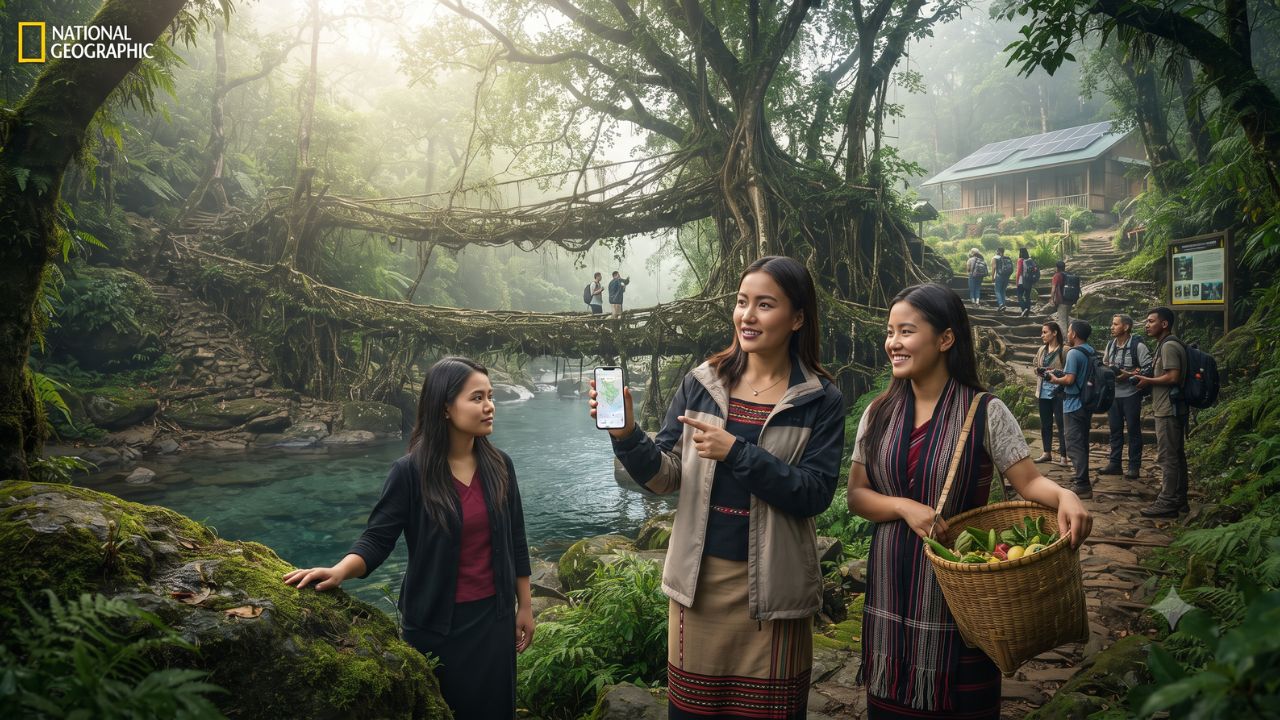
With more than three-fourths of its geographical territory blanketed by dense subtropical forests and home to indigenous bio-engineering feats found nowhere else on Earth, Meghalaya has generated over 75,000 local tourism livelihoods while deploying more than 150 sustainable infrastructure projects. Marked during the World Tourism Day 2026 observances, this Northeastern Indian state is executing a decisive pivot away from seasonal monsoon day-trippers toward a year-round, high-value experiential model that balances digital visitor management with village-owned hospitality.
Rather than relying on rapid commercial hotel expansion that strains delicate highland environments, Meghalaya’s model places rural Khasi, Jaintia, and Garo indigenous communities at the core of destination stewardship.
The Sustainable Transformation: 150 Projects and Community Cooperatives
Backed by initiatives showcased through Meghalaya Tourism, the state's strategic roadmap focuses on distributing visitor spending across four primary regional hubs: Umiam Lake, Sohra (Cherrapunji), Dawki-Shnongpdeng along the crystalline Umngot River, and the Nokrek Biosphere Reserve in the Garo Hills.
The state’s multi-layered development framework rests on several interconnected pillars:
- The Homestay Expansion Scheme: State-backed financial assistance and technical training have empowered hundreds of rural families to convert traditional timber and stone residences into certified village homestays, keeping lodging revenue directly within local communities.
- AI-Driven Carrying Capacity Management: Implementing predictive digital tools and real-time foot-traffic monitoring allows park authorities to regulate visitor flow at ecologically fragile sites like the Double Decker Root Bridge in Nongriat and Mawsmai Cave.
- Grassroots Creative Economy: Formal music development initiatives support thousands of local musicians, while annual cultural gatherings celebrate indigenous storytelling, handloom silk weaving (ryndia), and organic wild honey harvesting.
- Upgraded Clean Mobility: Deployment of purpose-built, tech-enabled regional tourist vehicles operated by trained local youth ensures reliable inter-district connectivity while generating dignified rural employment.
What Makes Meghalaya Experientially Unique
Meghalaya—literally "the abode of clouds"—occupies an elevated sandstone plateau where torrential monsoon rains have carved out Asia's deepest cave systems, roaring waterfall gorges, and sacred evergreen groves protected by ancient customary taboos.
The state’s most iconic wonder remains its Jingkieng Jri (Living Root Bridges), recognized on the UNESCO World Heritage Tentative List. Grown over decades by indigenous Khasi and Jaintia villagers who guide the aerial roots of Ficus elastica trees across raging river chasms using hollowed betel nut trunks, these living structures grow stronger with age and withstand intense tropical floods.
Beyond Sohra’s plunging waterfalls like Nohkalikai and Wei Sawdong, travelers journeying south toward the Bangladesh border discover the emerald waters of the Umngot River at Shnongpdeng, where wooden canoes appear to float on pure glass. In the western Garo Hills, the dense canopy of Nokrek National Park shelters the world's most genetically diverse wild citrus species (Citrus indica) alongside endangered western hoolock gibbons.
Visitor Insider Tips for Traveling Across Meghalaya
- Trekking to Nongriat’s Double Decker Bridge: The descent to Nongriat involves navigating approximately 3,500 concrete and stone steps each way. Begin your hike from Tyrna village at 6:30 a.m. to beat the midday heat and avoid afternoon foot traffic. Pack bamboo trekking poles and plenty of electrolyte water.
- Timing Your Visit for Crystal Waters: If your primary goal is kayaking or cliff jumping in Dawki and Shnongpdeng, visit between November and April. During the heavy monsoon months (June to September), rainfall causes river sediment to turn opaque brown, though waterfalls reach their thunderous peak volume.
- Base Yourself in Village Homestays: Instead of staying exclusively in Shillong, spend nights in Mawlynnong, Mawlyngbna, or Kongthong (the "whistling village," where mothers compose unique musical tunes to call each child). Homestays provide home-cooked meals featuring bamboo shoots, black sesame pork (dohkhlieh), and red rice (ja stem).
- Cave Exploration Safety: When exploring limestone caverns like Arwah, Krem Liat Prah, or Sjuw, hire a licensed local guide from the Meghalaya Adventurers’ Association. Wear rubber-gripped shoes with ankle support and carry a waterproof headlamp.
- Respecting Sacred Groves (Law Kyntang): When entering ancient sacred forests like Mawphlang, strictly follow local custom: do not remove or take away any leaf, twig, stone, or flower from the forest boundary, as tradition holds that disturbing nature brings misfortune.
Cultural and Environmental Context
Meghalaya operates under a matrilineal social structure where lineage and ancestral property pass from mothers to youngest daughters (khatduh). This social tradition empowers women as central decision-makers in rural tourism enterprises, from managing village councils to directing organic farm-to-table dining initiatives.
Community-managed conservation zones ensure that tourism growth directly incentivizes forest protection. Village councils (durbar shnong) allocate a percentage of community parking and entry fees toward river clean-up drives, solar-powered waste management, and the rehabilitation of degraded watershed catchments.
By transitioning from quick day excursions to immersive multi-day homestay itineraries, Meghalaya demonstrates how modern tourism technology and deep-seated ecological wisdom can unite to protect fragile mountain ecosystems.
FAQ: Visiting Meghalaya 2026
What is the best season to visit Meghalaya?
October to May is ideal for clear skies, calm emerald river waters, cave exploration, and comfortable village hiking across the Khasi and Garo Hills.
How do I travel to Meghalaya from major Indian travel hubs?
Fly into Lokpriya Gopinath Bordoloi International Airport in Guwahati (GAU), then take a shared cab, private taxi, or electric tourist coach to Shillong in approximately three hours via the scenic national highway.
Do foreign or domestic tourists require special permits for Meghalaya?
No special Inner Line Permit (ILP) or Protected Area Permit is currently required for general tourism in Meghalaya, though travelers should carry valid government photo identification.
What should I pack for a trekking trip in Meghalaya?
Pack breathable quick-dry clothing, sturdy waterproof hiking boots, a compact rain shell, a high-lumen headlamp, and cash in Indian Rupees for village homestays and entry fees.
Where living tree roots weave bridges across raging rivers and misty canyons echo with traditional songs, Meghalaya shows the world that true sustainability is a way of life.
Related Travel Guides
Disclaimer
This article is for informational and educational purposes only. It does not constitute legal, financial, or professional advice. While we strive to provide accurate and up-to-date information, travel policies, regulations, and conditions change rapidly. Always verify information with official sources before making travel decisions. Nomad Lawyer makes no representations about the accuracy, reliability, completeness, or suitability of the information provided. Readers should consult qualified professionals for advice specific to their circumstances. The views expressed in this article are those of the author and do not necessarily reflect the views of Nomad Lawyer.
Preeti Gunjan
Contributor & Community Manager
A passionate traveller and community builder. Preeti helps grow the Nomad Lawyer community, fostering engagement and bringing the reader experience to life.
Learn more about our team →