
Malta Historic Architecture and Islands: Exploring Valletta, Mdina, and the Untamed Charm of Gozo
As inbound arrivals surge 18.1% to exceed 2.13 million visitors in six months, travelers in Malta look beyond coastal resorts toward Valletta's Grand Harbour, Mdina's silent bastions, and the rustic serenity of Gozo.

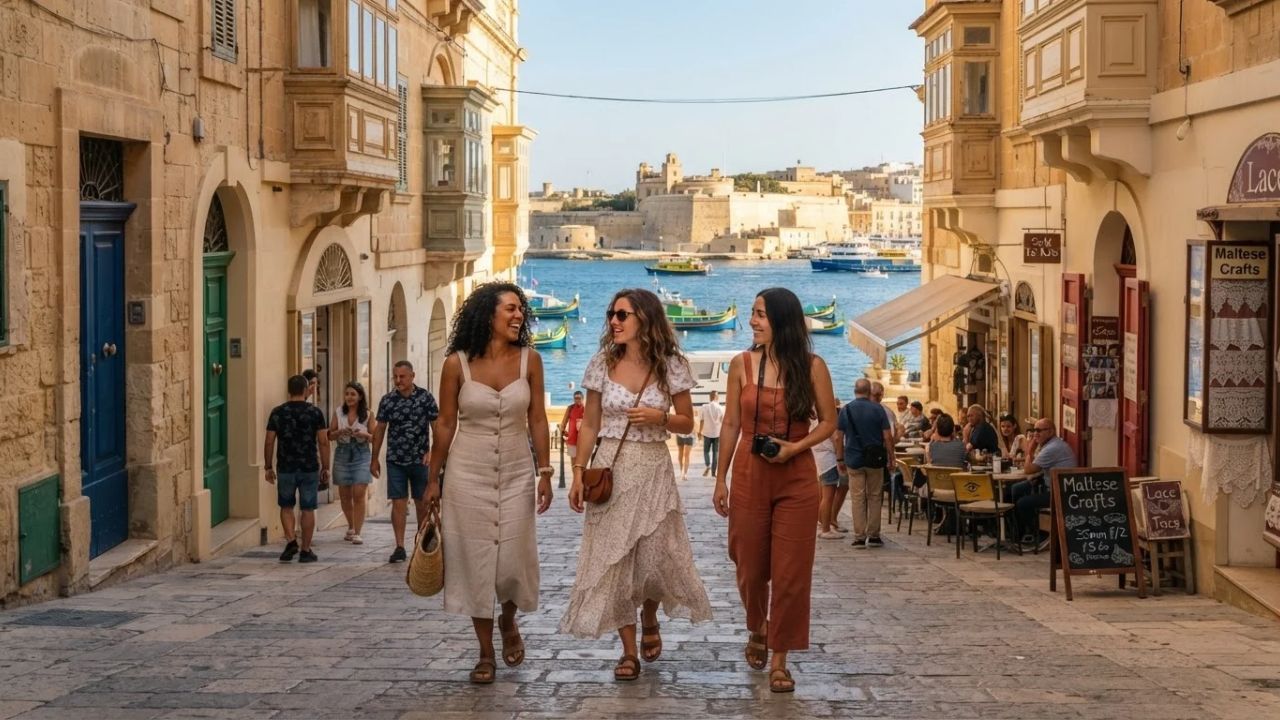
Image generated by AI
While Malta welcomed more than 2.13 million international visitors during the initial six months of the year—marking an 18.1% year-on-year surge—over half of them (52.7%) actively ventured past the mainland to seek refuge across the quiet rural sanctuaries of Gozo and Comino. Generating over 11.8 million guest nights during this six-month evaluation period, with peak summer arrivals regularly surpassing 450,000 monthly visitors, the sun-drenched Mediterranean archipelago has turned its compact geography into an extraordinary study in travel balance. Rather than letting tourist footfall overwhelm its golden limestone towns, the country connects high-density coastal resort districts with centuries-old maritime traditions, subterranean Roman crypts, and pastoral farming enclaves that maintain their unhurried rhythm.
The Dual Rhythm: Balancing Coastal Resorts and Island Dispersal
Tourism forms the economic bedrock of the Maltese archipelago, generating roughly 15% to 20% of national Gross Domestic Product and sustaining over 40,000 local jobs. An individual visitor spends an average of €110 to €140 per day, distributed across family-run eateries, village bakeries, coastal ferries, and entrance fees for historic sites. In the coastal hub of Qawra, set along the indented coastline of St. Paul’s Bay and linked to commercial Buġibba by wide pedestrian promenades, hospitality properties consistently operate at 85% to 95% occupancy during the peak summer months. Guests maintain an average length of stay between 5 and 7 nights, drawn by all-inclusive seaside amenities, thermal wellness spas, and over 300 days of annual sunshine.
Yet the defining trend of modern Maltese travel is geographic dispersal. Mainland Malta spans 246 square kilometers, but just a short 20-minute ferry journey from the northern terminal at Cirkewwa across to Mgarr brings travelers to Gozo, an island measuring only 67 square kilometers. On Gozo, the energetic pace of the main island yields to terraced olive groves, quiet stone farmhouses, secluded swimming coves, and hillside parish churches. Official destination initiatives highlighted by VisitMalta actively encourage travelers to divide their stay, coupling multi-day coastal resort holidays with agritourism farm stays, vineyard excursions, and olive oil tastings across Gozo's sleepy countryside.
What Makes Malta Different: Seven Millennia of Living Fortifications
What sets Malta apart from any other Mediterranean island destination is the density of its monumental architecture. Rising dramatically above the cobalt Mediterranean, the fortified capital of Valletta is recognized across the globe on the UNESCO World Heritage Centre register. The city overlooks the natural Grand Harbour, a deep-water basin reaching depths of 12 to 15 meters that accommodates commercial excursion vessels, private superyachts, and cruise liners simultaneously, supporting an annual throughput exceeding 500,000 cruise passengers. These waters served as the primary theater for two of the most celebrated conflicts in military history: the epic Great Siege of 1565 against the Ottoman Empire, and the intense air battles of World War II between 1940 and 1942.
Inside Valletta's grid of limestone streets, the High Baroque splendor of St. John’s Co-Cathedral houses Caravaggio masterpieces above intricately carved marble tombstones. Nearby, the Grandmaster’s Palace, constructed over four centuries ago by the Knights of Malta, anchors the civic center, while the Manoel Theatre and the National Archaeological Museum safeguard delicate prehistoric relics dating as far back as 2500 BCE. Walking through the Upper Barrakka Gardens at midday, travelers listen to the daily noon salute fired by historic cannons over the harbor bastions.
Beyond the capital city walls, ancient history weaves seamlessly into everyday community life. In Rabat, visitors descend into the subterranean chambers of St. Paul’s Catacombs, where intricate fourth-century underground burial complexes reveal Roman and early Christian funerary traditions. Directly adjacent lies Mdina, affectionately called "The Silent City," where aristocratic Norman and Baroque stone palaces line narrow, traffic-free lanes that glow amber beneath wrought-iron lamps after dusk.
To the south, the traditional fishing village of Marsaxlokk maintains a maritime heritage that stretches back over 3,000 years to Phoenician traders around 800 BCE, followed by Carthaginian and Roman merchants. Today, hundreds of traditional wooden luzzu boats bob in the harbor, each painted in vivid primary tones of red, yellow, blue, and green, bearing the ancient protective Eye of Osiris on the bow to turn away ocean storms. The local fishing fleet operating out of Marsaxlokk remains indispensable to the national food system, supplying up to 70% of the fresh seafood served in restaurants across the islands.
Visitor Insider Tips: Navigating Malta and Gozo Like a Local
To experience the authentic cadence of Maltese life while steering clear of tourist bottlenecks, plan your journey around insider local habits:
- Timing and Crowd Avoidance: The medieval alleys of Mdina become crowded with tour groups between 11:00 and 15:00. Arrive instead at 08:30 for absolute quiet, or wander its shadowed passages after 20:00 when the stone corridors become completely silent. At St. Paul’s Catacombs in Rabat, site curators enforce a strict capacity limit of 80 to 100 visitors per hour to preserve delicate subterranean limestone chambers; book weekday morning slots to bypass entrance queues.
- Public Transport Hacks: Driving a rental car in Malta can be stressful due to narrow village streets, left-side traffic, and scarce parking. Take advantage of the public bus network operated by Malta Public Transport, which runs over 2,000 daily routes connecting every town and ferry terminal across Malta and Gozo. Single tickets cost between €2.00 and €3.00, reducing your overall transportation expenses by up to 65% compared to taxis or rental cars. Purchase an Explore Card or contactless Tallinja card for effortless boarding.
- Churches and Cultural Etiquette: When visiting revered religious sanctuaries like the soaring rotunda of Mosta Church or St. John’s Co-Cathedral, modest dress is strictly enforced; shoulders and knees must be covered, and shawls are provided at the door if needed. Never wear stiletto heels inside historic cathedrals, as thin heels can permanently damage fragile 400-year-old inlaid marble floors.
- Neighborhood Bases for Character: For lively seaside promenades and family-friendly resort amenities, base yourself along St. Paul’s Bay or Qawra. For cultural atmosphere, reserve a restored townhouse in Valletta or the historic Three Cities (Birgu, Senglea, and Bormla). On Gozo, rent a traditional stone farmhouse (razzett) in peaceful rural villages like Xagħra or Nadur, featuring private limestone courtyards, swimming pools, and sweeping countryside views.
- Authentic Culinary Encounters: Do not leave without ordering fresh pastizzi—crispy diamond-shaped pastries filled with warm spiced mashed peas (piżelli) or creamy ricotta—from local village pastizzeriji, best accompanied by strong espresso or sweet almond tea. For an authentic evening feast, seek out traditional rabbit stew (fenkata) slow-cooked with garlic, bay leaves, and red wine, paired with indigenous Maltese wines produced from native Ġellewża or Girgentina grapes. Seek out evening performances featuring traditional Maltese folk singing (Għana), where improvised rhyming poetry has helped drive a 15% to 20% increase in repeat visitor interest.
Cultural and Environmental Context: Limestone Conservation and Sustainable Tourism
The rapid influx of millions of international travelers brings significant structural and environmental responsibilities to an island state of limited landmass. Malta’s built heritage is predominantly crafted from native Globigerina limestone—a porous, golden building stone that gives the islands their distinctive architectural identity but remains acutely susceptible to salt-air erosion, humidity fluctuations, and vibrations from vehicular traffic.
To protect delicate sites like St. John’s Co-Cathedral, the Grandmaster’s Palace, and the prehistoric temples, substantial national conservation funds are channeled into limestone stabilization, laser cleaning, and specialized mortar repairs. By enforcing hourly visitor limits at subterranean crypts like St. Paul’s Catacombs, heritage authorities actively manage microclimate humidity, preventing salt recrystallization from breaking down ancient rock surfaces.
Environmental sustainability is equally urgent in the hospitality sector. Benefiting from over 300 days of sunshine each year, progressive resort properties across Qawra and St. Paul’s Bay are scaling up rooftop solar panel arrays and automated energy management systems that adjust cooling according to real-time room occupancy. In an archipelago with no permanent rivers or large freshwater lakes, advanced desalination and wastewater recycling systems minimize pressure on fragile underground aquifers. Furthermore, the expansion of hybrid and electric passenger ferries between Valletta, Sliema, and the Three Cities offers low-emission transit across the historic harbor, ensuring that maritime exploration does not compromise the marine ecosystems supporting local fishing communities.
FAQ: Visiting Malta in 2026
What is the best time of year to visit Malta?
April through June and September through October provide warm sunny weather (22°C to 28°C) and comfortable swimming conditions without the extreme heat and dense visitor crowds of July and August.
How do travelers get from mainland Malta to Gozo?
Regular vehicle and passenger ferries run continuously between Cirkewwa on Malta's northern tip and Mgarr Harbour on Gozo. The scenic crossing takes just 20 minutes, with tickets purchased on the return leg from Gozo.
Is public transportation sufficient for exploring the islands?
Yes. Malta Public Transport operates over 2,000 daily bus routes across Malta and Gozo, providing affordable, direct access to historical centers, beaches, and ferry ports without the need for rental vehicles.
Is Malta safe for solo and independent travelers?
Malta is widely recognized as one of the safest destinations in the European Union, featuring well-policed public areas, safe nighttime streets, and hospitable local communities throughout both islands.
Wandering between the silent limestone bastions of Mdina and the sun-soaked coves of Gozo reveals an island where thousands of years of Mediterranean history still live in every sea breeze.
Related Travel Guides
Disclaimer
This article is for informational and educational purposes only. It does not constitute legal, financial, or professional advice. While we strive to provide accurate and up-to-date information, travel policies, regulations, and conditions change rapidly. Always verify information with official sources before making travel decisions. Nomad Lawyer makes no representations about the accuracy, reliability, completeness, or suitability of the information provided. Readers should consult qualified professionals for advice specific to their circumstances. The views expressed in this article are those of the author and do not necessarily reflect the views of Nomad Lawyer.
Raushan Kumar
Founder & Lead Developer
Full-stack developer with 11+ years of experience and a passionate traveller. Raushan built Nomad Lawyer from the ground up with a vision to create the best travel and law experience on the web.
Learn more about our team →