
Paros Emerges as the Aegean's Premier Sanctuary as €45.44 Million Airport Expansion Transforms the Cyclades
With international flight arrivals surging 13.5% and ferry arrivals topping 969,000, Paros balances refined luxury and ancient marble heritage against a major €45.44 million runway expansion.

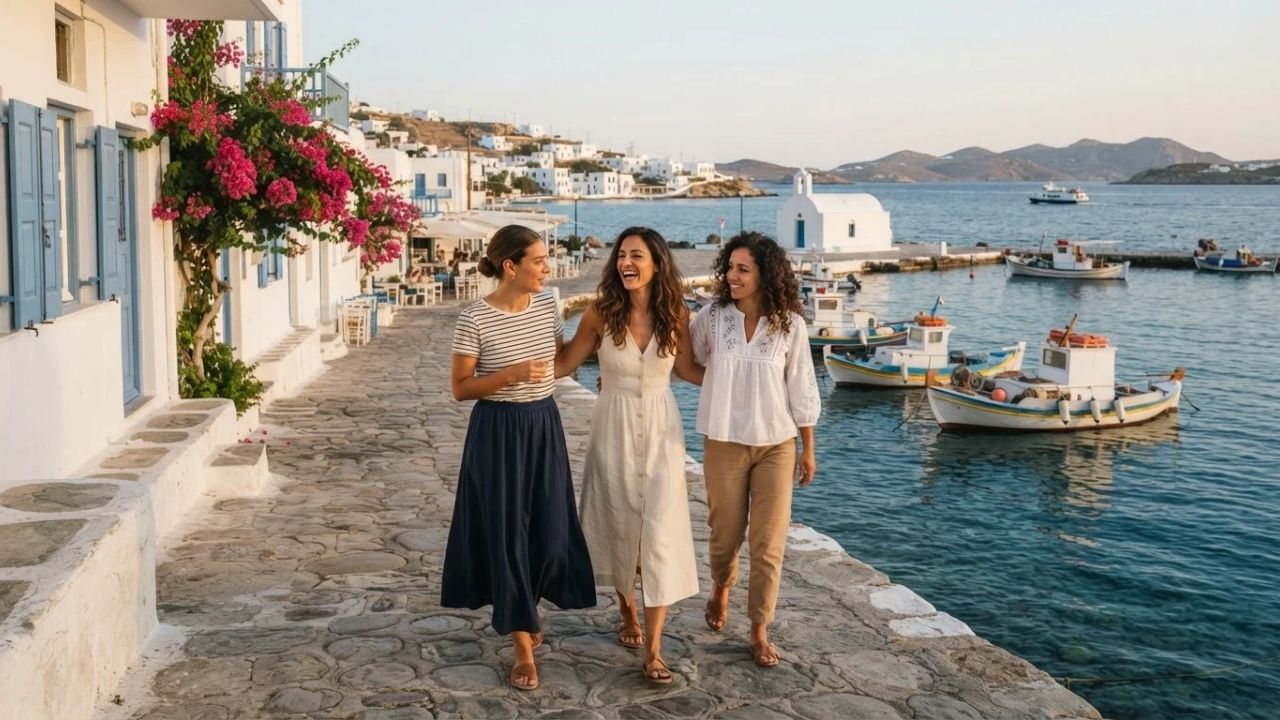
Image generated by AI
Sustaining a permanent island population of just 14,520 residents, the Cycladic island of Paros logged an astonishing 969,681 ferry and cruise disembarkations in 2025 alone—surpassing the 726,441 passenger arrivals recorded the previous year. Positioned right at the geographical crossroads of the Aegean Sea between Mykonos and Naxos, this sun-drenched sanctuary of translucent marble and whitewashed cubic chapels is stepping decisively out of the shadow of its over-commercialized neighbors. During the first six months of 2026, direct international flight arrivals surged to approximately 76,000, marking a 13.5 per cent year-over-year leap that outpaces broader Greek national averages. Now, backed by a €45.44 million state infrastructure overhaul approved under the National Development Program 2026–2030, Paros is lengthening its airport runway from 1,400 meters to 1,799 meters and erecting a new 12,117-square-meter terminal, establishing direct long-haul charter connectivity with Europe while safeguarding its timeless Cycladic soul.
The Aegean Realignment: Balancing High-Yield Luxury with Village Heritage
The dramatic rise of Paros reflects a broader evolution in traveler priorities across the Mediterranean. Disillusioned by the frenetic nightlife and extreme commercialization of traditional tourism capitals, discerning holidaymakers are seeking destinations that combine refined gastronomy and boutique privacy with genuine community rhythms. Financial indicators underscore this economic transition: certified regional value-added tax revenues jumped 23.68 per cent year-over-year, demonstrating substantial capital inflow that directly supports local farmers, fishermen, and family-operated tavernas.
Global hospitality brands are investing heavily to meet this upscale demand. Premier developments such as the €15 million OROSEA Paros (Autograph Collection), featuring 40 bespoke private-pool suites, and the 50-room Parian Chronicle Hotel (Destination) are establishing low-density sanctuaries near Naoussa and Parikia. Unlike the dense high-rise developments of other holiday coasts, local municipal regulations strictly enforce Cycladic architectural vernacular—mandating hand-cut stone foundations, rounded whitewashed parapets, and vibrant bougainvillea borders. This deliberate aesthetic containment ensures that expanding hospitality projects integrate harmoniously with the island's natural coastal terrain.
What Makes Paros Different: Parian Marble, Byzantine Trails, and Quiet Harbors
The unique identity of Paros is chiseled into its geological foundations. At the ancient underground quarries of Marathi, miners once extracted Parian marble, renowned across antiquity for its flawless translucence. This prized white stone was sculpted by classical masters into timeless masterpieces like the Venus de Milo and the Winged Victory of Samothrace, both celebrated globally by the UNESCO World Heritage Centre. Standing inside these ancient subterranean chambers, you can still trace the chisel marks left by ancient quarrymen over two millennia ago.
In the port capital of Parikia, religious history takes monumental form at the Panagia Ekatontapyliani (the Church of 100 Doors). Founded in the 4th century by Saint Helena, mother of Emperor Constantine the Great, this palatial Byzantine complex preserves intact Roman baptisteries and ancient stone colonnades.
Venture inland toward the mountainous interior, and the Aegean transforms. The village of Lefkes sits nestled in an amphitheater of pine-covered hills, completely insulated from coastal cruise crowds. From Lefkes, travelers can hike the ancient Byzantine Path, a paved marble trail built in the 10th century that winds past terraced olive groves, old windmills, and wild thyme hillsides down to the tranquil village of Prodromos.
Along the coast, watersports enthusiasts gather at Golden Beach and Santa Maria, where steady northern meltemi winds create world-championship windsurfing and kiteboarding conditions. When night falls, evening life gravitates toward "noctourism"—a movement away from high-decibel dance clubs toward moonlit harbor strolls, sommelier-guided tastings of indigenous Parian grape varieties like Monemvasia and Mandilaria, and quiet waterside dining in Naoussa, where traditional wooden fishing boats (caiques) rock gently against centuries-old Venetian fortress walls. Through comprehensive trip-planning resources provided by Visit Greece, travelers can tailor their stay to experience both mountain solitude and coastal elegance.
Visitor Insider Tips: Navigating Parikia, Naoussa, and Antiparos
To experience Paros like an experienced Aegean traveler while avoiding peak-season congestion, keep these practical tips in mind:
- Embrace the Golden Shoulder Months: While summer brings nearly 500,000 seasonal visitors between July and August, visiting during the shoulder window of late May to June or September through mid-October delivers warm, swimmable seas, comfortable walking temperatures, and uncrowded village plazas. German travel to Greece rose 13.6 per cent largely by targeting these serene autumn weeks.
- The Seven-Minute Satellite Escape to Antiparos: Do not miss a day trip to the neighboring island of Antiparos. Head to the western port of Pounda and board the local roll-on/roll-off ferry, which crosses the shallow strait in just seven minutes for a couple of euros. Antiparos offers quiet pedestrian shopping streets, historic cave stalactites, and secluded coastal coves favored by low-profile international celebrities.
- Taste Authentic Cycladic Island Flavors: Dine in family-run tavernas and order gouna, local mackerel salted and sun-dried along the harbor before being grilled over open coals. Sample revithada, a slow-simmered chickpea stew cooked overnight in sealed earthenware clay pots inside wood-fired baker's ovens, paired with spicy xinomyzithra goat cheese and a glass of chilled, unoaked local white wine.
- Where to Base Yourself on the Island: If you value fine dining, chic open-air boutiques, and scenic harbor strolls, choose a boutique hotel near the fishing harbor of Naoussa. For ferry access and historic walking corridors, base yourself in Parikia. If you prefer cool mountain air and stone-paved tranquility away from the coast, book a guesthouse in inland Lefkes.
- Master Ferry Connections and Island Hopping: Paros serves as the central ferry crossroads of the Cyclades. Book your passage in advance through operators like Blue Star Ferries, which offer frequent, dependable passenger and vehicle connections to Piraeus, Mykonos, Naxos, and Santorini. For local exploration, rent a small four-wheel-drive car rather than a low-powered scooter, as steep interior mountain switchbacks and sudden crosswinds require sturdy vehicle handling.
Cultural and Environmental Context: Water Preservation and Sustainable Growth
Accommodating nearly one million maritime passengers on an island with just 14,520 permanent residents places severe pressure on delicate insular resources. The greatest environmental challenge in the Cyclades is freshwater scarcity. Paros receives limited winter rainfall, making ground aquifers vulnerable to over-extraction.
In response, municipal authorities and responsible hotel developers have pioneered strict conservation mandates. New luxury properties must incorporate privately funded biological wastewater treatment plants that achieve 100 per cent water recycling for estate vegetation. Architectural regulations enforce Class A+ energy efficiency, while island-wide solar photovoltaic farms scheduled for completion through 2027 are set to decouple the local power grid from diesel generators.
Preserving local culture is equally vital. By protecting traditional stone-walled footpaths like the Byzantine trail, patronizing local pottery workshops in Kostos, and observing respectful silence in rural chapels, travelers help ensure that the economic windfall of tourism preserves the living heritage of the Cyclades without converting authentic island communities into artificial resort enclaves.
FAQ: Visiting Paros and the Cyclades 2026
What airport upgrades are taking place on Paros?
A €45.44 million state development project is lengthening the runway to 1,799 meters and building a new 12,117-square-meter terminal, allowing direct international passenger flights from across Europe to land on the island.
How do I travel to Paros from Athens?
Travelers can take a 45-minute domestic flight from Athens International Airport to Paros Airport, or board a high-speed catamaran (three hours) or conventional ferry (four hours) from Piraeus Port.
How easy is it to visit Antiparos from Paros?
Very easy. Frequent vehicle and passenger ferries depart daily from the port of Pounda on the west coast of Paros, completing the crossing to Antiparos in just seven minutes.
What is the Byzantine Path on Paros?
The Byzantine Path is a paved 10th-century marble trail connecting the mountain village of Lefkes to the hamlet of Prodromos, offering a scenic 3.5-kilometer downhill walk past olive groves and historic stone bridges.
Where pristine white marble reflects the Aegean sun and ancient fishing harbors invite quiet contemplation, Paros proves that true Mediterranean luxury is discovered in stillness.
Related Travel Guides
Disclaimer
This article is for informational and educational purposes only. It does not constitute legal, financial, or professional advice. While we strive to provide accurate and up-to-date information, travel policies, regulations, and conditions change rapidly. Always verify information with official sources before making travel decisions. Nomad Lawyer makes no representations about the accuracy, reliability, completeness, or suitability of the information provided. Readers should consult qualified professionals for advice specific to their circumstances. The views expressed in this article are those of the author and do not necessarily reflect the views of Nomad Lawyer.
Raushan Kumar
Founder & Lead Developer
Full-stack developer with 11+ years of experience and a passionate traveller. Raushan built Nomad Lawyer from the ground up with a vision to create the best travel and law experience on the web.
Learn more about our team →