
Malaysia Prepares For 2026 Harvest Moon As Spectacular Night Sky Event Boosts Celestial Travel Experiences
Malaysia Prepares For 2026 Harvest Moon As Spectacular Night Sky Event Boosts Celestial Travel Experiences

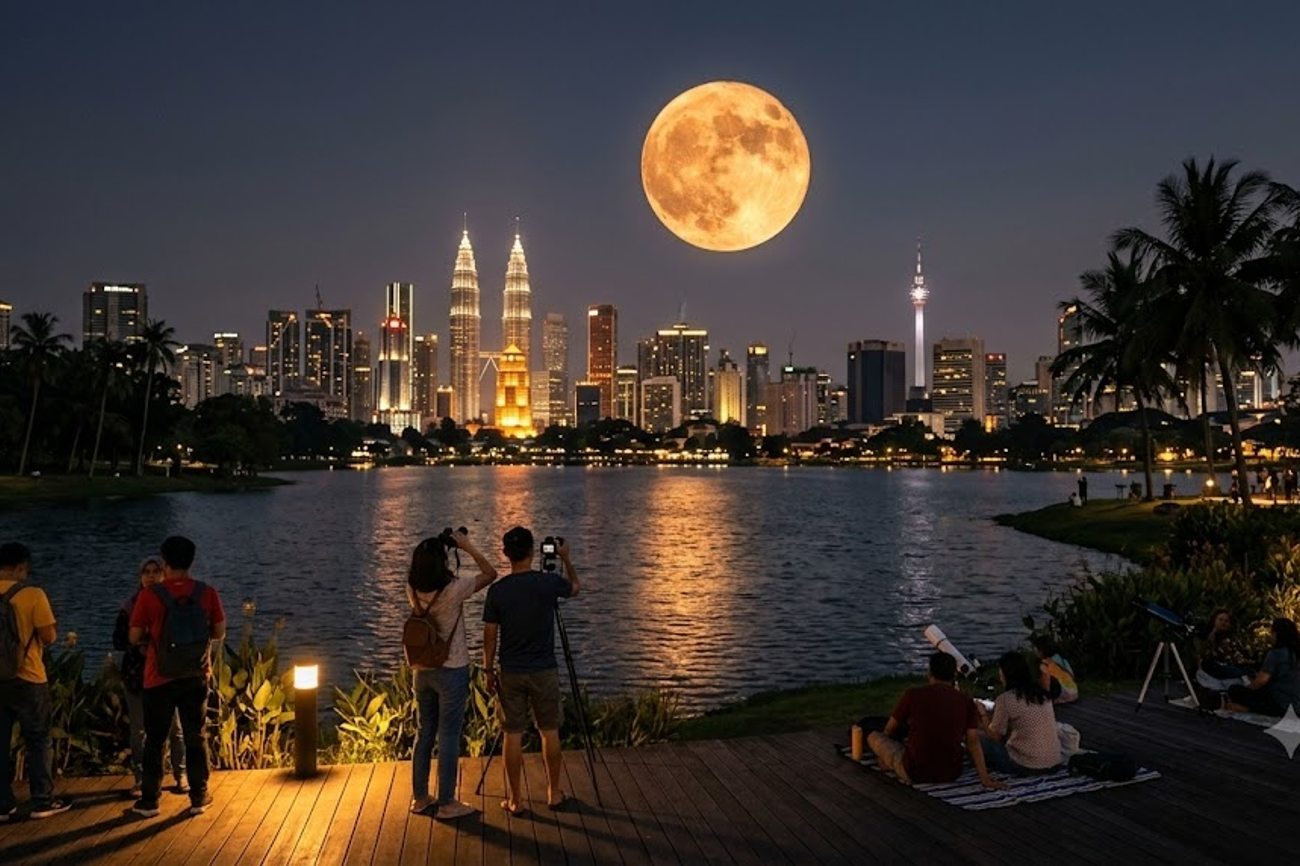
Image generated by AI
[Kuala Lumpur, September 2026] — Malaysia is preparing for a rare celestial alignment as the 2026 Harvest Moon reaches its peak on the night of September 26-27, marking one of the few years where the full moon coincides with the September equinox.
The astronomical event will reach its absolute peak in Malaysia at 12:49 AM MYT on September 27, 2026. On a global scale, the event is timed for 16:49 UTC on September 26. This specific lunar phase is characterized by its extreme brightness and prolonged visibility, which will persist across several nights, offering a window for nature and astronomy tourism across the Southeast Asian peninsula and Borneo.
The Mechanics of the Harvest Moon
The 2026 event is triggered by the moon's orbital path relative to the horizon during the equinox period. Unlike standard full moons, which typically rise approximately 50 minutes later each evening, the Harvest Moon rises only 20 to 30 minutes later on consecutive nights. This phenomenon creates a sustained period of evening illumination that historically allowed agricultural communities to extend their harvesting hours well past sunset.
While this event is not classified as a supermoon or a lunar eclipse, its significance lies in its timing and luminosity. The moon will appear nearly full and exceptionally bright from September 25 through September 27, 2026. This extended window reduces the pressure on observers to capture a single "peak" moment, allowing for flexible scheduling based on weather patterns and geographic accessibility.
Markets and Regions Impacted
The surge in "celestial tourism" is expected to drive traffic toward remote and rural sectors of Malaysia, shifting focus away from traditional urban hubs. The following regions are identified as primary hubs for the event:
| Destination Type | Primary Appeal | Expected Activity |
|---|---|---|
| Highland Regions | Cooler climates and thinner atmosphere | High-altitude photography and stargazing |
| Coastal & Island Areas | Unobstructed horizons over the ocean | Beach-front moon viewing and night cruises |
| Rural Countryside | Low light pollution and agricultural vistas | Heritage tours and farm-stay experiences |
| Eco-Tourism Sites | Protected natural environments | Guided nature walks and astronomy workshops |
This shift in traveler behavior is supported by the Ministry of Tourism, Arts and Culture Malaysia, as the country seeks to diversify its offerings into experience-based and "slow travel" segments.
Practical Traveler Advisory and Strategic Insights
For passengers booking travel to Malaysia in September 2026, this event transforms a standard trip into a synchronized cultural and astronomical experience. The primary impact is the overlap with the Mid-Autumn Festival, which falls on September 25, 2026.
Travelers should expect a spike in demand for rural accommodations and eco-lodges. Those seeking the best views should avoid major metropolitan centers like Kuala Lumpur or George Town due to intense urban light pollution. Instead, bookings should be targeted toward "dark-sky" regions.
Furthermore, the event is not limited to the moon. Skywatchers using binoculars or telescopes will be able to observe the moon in close visual proximity to Saturn and Neptune. Travelers are encouraged to coordinate with local astronomy clubs or utilize equipment provided by specialized eco-resorts to maximize the planetary viewing opportunities.
Malaysia is gearing up for the 2026 Harvest Moon, a spectacular night sky event that is expected to boost celestial travel experiences in the country. According to the Malaysia Tourism Board, the event is anticipated to attract a large number of tourists, with many hotels and resorts offering special packages and promotions. To accommodate the influx of visitors, major airports such as Kuala Lumpur International Airport are expected to operate at full capacity.
The Rise of Astronomy Tourism
The 2026 Harvest Moon serves as a catalyst for the broader trend of dark-sky tourism. As urban centers become increasingly saturated with artificial light, travelers are paying a premium for "natural darkness." This trend aligns with global standards promoted by organizations like the International Astronomical Union (IAU), which emphasizes the preservation of the night sky as a shared human heritage.
Malaysia's diverse geography—ranging from the rainforests of Sabah and Sarawak to the highlands of Pahang—positions the country as a competitive destination for this niche market. By integrating the Harvest Moon with existing cultural festivals, the region is attempting to create a multi-layered tourism product that combines science, heritage, and nature.
The integration of the Mid-Autumn Festival adds a layer of cultural depth. Because the festival celebrates family gatherings and moon appreciation, the astronomical event provides a physical focal point for these traditions. This is expected to result in an increase in "community tourism," where international visitors engage with local village celebrations and traditional food experiences.
FAQ: Malaysia Harvest Moon 2026
When is the best time to view the moon in Malaysia? The moon will be visibly full and bright from September 25 to 27, 2026. The exact peak occurs at 12:49 AM MYT on September 27.
Do I need special equipment to see the Harvest Moon? No, the moon is visible to the naked eye. However, telescopes or binoculars are recommended for those wanting to see the nearby planetary alignments of Saturn and Neptune.
Where are the best locations for viewing? Avoid cities. Seek out highland regions, coastal beaches, or rural eco-tourism sites where artificial light pollution is minimal.
How does this differ from a supermoon? The 2026 Harvest Moon is a seasonal full moon closest to the equinox. It is not a supermoon, meaning it will not appear significantly larger than a standard full moon, but it will be exceptionally bright.
A rare intersection of lunar science and cultural heritage awaits in the Malaysian night sky.
Related Travel Guides
- Türkiye Aligns Bulgaria And More Countries Experiencing Tourist Arrival Declines In H1 2026 As Europe Battles New Travel Challenges
- Venice and Barcelona Move With Global Visitor Hotspots as Overtourism Strategies Redefine Tourism
- Ethiopia Expands Community-Led Wildlife Conservation and Sustainable Tourism
Disclaimer
This article is for informational and educational purposes only. It does not constitute legal, financial, or professional advice. While we strive to provide accurate and up-to-date information, travel policies, regulations, and conditions change rapidly. Always verify information with official sources before making travel decisions. Nomad Lawyer makes no representations about the accuracy, reliability, completeness, or suitability of the information provided. Readers should consult qualified professionals for advice specific to their circumstances. The views expressed in this article are those of the author and do not necessarily reflect the views of Nomad Lawyer.
Kunal K Choudhary
Co-Founder & Contributor
A passionate traveller and tech enthusiast. Kunal contributes to the vision and growth of Nomad Lawyer, bringing fresh perspectives and driving the community forward.
Learn more about our team →