
LATAM Launches First Nonstop São Paulo to Cusco Flights for 2027: Transforming Access to Machu Picchu
LATAM will launch the first nonstop São Paulo to Cusco route on March 29, 2027, opening direct air access to Machu Picchu without a Lima layover.

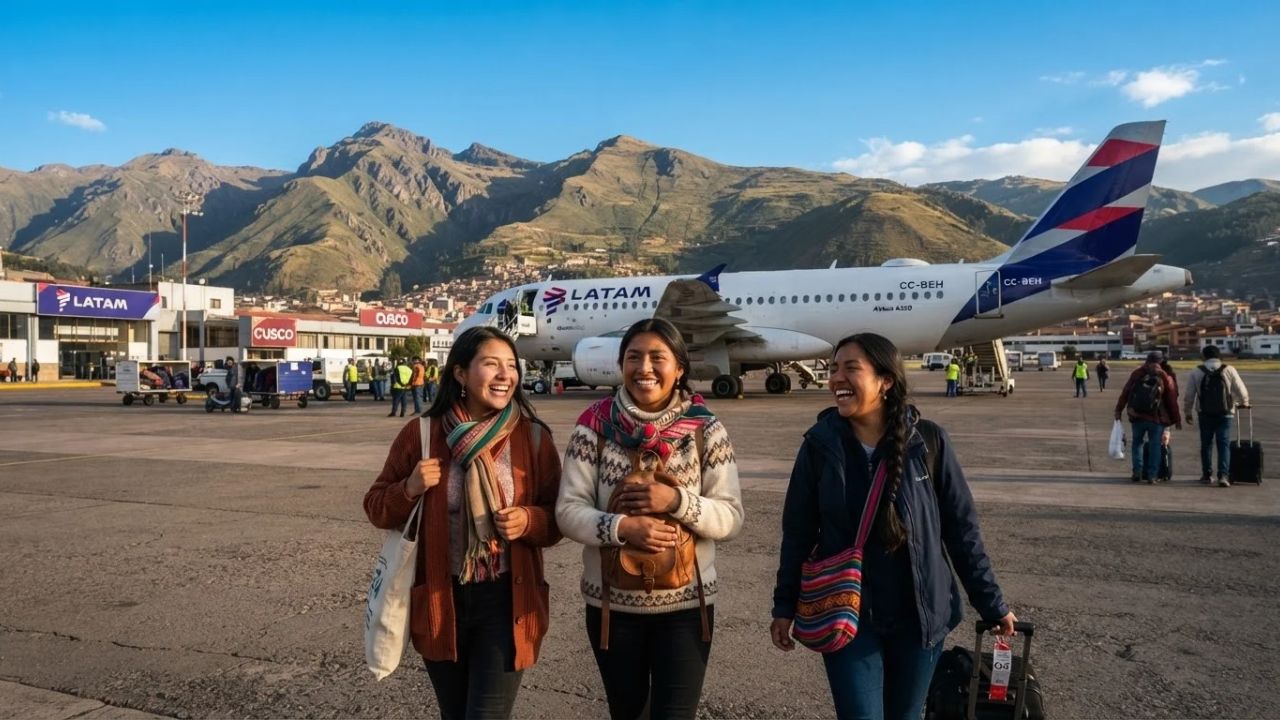
Image generated by AI
Despite Brazilian travelers generating nearly 7 percent of all international visitors to Cusco in 2025—ranking as the imperial Inca capital's third-largest global feeder market—there has never been a direct commercial flight connecting Brazil with the Sacred Valley gateway. That long-standing logistical barrier will officially dissolve on March 29, 2027, when LATAM Airlines launches the first nonstop service between São Paulo-Guarulhos (GRU) and Alejandro Velasco Astete International Airport (CUZ) in Cusco. By eliminating the compulsory transit stop at Lima's congested Jorge Chávez International Airport, the four-times-weekly service eliminates hours of transit friction for travelers heading toward the lost citadel of Machu Picchu.
The Cross-Border Aviation Breakthrough: Bypassing the Lima Bottleneck
For decades, international journeys from South America's largest economic hub to the Andean highlands adhered to an inflexible hub-and-spoke blueprint. Travelers departing Brazil endured early-morning transfers in Lima, where clearing international customs, retrieving checked baggage, re-checking into domestic terminals, and facing coastal fog delays frequently stretched a regional trip into a grueling fourteen-hour ordeal. While Alejandro Velasco Astete International Airport has maintained limited non-Peruvian links to regional capitals like Santiago de Chile, direct integration with Brazil's premier international transfer hub remained a glaring gap in South American aviation.
Operating on Airbus A320 aircraft configured with Economy and Premium Economy cabins, the new route establishes four weekly frequencies in each direction. Departures originating from Cusco are scheduled on Mondays, Tuesdays, Thursdays, and Saturdays, while return flights from São Paulo-Guarulhos take off on Tuesdays, Wednesdays, Fridays, and Sundays. Airline industry projections indicate the route will stimulate travel for approximately 48,000 annual passengers, while potentially channeling up to 70,000 additional Brazilian visitors into the Cusco region each year.
The route's fare hierarchy follows contemporary airline merchandising standards. Passengers selecting Economy Light receive seat transportation with a personal item but must pay extra for checked luggage, whereas Economy Standard and Full tiers include a standard checked bag weighing up to 23 kilograms. This baggage distinction is particularly relevant for Andean trekkers transporting high-altitude camping equipment, trekking poles, and thermal layers that exceed cabin baggage allowances.
What Makes the São Paulo to Cusco Direct Route Different
From an experiential standpoint, flying straight from sea-level São Paulo into Cusco at 3,400 meters (11,152 feet) elevation represents a profound shift in how travelers encounter the Andes. Arriving directly into the high mountain bowl of Alejandro Velasco Astete Airport places visitors immediately face-to-face with the thin air and jagged peaks of the Vilcanota mountain range.
This point-to-point connection bypasses the humid coastal atmosphere of Lima, dropping international travelers directly into the heart of Quechua territory. The immediate descent into Cusco reveals stepped agricultural terraces and weathered clay-tile roofs before wheels touch the runway. Within thirty minutes of exiting the terminal, travelers can stand before the megalithic interlocking stones of Sacsayhuamán or wander the cobblestone corridors of San Blas, where master woodcarvers and weavers practice crafts passed down across centuries.
Moreover, establishing direct service between South America's primary transatlantic transfer hub and Peru's premier archaeological center fundamentally redistributes regional tourism revenue. Rather than concentrating hotel nights and dining spending inside Lima's coastal enclaves of Miraflores and Barranco, tourist expenditure flows straight into highland communities, supporting family-operated boutique hotels, local licensed mountain guides, Quechua-led weaving cooperatives, and regional rail lines running down the Urubamba River.
Visitor Insider Tips
Direct arrivals into high-altitude mountain basins require careful physical preparation and tactical itinerary design:
- Drop immediately to the Sacred Valley for your first forty-eight hours: Landing at 3,400 meters without prior acclimation triggers acute mountain sickness (soroche) for many travelers. Arrange private ground transportation directly from Cusco airport down to Urubamba (2,870 meters) or Ollantaytambo (2,792 meters). Sleeping at these lower elevations allows your body to produce red blood cells comfortably before returning to explore high-altitude Cusco.
- Respect local altitude acclimation rituals: Avoid heavy meals, red meat, and alcohol during your initial twenty-four hours in the highlands. Sip traditional mate de coca (coca leaf infusion) or muña (Andean mint tea) offered in hotel lobbies, stay thoroughly hydrated with electrolyte solutions, and request an oxygen-enriched hotel room if you are prone to altitude headaches.
- Synchronize your flight schedule with train bookings to Aguas Calientes: Because flights from São Paulo operate on specific days, coordinate your airline tickets simultaneously with PeruRail or Inca Rail departures from Ollantaytambo station. Train allocations toward Machu Picchu fill weeks ahead during peak holiday seasons.
- Explore authentic Andean gastronomy beyond tourist corridors: While in Cusco, bypass standard pizza parlors around the Plaza de Armas. Head toward the San Pedro Market for freshly squeezed passion fruit juice, or reserve a table at indigenous-led dining spots specializing in slow-cooked pachamanca, alpaca tenderloin medallions, and heirloom native potatoes seasoned with huacatay (black mint).
- Double-check checked luggage weight thresholds: If booking Economy Standard or Full tiers, verify that your duffel or hard-shell suitcase does not exceed the 23-kilogram ceiling. Excess baggage fees at mountain airports are steep, and local rail operators to Machu Picchu enforce their own strict 5-kilogram limit for carry-on bags aboard trains.
Cultural and Environmental Context
The influx of up to 70,000 additional annual visitors highlights ongoing heritage protection challenges managed by the UNESCO World Heritage Centre and Peru's conservation authority, SERNANP. The Historic Sanctuary of Machu Picchu operates under dynamic carrying-capacity caps, requiring visitors to select designated circuit tickets and hire licensed local guides to prevent trail degradation and stone erosion.
Direct air access amplifies the necessity for regenerative tourism practices throughout the Sacred Valley. Traditional Quechua farming communities in places like Chinchero and the Maras salt mines have faced rapid commercialization. In response, local agrarian cooperatives have established community-based agro-tourism programs, allowing international travelers to participate in traditional potato harvests and natural alpaca wool dyeing workshops that funnel tourism revenue directly into village education and agricultural preservation.
Tourism authorities spearheaded by PROMPERÚ emphasize that expanding direct international aviation links must coincide with decentralization. By encouraging travelers arriving on LATAM's São Paulo flights to explore alternative regional attractions—such as the circular terraces of Moray, the pink salt ponds of Maras, the high-altitude route of Rainbow Mountain (Vinicunca), and the lesser-visited ruins of Waqrapukara—regional officials aim to spread visitor footprints and protect fragile archaeological monuments from overcrowding.
FAQ: Flying Nonstop to Cusco and Visiting Machu Picchu in 2027
When do LATAM's nonstop São Paulo to Cusco flights begin?
Commercial operations commence on March 29, 2027, operating four weekly frequencies with departures from Cusco on Mondays, Tuesdays, Thursdays, and Saturdays, and returns from São Paulo on Tuesdays, Wednesdays, Fridays, and Sundays.
Do international travelers need a visa to visit Peru?
Citizens of Brazil, the United States, Canada, the European Union, and the United Kingdom do not require a tourist visa for stays up to 90 days, requiring only a passport valid for at least six months upon entry.
How do travelers reach Machu Picchu after landing in Cusco?
From Cusco, travelers take private transfers or buses to Ollantaytambo station (roughly 90 minutes), followed by a scenic 90-minute train ride to Aguas Calientes, where shuttle buses ascend the mountain switchbacks to the sanctuary gates.
Does the direct flight increase the risk of altitude sickness?
Landing directly at 3,400 meters increases initial altitude sensitivity compared to gradual overland ascents. Travelers should rest immediately, avoid strenuous physical activity on day one, and consider descending into the Sacred Valley for their initial nights.
Stepping off a direct flight into the thin mountain air of Cusco marks the beginning of an ancient journey that no modern shortcut can diminish.
Related Travel Guides
LATAM, Copa, and Avianca Slash Autumn Fares as Latin American Aviation Sector Unveils 2026 Deals
US Updates Peru Travel Advisory 2026: Safety Shifts for Machu Picchu and Amazon Regions
10 Essential Altitude Acclimation and Travel Tips for Cusco, According To Reddit
Disclaimer
This article is for informational and educational purposes only. It does not constitute legal, financial, or professional advice. While we strive to provide accurate and up-to-date information, travel policies, regulations, and conditions change rapidly. Always verify information with official sources before making travel decisions. Nomad Lawyer makes no representations about the accuracy, reliability, completeness, or suitability of the information provided. Readers should consult qualified professionals for advice specific to their circumstances. The views expressed in this article are those of the author and do not necessarily reflect the views of Nomad Lawyer.
Preeti Gunjan
Contributor & Community Manager
A passionate traveller and community builder. Preeti helps grow the Nomad Lawyer community, fostering engagement and bringing the reader experience to life.
Learn more about our team →