
Cathay Pacific Realigns Asia Pacific Leadership: Expanding High-Yield Corridors Across Southeast Asia and Oceania
Cathay Pacific names Aldric Chau and Richard Jones to head Southeast Asia and Oceania, strengthening passenger connectivity and air cargo trade through Hong Kong.

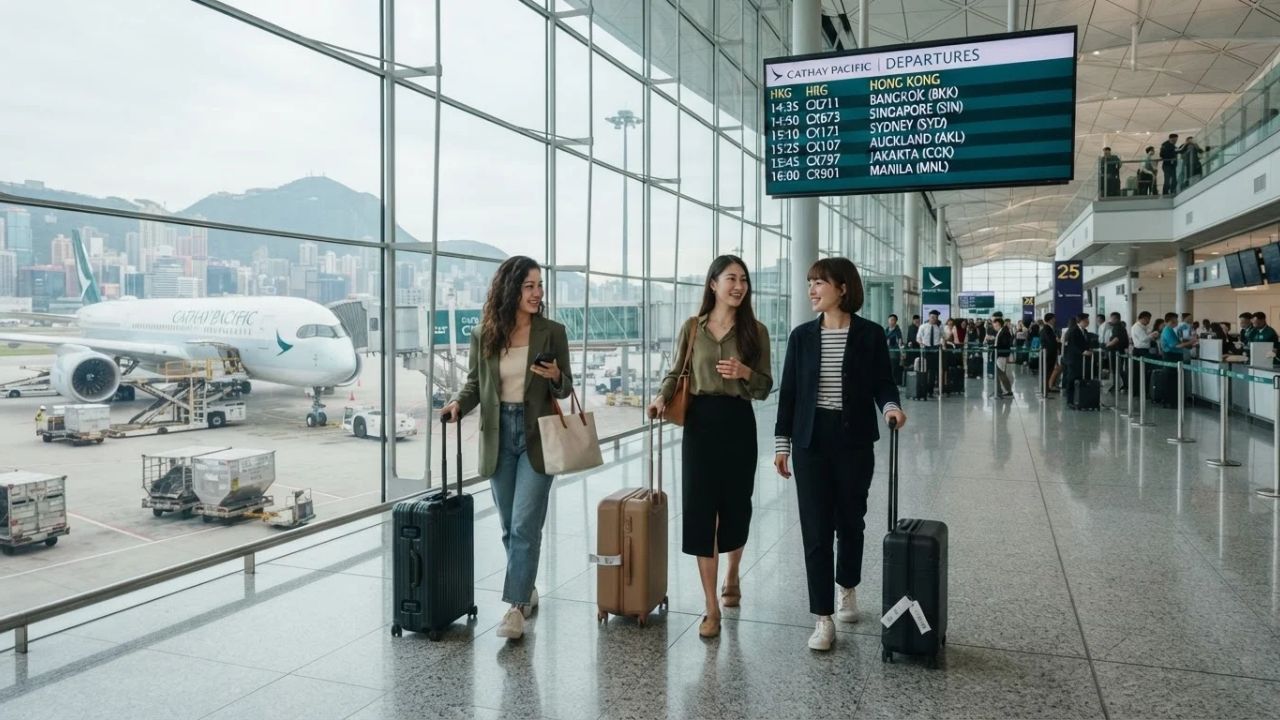
Image generated by AI
While Hong Kong International Airport processes tens of millions of travelers each year, the true operational genius of its home carrier lies in synchronizing long-haul flights from London, Sydney, and New York with regional transfers across Southeast Asia within ninety-minute tarmac windows. That cross-continental transit machine gained renewed strategic focus on September 16, 2026, when Hong Kong aviation stalwart Cathay Pacific announced senior leadership appointments to drive growth across its fastest-evolving regional corridors. The airline appointed Aldric Chau as regional general manager for Southeast Asia and Oceania, while Richard Jones returned to Australia and New Zealand as area head for Oceania. The dual appointments anchor the carrier's broader ambition to integrate digital innovation, passenger comfort, and high-value cargo flows connecting the South China Sea with the South Pacific.
The Southern Cross and Malacca Straits: Anchoring Cathay’s Regional Pivot
The strategic reorganization announced on September 16 unites two seasoned executives with deep institutional knowledge of the carrier's passenger and logistics operations. Aldric Chau steps into the regional general manager role for Southeast Asia and Oceania following an 18-year career across Cathay Pacific's commercial and operational divisions. Most recently serving as general manager digital, Chau spearheaded enterprise-wide initiatives spanning artificial intelligence, machine learning, data science, and customer experience innovation. His prior leadership encompasses front-line commercial assignments, service delivery portfolios, and a term as country manager for Sri Lanka and the Maldives.
Stationed in Singapore, Chau takes command of commercial, operational, and support functions across 20 ports covering nine countries and territories. His mandate focuses on accelerating passenger connectivity across Southeast Asia's rapidly expanding economies while refining digital interactions for corporate and leisure flyers navigating multi-city Asian journeys.
Complementing this Southeast Asian focus, Richard Jones returns to Sydney to lead the Oceania travel network after more than three decades with the airline. Jones brings a wealth of international experience, having previously guided Cathay’s commercial strategy across the United States, Canada, and Latin America. His extensive career also includes serving as vice president for customer travel and lifestyle in the Southwest Pacific and sales and marketing manager for Australia.
In his new role, Jones oversees passenger operations while prioritizing Cathay Cargo services across Australia and New Zealand. High-value transpacific trade relies heavily on the belly space of widebody passenger aircraft, and Jones emphasized the carrier's ongoing commitment to transporting Australian beef, dairy, and Tasmanian stone fruit, alongside New Zealand salmon and wine, to culinary capitals across Asia and Europe. These vital transport links highlighted by Tourism Australia underscore how air passenger routes directly sustain regional agricultural trade.
What Makes the Hong Kong Transit Stopover Different: Between Harbour Dhows and Mountain Ridges
Many international travelers view Hong Kong simply as an efficient transit point between Western nations and the Pacific rim, but seasoned explorers know that Chek Lap Kok offers one of the most culturally immersive stopover opportunities in global aviation. Arriving at the airport and boarding the high-speed Airport Express train whisks passengers into the heart of Central in just 24 minutes, bypassing expressway congestion entirely.
Unlike the flat, sprawling urban expanses of Singapore or Bangkok, Hong Kong is defined by extreme verticality and rugged topography. Towering concrete and glass spires crowd against steep, jungle-covered granite slopes, creating a unique urban ecosystem where primeval nature stands minutes from high finance. Travelers taking an autumn layover can trade climate-controlled departure gates for the misty trails of Victoria Peak or hike the Dragon’s Back ridge, watching wild black kites ride thermal breezes above the South China Sea.
Down at water level, the city's maritime soul endures. Crossing Victoria Harbour aboard the historic green-and-white wooden Star Ferry costs mere pocket change and delivers unrivaled views of the iconic waterfront. In the morning, tea houses fill with steam and chatter as locals partake in yum cha, the centuries-old Cantonese tradition of drinking fragrant tea and eating bamboo-steamed dim sum. Stopover programs supported by Discover Hong Kong demonstrate how travelers can turn a six-hour connection into an authentic cultural encounter, sampling roasted goose in Wan Chai or wandering through the incense-filled courtyards of the historic Man Mo Temple.
Visitor Insider Tips: Mastering Hong Kong Transit and Urban Rhythms
Experiencing Hong Kong’s transit network and street life with insider fluency requires practical savvy, local transit hacks, and cultural awareness:
Airport Express and In-Town Check-in: If you have an extended daytime layover, take advantage of the In-Town Check-in service available at Hong Kong Station in Central. Eligible Cathay Pacific passengers can drop their checked luggage and collect boarding passes in the morning, leaving them completely unencumbered to explore the city until ninety minutes before departure.
The Essential Octopus Card: Skip buying single-journey transit tickets. Download the digital Tourist Octopus card to your smartphone wallet before landing, or purchase an on-loan card at the airport MTR customer service counter. The contactless smart card pays for everything: Airport Express trains, the MTR subway, historic double-decker "ding ding" street trams, harbour ferries, convenience stores, and neighborhood bakeries.
Tea House and Dining Etiquette: When enjoying dim sum at heritage institutions like Lin Heung Lau or Luk Yu Tea House, master the traditional dining gestures. When a companion or server refills your porcelain cup with hot tea, tap your index and middle fingertips lightly on the tabletop twice. This subtle gesture, known as finger kowtow, signifies silent gratitude without interrupting the conversation. When your teapot needs hot water, leave the porcelain lid turned upside down or resting ajar on the pot's rim; waitstaff will replenish it without you needing to flag them down.
Street Food Exploration Beyond Tourist Corridors: Resist the urge to dine exclusively around international hotel malls. Ride the Tsuen Wan MTR line across the harbor to Sham Shui Po, where historic open-air street markets serve freshly steamed rice noodle rolls (cheong fun) drizzled with sweet soy, sesame paste, and chili sauce. In Kowloon City, seek out Chiu Chow bakeries for warm egg tarts featuring flaky puff pastry and velvety egg custard.
Strategic Layover Accommodation: If your layover is under 12 hours, book a day room at airport hotels on Lantau Island or take a five-minute taxi to the coastal village of Tung Chung. For 48-hour stopovers, base yourself in Sheung Wan or Wan Chai on Hong Kong Island, where quiet boutique hotels are tucked behind traditional dried seafood shops, antique galleries, and contemporary espresso bars.
Cultural and Environmental Context: Sustaining a Maritime Global Crossroads
Managing an intercontinental aviation network that bridges Asia and Oceania requires confronting critical environmental and cultural realities. Hong Kong International Airport sits on extensive reclaimed land off Lantau Island, bordering sensitive marine habitats that support the endangered Indo-Pacific humpback dolphin, known locally as the Chinese white dolphin. Cathay Pacific's regional growth strategy incorporates stringent environmental targets, including accelerated fleet modernization using fuel-efficient Airbus A350 aircraft and commitments to scale up Sustainable Aviation Fuel (SAF) usage across Asian departures.
At the same time, regional air connectivity plays a vital role in sustaining local cultural traditions. Hong Kong's cultural identity is deeply tied to its maritime history, visible in coastal settlements like Tai O, where stilt houses constructed over tidal mudflats preserve the historic way of life of the Tanka fishing community. Similarly, cultural connections between Hong Kong and regional centers across Southeast Asia foster cross-cultural exchanges that support intangible heritage, from traditional Cantonese opera to historic tea processing techniques recognized by the UNESCO World Heritage Centre.
By championing sustainable tourism practices and encouraging international transit flyers to venture beyond airport retail corridors, the airline’s expanded network helps channel international spending directly into family-run noodle shops, traditional craftsmen, and neighborhood heritage conservation groups that keep Hong Kong's historic fabric vibrant.
FAQ: Navigating Hong Kong and Cathay Pacific Travel in 2026
Who are Cathay Pacific's newly appointed regional leaders in 2026? Cathay Pacific named 18-year veteran Aldric Chau as regional general manager for Southeast Asia and Oceania based in Singapore, while 30-year company veteran Richard Jones returned to Sydney as area head for Oceania.
How fast is the transit journey from Hong Kong Airport to the city center? The Airport Express train delivers passengers from Chek Lap Kok directly to Hong Kong Station in Central in just 24 minutes, with high-speed trains departing every ten minutes throughout the day.
Do international transit passengers need a visa to explore Hong Kong? Travelers holding passports from over 170 jurisdictions, including the United States, Canada, Australia, the United Kingdom, and the European Union, can enter Hong Kong visa-free for stays ranging between 14 and 90 days.
What role does Cathay Cargo play across the Oceania network? Cathay Cargo utilizes widebody passenger aircraft belly space and dedicated freighters to transport fresh Australian and New Zealand produce, including dairy, beef, seafood, and seasonal fruit, directly to Asian and European consumer markets.
In a metropolis sculpted where jungle ridges plunge into saltwater, navigating Cathay's global network turns any stopover into a masterclass in modern discovery.
Related Travel Guides
Disclaimer
This article is for informational and educational purposes only. It does not constitute legal, financial, or professional advice. While we strive to provide accurate and up-to-date information, travel policies, regulations, and conditions change rapidly. Always verify information with official sources before making travel decisions. Nomad Lawyer makes no representations about the accuracy, reliability, completeness, or suitability of the information provided. Readers should consult qualified professionals for advice specific to their circumstances. The views expressed in this article are those of the author and do not necessarily reflect the views of Nomad Lawyer.
Naina Thakur
Contributor & Travel Specialist
Travel enthusiast and legal writer covering visa regulations, responsible tourism, and cultural journeys across global destinations.
Learn more about our team →