
AirAsia Restores Direct Sabah-Sarawak Flights: Reconnecting Kota Kinabalu With Bintulu and Sibu This November
AirAsia relaunches direct flights linking Kota Kinabalu with Bintulu and Sibu from November 2026, slashing travel times across East Malaysia on Airbus A320s.

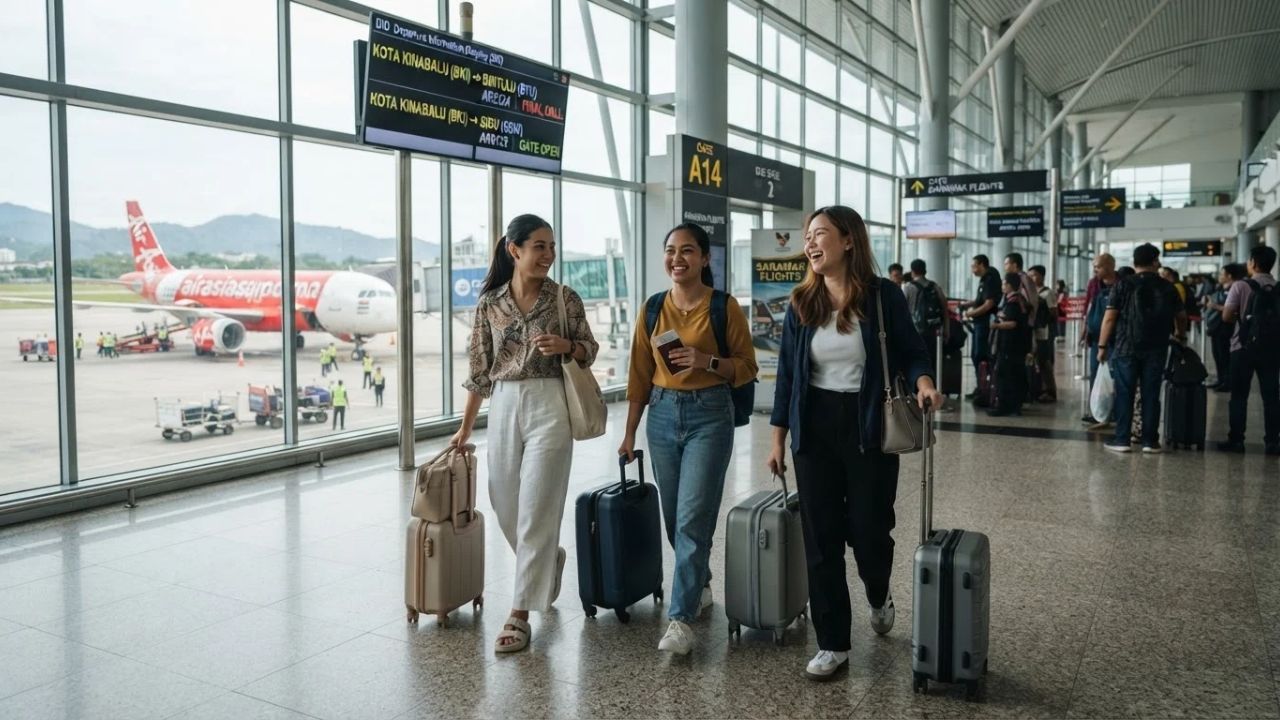
Image generated by AI
Despite sharing the third-largest island on Earth, travelers journeying between the Malaysian states of Sabah and Sarawak have long had to endure circuitous transit layovers in Peninsular Malaysia or bone-jarring fourteen-hour overland marathons across unpaved logging roads. That regional isolation recedes on November 1 and 2, 2026, when budget carrier AirAsia officially re-establishes direct air bridges connecting Sabah’s coastal capital of Kota Kinabalu with the central Sarawak hubs of Bintulu and Sibu aboard Airbus A320 aircraft. Revealed on September 16, 2026, following bilateral discussions between the airline and Malaysia’s Tourism, Arts and Culture Minister Datuk Seri Tiong King Sing, the renewed network delivers three weekly flights to Bintulu and four weekly flights to Sibu. With seats available for purchase since September 2, the reinstatement restores vital domestic mobility across East Malaysia, slashing transit times and unlocking seamless multi-state Borneo expeditions.
Reconnecting the Borneo Corridor: Schedules, Capacity, and Ministerial Mandates
The restoration of these two crucial flight corridors directly addresses a chronic connectivity bottleneck across Malaysian Borneo. Service between Kota Kinabalu and Bintulu returns to operation on November 1, 2026, providing three scheduled flights per week. The companion route linking Kota Kinabalu with Sibu restarts on November 2, 2026, offering four weekly frequencies. Both services will be operated with standard 180-seat Airbus A320 aircraft, providing consistent passenger capacity and dependable cargo holds for regional traders and travelers moving between the two states.
The operational restart follows high-level policy discussions led by Tourism, Arts and Culture Minister Datuk Seri Tiong King Sing, who emphasized that robust air connectivity across Sabah and Sarawak is essential for economic cohesion, regional tourism distribution, and family reunification. Crucially, the minister urged AirAsia to ensure operational stability, stressing that frequent schedule revisions or last-minute flight cancellations severely harm traveler confidence and disrupt commerce. Minister Tiong also pressed the carrier to maintain reasonable and accessible ticket pricing, ensuring that expanded flight frequencies deliver genuine economic relief to local communities and small business operators rather than remaining an expensive luxury.
For independent travelers and nature enthusiasts, the renewed routes eliminate the friction of regional transfers. Previously, visitors hoping to combine climbing Mount Kinabalu in Sabah with riverboat journeys along Sarawak’s Rajang River had to backtrack through Kuala Lumpur or take costly charter flights. Restoring these direct links allows travelers to explore the varied geographical zones of northern and central Borneo within a single itinerary.
What Makes Central Sarawak and Sabah Different: Beyond the Resort Brochures
While glossy tourist brochures present East Malaysia as a uniform tropical jungle, Sabah and Sarawak possess strikingly different cultural identities, colonial histories, and ecological settings. Stepping off the plane in Kota Kinabalu reveals a modern coastal metropolis backdropped by the granite peaks of Mount Kinabalu and the coral atolls of Tunku Abdul Rahman Marine Park. The cultural fabric here is defined by indigenous Kadazan-Dusun and Bajau maritime traditions, lively waterfront markets, and fiery orange sunsets over Tanjung Aru beach.
In stark contrast, Sibu sits deep in central Sarawak along the broad, muddy coils of the Batang Rajang, Malaysia’s longest river. Founded in 1901 by visionary scholar Wong Nai Siong and Methodist settlers from China's Fujian province, Sibu is celebrated for its distinctive Foochow heritage, clan association halls, and rich culinary traditions. It serves as the historic departure port for express longboats heading into the interior river outposts of Kapit and Belaga, where traditional Iban and Orang Ulu longhouses line riverbanks shrouded in rainforest canopy.
To the northeast, Bintulu balances dual identities. Known nationally as a premier center for liquefied natural gas and heavy industry, Bintulu also serves as the gateway to the untamed wilderness of Similajau National Park. Here, coastal rainforest meets the South China Sea in stretches of secluded golden sand beaches where saltwater crocodiles patrol river estuaries. Official promotional campaigns from both the Sarawak Tourism Board and the Sabah Tourism Board highlight how linking these distinct cities allows travelers to transition from coastal coral reefs to ancient river settlements in less than an hour.
Visitor Insider Tips: Navigating East Malaysia Like a Veteran
Exploring Sabah and Sarawak with local confidence requires practical street knowledge, an understanding of regional transit logistics, and cultural awareness:
The Autonomous Immigration Reality: Although Sabah and Sarawak belong to the Malaysian federation, both states maintain autonomous immigration control established under the 1963 Malaysia Agreement. When boarding flights between Kota Kinabalu and Bintulu or Sibu, you must pass through immigration checkpoints and obtain separate entry stamps. Always keep your passport accessible in your daypack, and ensure it has ample blank pages for state stamps.
Sibu Culinary Mornings: Sibu is legendary throughout Borneo for its street food. Wake up early and head to the multi-story Sibu Central Market to devour a steaming bowl of kampua mee—fresh egg noodles tossed in lard or shallot oil, soy sauce, and crowned with tender slices of roast pork and scallions. Pair your noodles with fresh kompia, traditional wood-fired Foochow baked sesame rolls stuffed with savory minced meat, often referred to locally as the "Foochow bagel."
Similajau Trekking and Crocodile Awareness: When hiking the coastal trails of Similajau National Park near Bintulu, start your trek before 8:00 AM to avoid intense tropical midday heat. While the golden beaches appear inviting, observe all warning signs: estuarine crocodiles (Buaya Katak) inhabit the freshwater streams and mangrove estuaries feeding into the sea. Never swim in murky river mouths, and always carry plenty of clean drinking water and electrolyte tablets.
Kota Kinabalu Night Market Savvy: Avoid expensive air-conditioned seafood dining halls in downtown KK. Instead, head to the Filipino Night Market (Pasar Malam Filipino) along the waterfront promenade after dusk. Stroll past vendors grilling whole sea bass, giant tiger prawns, and squid over smoking coconut husks. Request your fish seasoned with homemade sambal and fresh calamansi lime juice, served alongside steamed rice and stir-fried sayur manis (Sabah sweet vegetable).
Strategic Base Locations: In Kota Kinabalu, stay around Gaya Street for immediate walking access to historic coffee shops and ferry jetties heading to offshore islands. In Sibu, book a river-facing hotel along the Rajang waterfront to watch tugboats and longboats navigate the currents under early morning mist.
Cultural and Environmental Context: Sustainable Stewardship of the Borneo Rainforest
Re-establishing direct regional flights brings essential economic opportunities to local communities, yet it also highlights the urgent need for environmental stewardship across Borneo. The island harbors some of the most ancient rainforest ecosystems on our planet, with evolutionary lineages stretching back over 130 million years. Protecting these irreplaceable canopies from logging, road fragmentation, and monoculture plantations remains a vital conservation priority.
Direct air travel helps reduce the pressure to construct invasive highway networks through sensitive primary forests, enabling sustainable ecotourism to reach remote communities without causing habitat fragmentation. Furthermore, responsible travel in East Malaysia centers on ethical engagement with indigenous communities. When visiting traditional Iban, Bidayuh, or Kadazan longhouses, observe local customs: always bring a modest host gift—such as dried fruit, biscuits, or tea—to present to the village headman (Tuai Rumah), ask for consent before taking photographs of elders, and remove footwear before stepping onto the communal bamboo veranda (ruai).
Biodiversity preservation remains paramount, as recognized by the UNESCO World Heritage Centre through its protection of Kinabalu Park in Sabah and Niah National Park in Sarawak. By channeling tourism expenditures into community-managed river cooperatives, local guiding associations, and family-run homestays, travelers ensure that economic gains directly incentivize the protection of ancient rainforests and indigenous heritage.
FAQ: Exploring Sabah and Sarawak in 2026
When do AirAsia's new East Malaysia flights commence? AirAsia resumes the Kota Kinabalu to Bintulu route on November 1, 2026, operating three weekly flights, and restarts the Kota Kinabalu to Sibu service on November 2, 2026, offering four weekly departures.
Do travelers need a passport to fly between Sabah and Sarawak? Yes. Sabah and Sarawak manage independent immigration borders. All international travelers and West Malaysian citizens must present a valid passport and obtain distinct entry stamps when flying between the two Borneo states.
What is the best time of year to explore Malaysian Borneo? The most favorable travel window extends from March through October during the dry season, providing calmer sea conditions for island excursions in Sabah and drier trails for jungle trekking in Sarawak.
What aircraft does AirAsia operate on these regional routes? AirAsia operates single-aisle Airbus A320 aircraft on both the Kota Kinabalu–Bintulu and Kota Kinabalu–Sibu routes, providing 180 seats per flight alongside dedicated baggage capacity.
Above the misty canopy of the Rajang and the reefs of the South China Sea, reconnecting Borneo's wild outposts restores the untamed rhythm of regional travel.
Related Travel Guides
Disclaimer
This article is for informational and educational purposes only. It does not constitute legal, financial, or professional advice. While we strive to provide accurate and up-to-date information, travel policies, regulations, and conditions change rapidly. Always verify information with official sources before making travel decisions. Nomad Lawyer makes no representations about the accuracy, reliability, completeness, or suitability of the information provided. Readers should consult qualified professionals for advice specific to their circumstances. The views expressed in this article are those of the author and do not necessarily reflect the views of Nomad Lawyer.
Kunal K Choudhary
Co-Founder & Contributor
A passionate traveller and tech enthusiast. Kunal contributes to the vision and growth of Nomad Lawyer, bringing fresh perspectives and driving the community forward.
Learn more about our team →