
Lassen Volcanic National Park 2026: California's Wildest Geothermal Wonderland With Active Volcano and Steaming Fumaroles
Explore Lassen Volcanic National Park, California's most underrated gem featuring an active volcano, eight hydrothermal fields, and dramatic lava landscapes that rival Yellowstone in raw geothermal power.

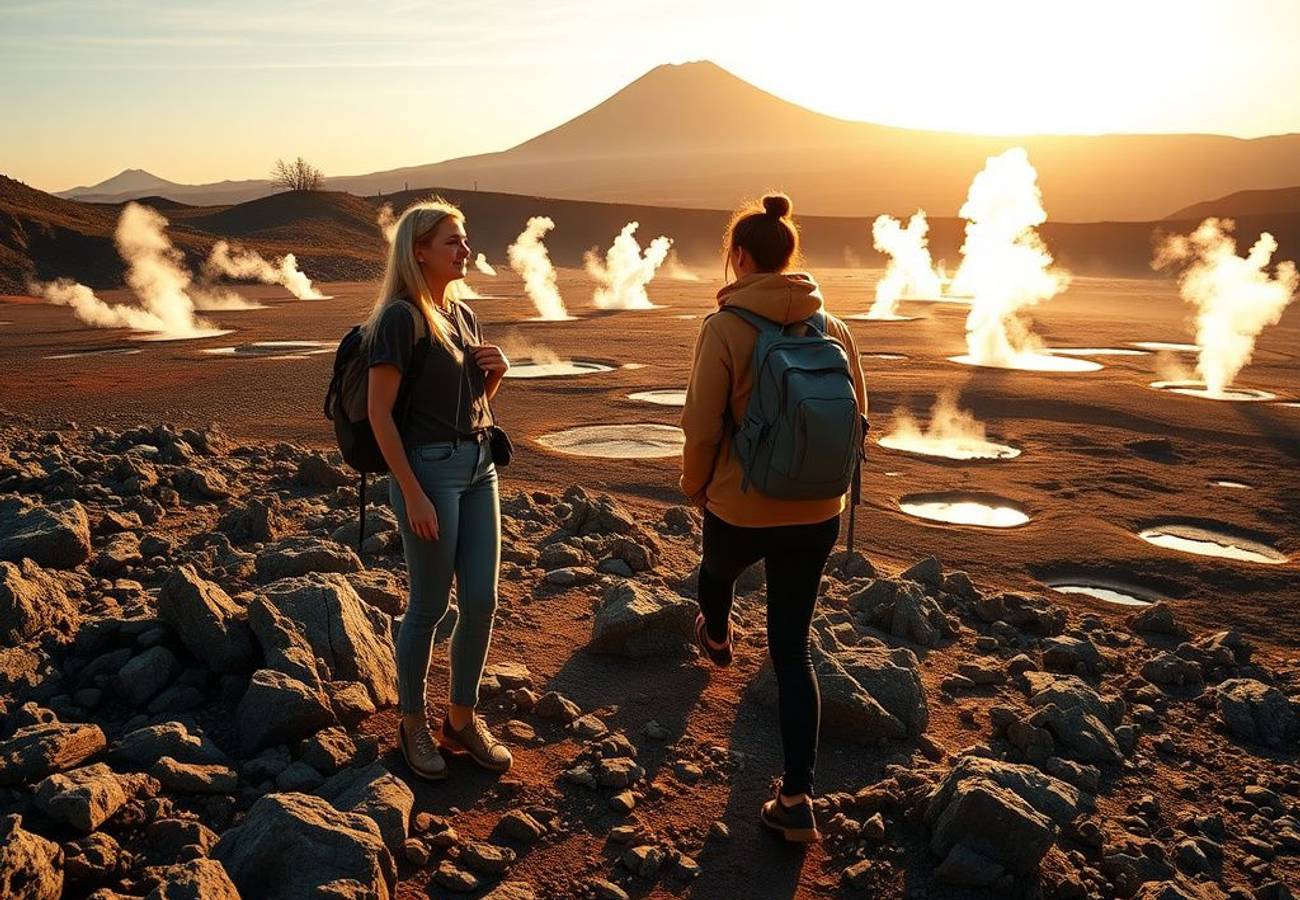
Image generated by AI
I finally made the drive north to Lassen Volcanic National Park last summer, and I can tell you with certainty: this place shouldn't be this overlooked. Nestled in the Cascade Range of Northern California, about 40 to 50 minutes from the nearest interstate, Lassen remains one of America's best-kept national park secrets. Where Yosemite crowds flock to granite cliffs and Redwood parks draw visitors seeking towering old-growth trees, Lassen offers something radically different—a landscape literally shaped by volcanic chaos.
The centerpiece is unmistakable: Lassen Peak (10,457 feet), an active stratovolcano that last erupted between 1915 and 1917. Formed around 27,000 years ago when it punched through the remains of an older volcano, Lassen still demands constant monitoring by the U.S. Geological Survey for seismic activity. What struck me most wasn't the summit itself, but the alien terrain flanking it—eight distinct hydrothermal fields where steaming fumaroles, roaring steam vents, and bubbling mud pots continue their ancient dance, powered by molten rock still heating the subsurface.
Reddit: "Lassen is what Yellowstone would look like if someone turned up the heat and stripped away the crowds." — r/travel
The Landscape That Defies Expectation
Standing in the park's interior, you grasp just how young and raw this topography truly is. The Cinder Cone (700 feet), which last erupted around 1666, created the Painted Dunes—vibrant fields of oxidized volcanic pumice that shift between rust, ochre, and burgundy as light moves across them. Walk the Fantastic Lava Beds trail, and you're literally traversing hardened lava flows that cooled mere centuries ago. Alpine meadows burst with wildflowers in late spring and early summer. Aspen groves, towering pines, and old-growth red fir forests frame the park's western edges. Yet everywhere—visible in dark rock faces, cinder fields, and thermal vents—you see the signature of fire.
The park's main artery, the Lassen Volcanic National Park Highway (a 30-mile stretch of California State Route 89), connects the Southwest Entrance to Summit Lakes, weaving past some of the most dramatic overlooks in California. The Diamond Peak Scenic Vista offers panoramic views of Lassen Peak itself. Near Lake Helen, close to the base of the park's southernmost active plug dome volcano, the vista expands like a geologist's textbook come to life. In the northwest corner, the Chaos Crags Viewpoint reveals a boulder-strewn landscape that resulted from a catastrophic rock avalanche around 1660—a terrain so jagged and alien it justifies its name.
When to Visit: Timing Is Everything
Here's the reality: Lassen Volcanic National Park Highway closes from late September or October through May, when snowfall blankets the park entirely. This seasonal closure shapes visitor patterns dramatically. Summer, with average daytime temperatures around 82°F (28°C), is prime season. Hiking conditions are optimal. Camping fills up. The park fully awakens.
But there's a hidden calendar most visitors miss. During late spring and early summer, before the peak crowds of July and August, the meadows explode with wildflowers—lupine, Indian paintbrush, and alpine lilies carpeting the ground. By mid-September, temperatures plummet, and the aspens turn gold and crimson. That shoulder season (late August through early September) offers genuine solitude combined with autumn colors.
Winter is genuinely quiet. Vehicle touring drops to almost nothing, but dedicated routes for cross-country skiing and snowshoeing open in the Southwest and Manzanita Lake areas. Backcountry ski camping exists, though wilderness permits are mandatory—and the experience is profound if you're equipped for it.
Trails That Demand Your Legs
The Lassen Peak Trail isn't deceptively long at five miles roundtrip, but don't let that fool you. Nearly 2,000 feet of elevation gain, switchbacks, and rocky scrambling transform it into a serious alpine climb. From the summit, you see nearly the entire park sprawled beneath you—and to the west, the colossal, snow-capped Mount Shasta rises on the horizon like an afterthought.
For sheer geothermal drama, nothing beats Bumpass Hell. This three-mile out-and-back hike descends to the park's largest hydrothermal area spanning 16 acres. An elevated wooden boardwalk keeps you safe while boiling springs, roaring steam vents, and multicolored mud pots rage around you. The smell—sulfurous and primal—hits you from a quarter-mile away. I've hiked Yellowstone's thermal basins; Bumpass Hell rivals them in raw intensity, with fewer tourists elbowing for position.
For something quieter, Kings Creek Falls combines forest, meadow, creek, and waterfall scenery in a single hike. Both Summit Lake and Manzanita Lake are ringed by short, easy walks with virtually no elevation gain—perfect for families or those recovering from Lassen Peak's punishment. The Cinder Cone Trail (4 miles out and back) in the remote northeast corner follows the 19th-century Nobles Emigrant Trail and culminates at a volcanic ash mound overlooking the otherworldly Painted Dunes.
Wildlife: A Park Teeming With Life
Lassen harbors more than 300 wildlife species. Black bears and mountain lions occupy the apex. Three amphibian species (Pacific tree frog, Western toad, long-toed salamander) and nine fish species inhabit the alpine lakes. Marmots and pikas scurry across rocky terrain near major scenic overlooks. Bushy-tailed Douglas squirrels own the woodlands around Summit Lake and Manzanita Lake.
The real show happens at dawn and dusk, when mule deer and other creatures emerge to feed in Kings Creek Meadow, Hat Creek Meadow, Warner Valley, and the meadows flanking Drakesbad Guest Ranch. I watched a family of mule deer at first light for nearly 20 minutes—a moment of profound stillness that justified the early alarm.
The Park's Hidden Gems
Karin O'Coy, executive director of the Lassen Park Foundation, recommends exploring Juniper Lake on the park's southeast side—a genuinely remote area with pristine lakeside camping. Butte Lake offers access to the Fantastic Lava Beds and serves as an alternate trailhead for the Cinder Cone Trail. Ask rangers at the visitor center about the park's many small, high-elevation lakes—they'll guide you toward solitude that larger lakes can't match.
The Kohm Yah-mah-nee Visitor Center near the Southwest Entrance houses maps, brochures, and basic information. The historic Loomis Museum near Manzanita Lake displays vintage photography from the 1914-1917 eruptions, plus artifacts from the local Atsugewi people. Benjamin F. Loomis, the museum's namesake, captured the eruptions on film—his images remain among the most dramatic volcanic documentation in North American history.
Exploring the Park Itself
The Volcanic Legacy Scenic Byway designation signals Lassen's regional importance. The main park road spans roughly 30 miles, offering abundant viewpoints, pullouts, and trailheads. Manzanita Lake features the Manzanita Lake Camper Store, which rents canoes, kayaks, and paddleboards—motorized vessels are prohibited, preserving the lake's wilderness character. A waterfront day-use area provides picnic tables and beach access for swimming and fishing.
Summit Lake, positioned near the road's midpoint, offers shady picnic areas and forested campgrounds. The road crosses the historic Nobles Emigrant Trail, an overland wagon route blazed by William Nobles in the 1850s and used by thousands of settlers heading westward—a tangible link to American expansion history.
Three additional park areas exist beyond the main highway. Warner Valley in the south features the historic Drakesbad Guest Ranch, a backcountry luxury outpost established in 1900. Juniper Lake in the southeast provides remote waterfront camping. Butte Lake in the northeast grants access to some of the park's most spectacular volcanic terrain.
Lassen isn't Instagram famous, but maybe that's precisely why it should be on your bucket list.
Related Travel Guides
Disclaimer
This article is for informational and educational purposes only. It does not constitute legal, financial, or professional advice. While we strive to provide accurate and up-to-date information, travel policies, regulations, and conditions change rapidly. Always verify information with official sources before making travel decisions. Nomad Lawyer makes no representations about the accuracy, reliability, completeness, or suitability of the information provided. Readers should consult qualified professionals for advice specific to their circumstances. The views expressed in this article are those of the author and do not necessarily reflect the views of Nomad Lawyer.
Kunal K Choudhary
Co-Founder & Contributor
A passionate traveller and tech enthusiast. Kunal contributes to the vision and growth of Nomad Lawyer, bringing fresh perspectives and driving the community forward.
Learn more about our team →