
Kuwait and UAE Drive Arctic Travel Surge as Gulf Travellers Seek Northern Lights and Polar Escapes for Winter 2026/27
Travellers from Kuwait, the UAE, and across the Gulf are trading warm beaches for polar wildernesses, driving a winter surge toward Finnish Lapland, Hokkaido, and European ski resorts.

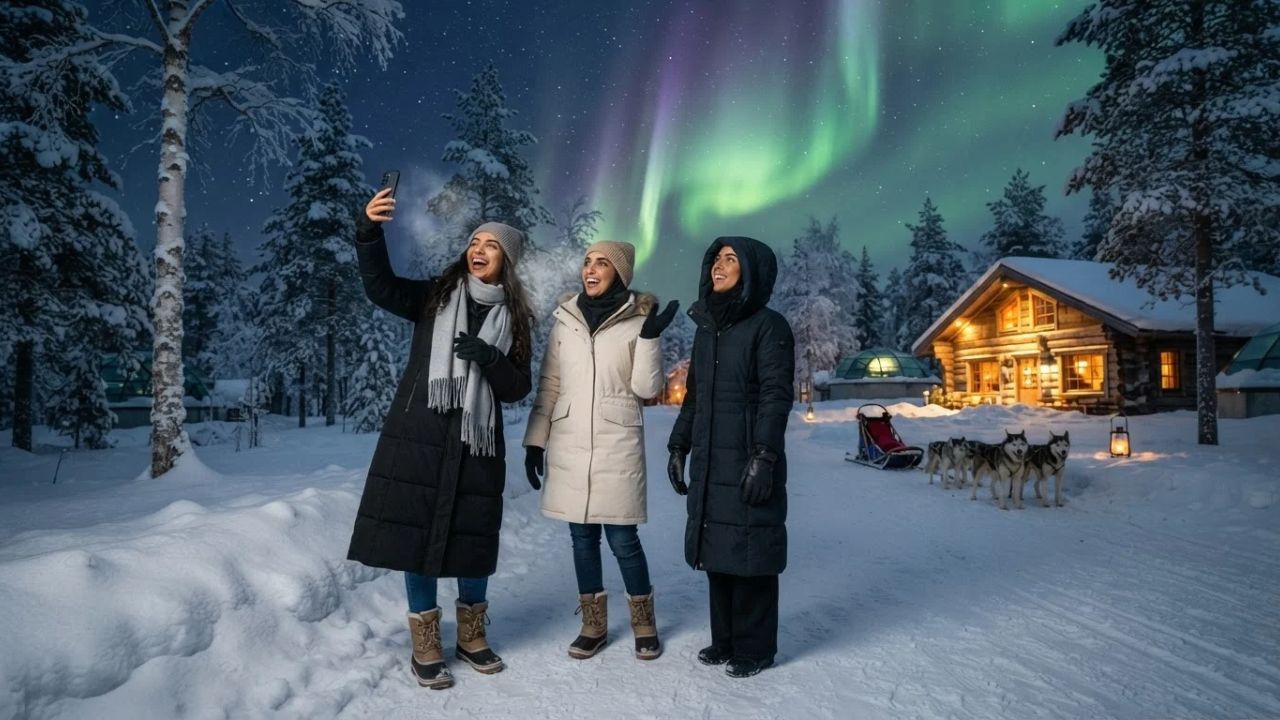
Image generated by AI
In a striking reversal of long-standing travel habits, families from Kuwait and the United Arab Emirates are abandoning tropical beach resorts to spend their winter holidays sleeping beneath the Aurora Borealis in sub-zero Finnish Lapland. Ahead of the 2026/27 winter season, outbound travel across the Arabian Gulf is experiencing a structural pivot toward climate-contrast tourism, where desert heat is traded for deep powder snow, Arctic Circle expeditions, and high-altitude ski chalets. What began as a niche curiosity for adventurous solo travelers has matured into a multi-generational phenomenon, with the UAE leading very high demand for Finland and alpine ski holidays, while Kuwait expands rapidly across European snow destinations and family winter itineraries. Supported by expanding premium interest from Saudi Arabia and Qatar alongside emerging adventure demand from Oman, this polar migration is reshaping Europe's high-latitude winter economy.
The Polar Pivot: How Climate Contrast is Redefining Gulf Outbound Travel
For decades, winter travel across Kuwait, Dubai, Abu Dhabi, Riyadh, and Doha meant boarding westbound flights toward warm equatorial coastlines or shopping districts in London and Paris. Today, travelers are deliberately searching for temperatures plunging below minus twenty degrees Celsius. The desire for rare, transformative encounters has pushed conventional beach holidays down the priority list.
European destinations, commercial airlines, and bespoke polar operators are restructuring their offerings to cater to this high-spending demographic. Travelers from the UAE and Kuwait demand seamless luxury paired with rugged Arctic exploration: private heated glass igloos that frame the night sky, enclosed snowmobile caravans guided by thermal specialists, and private ski chalets staffed with private chefs. While traditional luxury hubs in Switzerland and France continue to attract Gulf royalty and corporate leaders, Finnish Lapland, Japan's northern island of Hokkaido, and even the Caucasus mountains of Georgia have captured unprecedented market share by delivering snowy environments that contrast dramatically with the arid terrain of the Arabian Peninsula.
What Makes Arctic and Alpine Escapes Different: From Lapland's Ice to Hokkaido's Powder
The primary beneficiary of this Gulf-led travel shift is Finland. In Finnish Lapland, the regional capital of Rovaniemi serves as the official gateway to the Arctic Circle. Visitors step into a silent wilderness where old-growth pine forests bend under heavy crowns of snow. The region's appeal lies in activities completely alien to the desert: steering a team of Siberian huskies across frozen lakes, embarking on twilight reindeer sleigh rides through taiga trails, and visiting the historic Santa Claus Village in Rovaniemi. When night descends, the Aurora Borealis dances in curtains of emerald and violet across the sky, monitored by the Finnish Meteorological Institute and viewed directly from the comfort of heated glass-domed igloos.
Across the Eurasian landmass in Switzerland and France, traditional alpine luxury continues to exert timeless appeal. Destinations like Zermatt, set beneath the jagged pyramid of the Matterhorn, alongside the historic chalets of Gstaad and the frozen lake polo grounds of St. Moritz, cater to travelers who appreciate five-star mountain hospitality, scenic cogwheel rail journeys, and private ski instruction. Across the French border, high-altitude resorts such as Courchevel and Megève draw travelers with ski-in, ski-out luxury estates, Michelin-starred alpine gastronomy, and designer shopping boulevards carved into the snow banks. In Austria, picturesque winter villages preserve centuries of Tyrolean hospitality.
For travelers seeking exceptional snow conditions paired with Asian culinary traditions, Japan has emerged as an irresistible alternative. On the northern island of Hokkaido, cold Siberian winds sweep across the Sea of Japan to dump legendary "Japow"—some of the lightest, driest powder snow on earth—onto resorts like Niseko and Rusutsu. After a day traversing backcountry bowls, travelers unwind in steaming geothermal mineral springs (onsen) before dining on regional hot pots and fresh seafood, creating a cultural contrast that European resorts cannot duplicate. Meanwhile, for families seeking snowy adventures without the steep costs of the Swiss Alps, Gudauri in Georgia provides an accessible, family-friendly gateway into the high Caucasus mountains.
Visitor Insider Tips: Mastering the Sub-Zero Elements
Venturing into deep winter destinations requires meticulous preparation, especially for travelers acclimated to warm Gulf climates:
- Optimal Aurora and Snow Windows: In Finnish Lapland, the Northern Lights are visible on roughly 200 nights a year between late September and early April, with November through February delivering the deepest snow cover and darkest skies. For Japan's Hokkaido, peak powder conditions consistently fall between mid-January and late February.
- Sauna and Onsen Etiquette: In Finland, the traditional wood-fired sauna is a sacred social ritual; always shower thoroughly before entering, sit on a clean linen towel (pefletti), and take regular breaks to cool down in fresh snow. In Japanese onsen, wash completely at the seated shower stalls before entering the geothermal pools, tie long hair up, and keep towels out of the water.
- Warming Regional Flavors: Warm yourself from the inside out with authentic local dishes. In Lapland, try poronkäristys (sautéed reindeer served over creamy mashed potatoes with tart lingonberries) alongside hot cloudberry tea. In the Swiss Alps, share a communal pot of bubbling Gruyère and Emmental fondue. In Hokkaido, order steaming bowls of rich miso butter corn ramen.
- Where to Base Your Polar Stay: In Lapland, divide your journey: spend two nights in an architectural glass igloo outside Levi or Saariselkä for Aurora watching, followed by a cozy log cabin retreat near Visit Finland designated conservation areas. In Hokkaido, base yourself in Hirafu Village for direct lift access, or choose quiet Hanazono for secluded luxury chalets.
- Thermal Layering Hacks: Skip heavy cotton garments, which trap sweat and cause rapid chilling. Build your wardrobe around three essential layers: a moisture-wicking merino wool thermal base layer, an insulating fleece or down mid-layer, and a windproof, waterproof outer shell. Invest in fleece-lined mittens rather than fingered gloves, and use heated footbeds inside your snow boots.
Cultural and Environmental Context: Arctic Conservation and Indigenous Heritage
The explosion of interest in Arctic tourism brings sensitive environmental and cultural responsibilities. The Arctic is warming at nearly four times the global average, making the preservation of frozen ecosystems an urgent priority. Increased snowmobile traffic, light pollution from sprawling resort developments, and unregulated wilderness excursions threaten fragile sub-polar habitats managed by Metsähallitus Parks & Wildlife Finland.
Equally important is respecting the heritage of the indigenous Sámi people, Europe's only recognized indigenous population, whose ancestral lands span northern Finland, Sweden, Norway, and Russia's Kola Peninsula. Reindeer husbandry is not merely a tourist attraction; it represents an ancient, delicate livelihood intertwined with seasonal migrations and Arctic pasture health. Responsible travelers should verify that their tour operators carry official certifications from Sámi cultural associations, ensuring that excursions do not disrupt working reindeer herds or misrepresent sacred heritage.
By patronizing locally operated wilderness lodges, adhering strictly to "Leave No Trace" guidelines in national parks, and supporting conservation initiatives that protect nocturnal dark skies, travelers from Kuwait, the UAE, and across the globe help ensure that the quiet magic of the polar north endures.
FAQ: Planning an Arctic or Alpine Winter Escape 2026
When is the best time to see the Northern Lights in Lapland?
The optimal period extends from October through March, when long polar nights provide dark skies. Clear weather away from artificial city lighting gives you the highest probability of viewing vibrant geomagnetic activity.
How should first-time winter travelers prepare for extreme cold?
Dress in three technical layers: merino wool base layers against the skin, an insulating fleece or down jacket, and a windproof, waterproof outer parka with insulated snow boots, mittens, and thermal neck warmers.
How do I travel to Finnish Lapland from the Gulf region?
Airlines operate seasonal direct flights and convenient one-stop connections from Dubai, Doha, and Kuwait City into Helsinki, with immediate connecting flights to northern gateways like Rovaniemi, Kittilä, and Ivalo.
Are Arctic activities like husky sledding suitable for young children?
Yes. Professional wilderness operators provide specially tailored family excursions, supplying child-sized thermal snowsuits, heated sleds with reindeer hides, and gentle routes suitable for multi-generational travelers.
Under skies set ablaze by the silent Northern Lights, the icy north proves that stepping into the cold can warm the traveler's soul.
Related Travel Guides
Disclaimer
This article is for informational and educational purposes only. It does not constitute legal, financial, or professional advice. While we strive to provide accurate and up-to-date information, travel policies, regulations, and conditions change rapidly. Always verify information with official sources before making travel decisions. Nomad Lawyer makes no representations about the accuracy, reliability, completeness, or suitability of the information provided. Readers should consult qualified professionals for advice specific to their circumstances. The views expressed in this article are those of the author and do not necessarily reflect the views of Nomad Lawyer.
Raushan Kumar
Founder & Lead Developer
Full-stack developer with 11+ years of experience and a passionate traveller. Raushan built Nomad Lawyer from the ground up with a vision to create the best travel and law experience on the web.
Learn more about our team →