
Sri Lanka Pivots to Experiential Travel and the Pekoe Trail as Gulf Flight Disruptions Reshape Tourism in 2026
Following a 2.36 million visitor recovery in 2025, Sri Lanka responds to a temporary 2-3% European transit slowdown by expanding free visa access and spotlighting the 300km Pekoe Trail.

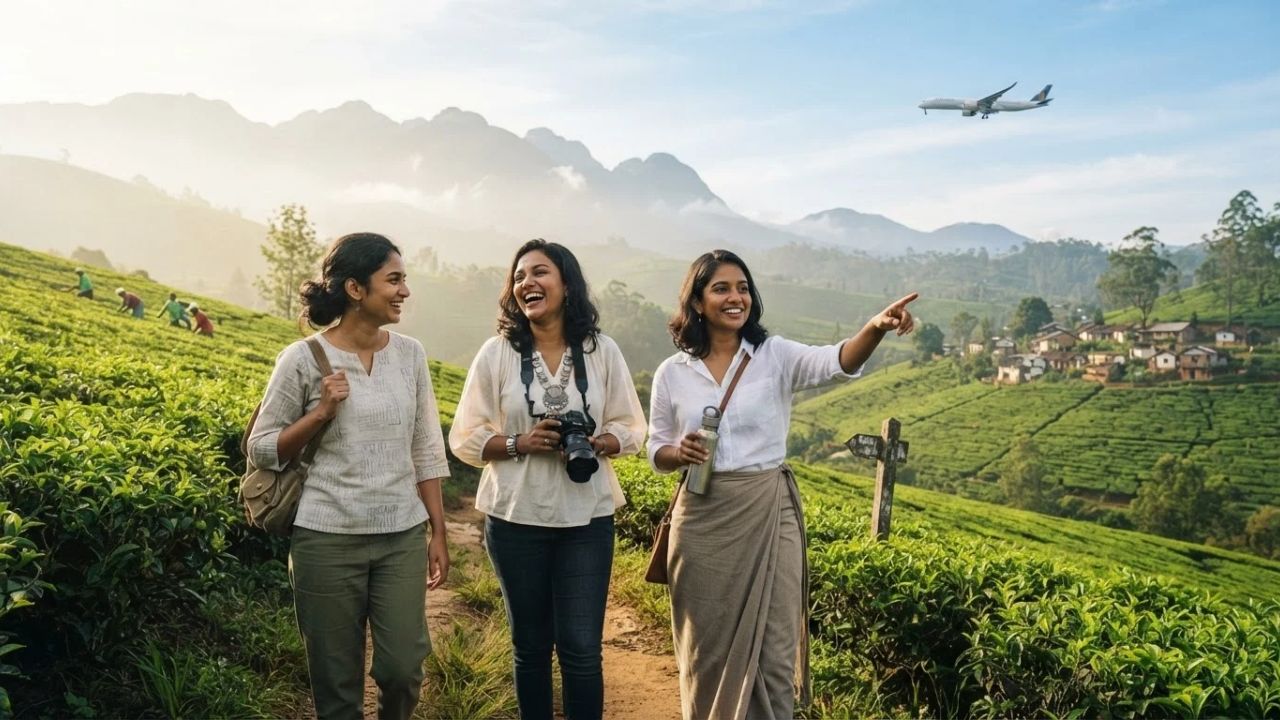
Image generated by AI
While Sri Lanka celebrated a triumphant recovery with 2.36 million international arrivals in 2025, a sudden two to three per cent dip across the first eight months of 2026 was triggered not by any domestic setback, but by airspace closures thousands of miles away across the Arabian Gulf. Because Western European holidaymakers heading to Colombo rely heavily on one-stop connections through mega-hubs in Dubai, Doha, and Abu Dhabi, regional flight detours and schedule uncertainty caused a noticeable hesitation among travelers from the United Kingdom, Germany, and France, particularly during sharp declines recorded in April. Yet far from derailing the island's tourism momentum, this external bottleneck has accelerated an ambitious transformation. By expanding free visa access measures, deepening airline partnerships with Emirates and Qatar Airways, and leaning into high-value experiential wonders like the 300-kilometre Pekoe Trail, Sri Lanka is diversifying beyond sun-and-sand resorts into one of the world's most compelling cultural walking destinations.
The Long-Haul Vulnerability: Overcoming Transit Headwinds
The modest slowdown across the first eight months of 2026 highlights the double-edged sword of global hub-and-spoke aviation. For over a decade, Gulf network carriers provided Sri Lanka with exceptional global reach, funnelling visitors from secondary European cities through modern Persian Gulf terminals straight into Bandaranaike International Airport (CMB) in Colombo. When Middle Eastern airspace restrictions lengthened travel times and pushed up airfares, European leisure bookings absorbed the friction.
To counterbalance this transit shock, the Sri Lanka Tourism Promotion Bureau activated a three-pillar strategy: market diversification, connectivity improvement, and experience development. Strong arrival growth from neighboring India—the island’s largest and most reliable source market—alongside resilient demand from Russia, China, Australia, and the broader Asia-Pacific region helped offset Western European softness. Concurrently, renewed promotional agreements with Emirates and expanded code-sharing with Qatar Airways are reassuring European voyagers, while the rollout of fee-free visa access for selected international source markets has eliminated pre-trip entry costs, making spontaneous escapes simpler and more affordable.
What Makes Sri Lanka Different: The Pekoe Trail and Highland Sanctuary
Sri Lanka’s most powerful countermeasure against shifting travel patterns is the reinvention of its interior hill country. Rather than confining travelers to crowded beach enclaves along the southern coast, the island is inviting wanderers to explore the Central Highlands of Sri Lanka, inscribed by the UNESCO World Heritage Centre.
At the center of this experiential push is The Pekoe Trail, a meticulously mapped 300-kilometre walking route divided into 22 distinct stages. Beginning just outside the sacred city of Kandy—home to the revered Temple of the Sacred Tooth Relic—the trail winds through emerald valleys, working tea estates, misty eucalyptus forests, and secluded mountain villages before culminating in the dramatic peaks surrounding Ella and Nuwara Eliya.
Walking these historic estate paths offers encounters that no tourist bus can duplicate. You traverse century-old granite hand-cut railway tunnels, cross bubbling mountain torrents on stone footbridges built by 19th-century British engineers, and witness the skilled harvesting of Ceylon tea by Tamil pluckers who carry forward multi-generational agrarian knowledge. The trail bridges the gap between luxury travelers staying in converted colonial planter bungalows and independent backpackers seeking quiet community homestays, distributing tourism income directly into remote rural economies that previously saw travelers only as distant shapes behind tour bus glass.
Visitor Insider Tips: Navigating the Hill Country and Coasts
To experience Sri Lanka with local insight and avoid common travel pitfalls, keep these practical tips in mind:
- Understand the Dual Monsoon Rhythm: Sri Lanka experiences two distinct monsoon seasons. When the southwest (Yala) monsoon brings rain to the southern and western beaches from May to September, the Central Highlands and the east coast (Arugam Bay and Trincomalee) enjoy dry, sunny conditions. When the northeast (Maha) monsoon arrives between October and January, the south and west coastlines become calm and dry.
- Temple Protocol and Sacred Etiquette: When visiting sacred Buddhist and Hindu shrines—including Kandy’s Temple of the Tooth or the ancient rock fortress of Sigiriya—dress modestly with shoulders and knees covered in white or light-colored fabrics. Remove footwear and headwear before passing through temple gates, and never take photographs with your back turned toward an image or statue of the Buddha.
- Savoring Authentic Highland Flavors: Skip westernized hotel buffets and seek out authentic Sri Lankan cuisine. Start your day with crispy rice-flour egg hoppers accompanied by spicy caramelized onion relish (seeni sambol) and freshly grated coconut pol sambol. For lunch, order a traditional rice and curry feast featuring tender slow-cooked jackfruit (polos), dhal simmered in rich coconut milk, and fragrant Ceylon cinnamon curry. In tea country, sip single-estate unblended Orange Pekoe tea brewed fresh at highland factories.
- Where to Base Yourself in the Highlands: In Kandy, stay in a heritage colonial home along the forested hills above Kandy Lake to escape downtown traffic. Along the Pekoe Trail, base yourself in Hatton or Haputale rather than tourist-heavy Ella town to experience untouched tea country panoramas and tranquil village life.
- The Iconic Blue Train Booking Hack: The scenic train ride between Kandy, Nanu Oya (Nuwara Eliya), and Ella is universally acclaimed, but reserved first-class and second-class observation tickets sell out instantly. Through the official booking portal of Sri Lanka Railways, reserve seats exactly 30 days in advance. If tickets are booked out, purchase unreserved second-class tickets at the station an hour before departure and stand in the open carriage doorway to soak in the mountain breeze.
Cultural and Environmental Context: Community Guardianship in the Hills
The expansion of the Pekoe Trail represents a conscious departure from unsustainable mass tourism. By spreading foot traffic across 22 rural stages, the trail prevents overcrowding in fragile mountain habitats while generating sustainable livelihoods for tea estate communities, local trail guides, and family-run guest houses.
Trail organizers and conservation bodies enforce strict zero-waste and Leave-No-Trace codes. Hikers are required to carry refillable water flasks, as community water refilling stations have been established along estate routes to eliminate plastic bottle litter in high-altitude watersheds that supply drinking water to millions downstream.
Furthermore, engaging with local communities requires sensitivity. The estate workers of the Central Highlands represent a unique cultural minority whose lives are tied to the demanding daily realities of tea production. Responsible hikers greet workers respectfully with a gentle "Vanakkam", avoid photographing individuals without explicit verbal consent, and purchase freshly harvested produce, spices, and handmade snacks directly from village stalls, ensuring that the visitor economy actively sustains the dignity and heritage of the hills.
FAQ: Visiting Sri Lanka and the Central Highlands 2026
What is the Pekoe Trail and how long does it take to hike?
The Pekoe Trail is a 300-kilometre, 22-stage walking trail spanning Sri Lanka's Central Highlands from Kandy to Nuwara Eliya and Ella. Hikers can complete individual day stages or tackle the entire trek across three weeks.
How has Sri Lanka simplified tourist visas in 2026?
Sri Lanka has expanded free tourist visa entry schemes for key international markets, allowing eligible travelers to apply easily online for 30-day tourist authorizations without payment before departure.
How can travelers avoid Gulf flight disruptions when visiting Sri Lanka?
Travelers can book direct connections or transit through alternative Asian hubs like Singapore, Kuala Lumpur, Bangkok, or major Indian cities (New Delhi, Mumbai, Chennai), bypassing Middle Eastern transit corridors entirely.
What is the best month to hike the Pekoe Trail?
January through April and July through September provide the clearest skies, minimal rainfall, and optimal trail footing across the central mountain passes.
From the emerald curve of a tea-cloaked mountain pass to the quiet chime of a temple bell, Sri Lanka proves that the finest journeys are measured not in miles flown, but in footsteps taken.
Related Travel Guides
Disclaimer
This article is for informational and educational purposes only. It does not constitute legal, financial, or professional advice. While we strive to provide accurate and up-to-date information, travel policies, regulations, and conditions change rapidly. Always verify information with official sources before making travel decisions. Nomad Lawyer makes no representations about the accuracy, reliability, completeness, or suitability of the information provided. Readers should consult qualified professionals for advice specific to their circumstances. The views expressed in this article are those of the author and do not necessarily reflect the views of Nomad Lawyer.
Raushan Kumar
Founder & Lead Developer
Full-stack developer with 11+ years of experience and a passionate traveller. Raushan built Nomad Lawyer from the ground up with a vision to create the best travel and law experience on the web.
Learn more about our team →