
Educational Travel in Morocco Sets a New Benchmark for Solo Women as Cultural Immersion Drives Economic Growth
Solo female and student arrivals have surged by up to 20% in Morocco, where over 60% of workshop fees empower rural artisan cooperatives from Fes to the High Atlas Mountains.

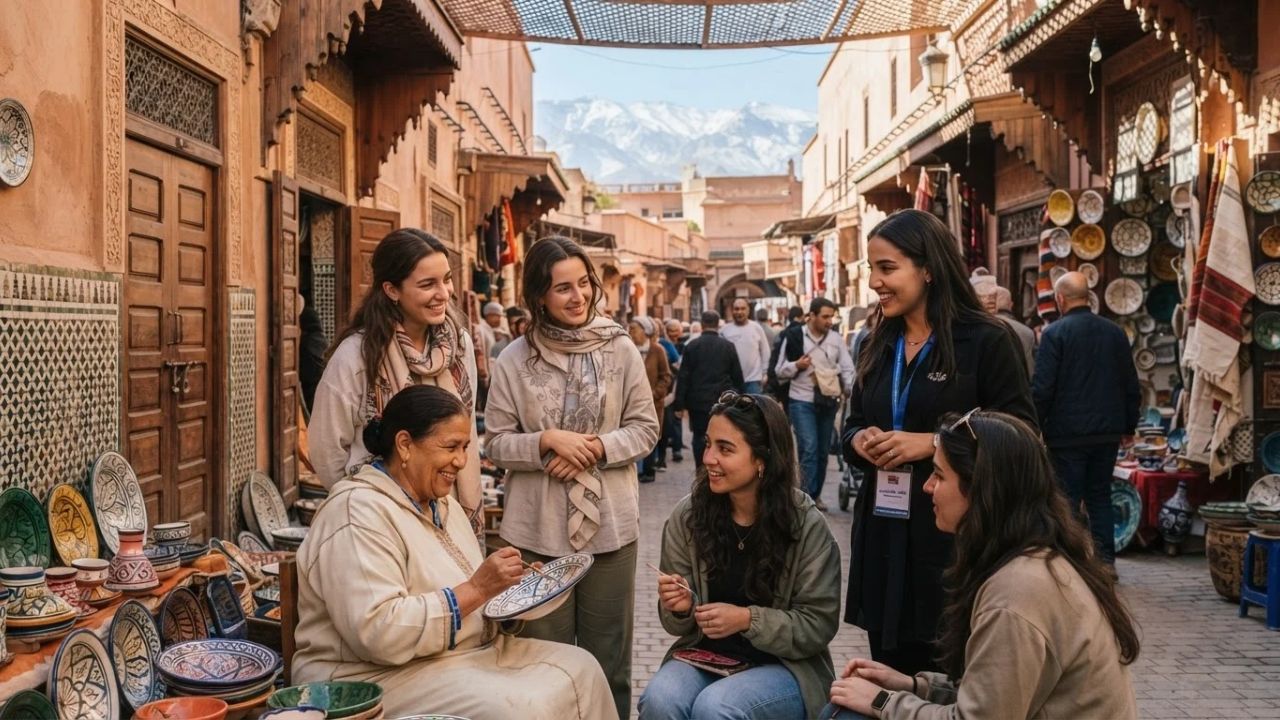
Image generated by AI
More than 60 per cent of the workshop fees paid by international students exploring the ancient alleyways of Fes and the High Atlas Mountains flow directly into female-led artisan cooperatives, establishing a powerful social contract between foreign visitors and rural craftswomen. While mass tourism historically treated North Africa as a whirlwind circuit of souvenir bazaars and desert photo opportunities, Morocco has pioneered a transformative model centered on academic discovery, personal safety, and local economic sovereignty. Annual arrivals of solo female student travelers from Western Europe, North America, and the United Kingdom have surged by 15 to 20 per cent, turning the Kingdom into Africa’s most visited destination with a record benchmark of 17.4 million total visitors. Generating $11.5 billion USD in travel service revenue—accounting for over 40 per cent of the nation's service exports and contributing 7 to 8 per cent of national GDP while sustaining 550,000 direct jobs—this youth-led travel movement is setting an international benchmark for independent exploration.
The Cultural Shift: Why Educational Travel is Reshaping Morocco
The traditional perception of independent travel across North Africa is being completely rewritten by young women who prioritize meaningful engagement over passive sightseeing. Within the nationwide travel sector, international arrivals command a 58.55 per cent market share, projected to expand at a compound annual growth rate (CAGR) of 8.19 per cent. Student travelers spend an average of $800 to $1,200 USD per journey, distributing capital away from foreign-owned corporate conglomerates directly into family-run riads, neighborhood bakeries, and cooperative ateliers.
What distinguishes this academic wave is active, hands-on participation. Cultural education and leisure activities capture a massive 69.85 per cent share of total visitor engagement. Students spend between four and six hours daily learning traditional leather tanning, zellige clay tile cutting, loom weaving, or conversational Moroccan Darija. The long-term economic dividend is extraordinary: surveys reveal an 80-plus per cent return intent rate among students within five years, while industry studies demonstrate a 3.5 multiplier effect on lifetime travel expenditure for travelers who complete an educational voyage before age 25. As Morocco accelerates toward its national 2030 Tourism Goal of welcoming 26 million to 35 million visitors annually ahead of co-hosting the FIFA 2030 World Cup, educational travel has emerged as its most sustainable foundation.
What Makes Morocco Different: High-Speed Rails, Ancient Medinas, and Certified Treks
Traveling across Morocco in 2026 pairs nine centuries of Islamic architectural heritage with state-of-the-art transit infrastructure. Travelers no longer face grueling day-long bus journeys between imperial cities. Operated by the ONCF National Railways Office, the high-speed Al Boraq bullet train cuts the journey between Tangier on the Strait of Gibraltar and commercial Casablanca to under two hours and 10 minutes, hurtling along coastal tracks at speeds up to 320 km/h. Coupled with a 30 per cent expansion in direct European flights connecting secondary gateways like Agadir and Rabat, traversing the country is faster and safer than ever before.
In the historic imperial heartlands, walking into the car-free Medina of Fez (Fes el-Bali) or the Medina of Marrakesh, both protected by the UNESCO World Heritage Centre, feels like stepping into a medieval living metropolis. Over 9,000 labyrinthine alleyways wind between madrasas, brass workshops, and spice stalls. The urban environment is secured by a visible, around-the-clock National Tourist Police force patrolling historic quarters in Marrakech, Fes, and coastal Essaouira.
Venturing south into the High Atlas Mountains or the desert dunes of Merzouga in the Sahara, safety is reinforced by a mandatory municipal policy: a 100 per cent Licensed Guide Mandate. Independent students and trekkers heading into high-altitude passes or the sand seas of Erg Chebbi must be accompanied by certified mountain guides, ensuring professional wilderness security while providing stable careers for indigenous Amazigh mountain communities. Discovering these certified paths is made seamless through resources curated by Visit Morocco.
Visitor Insider Tips: Navigating Medinas, Riads, and Mountain Passes
To experience Morocco with local confidence, cultural grace, and safety, keep these field-tested strategies in mind:
- Download an eSIM and Master Offline Maps: Cellular networks provide 98 per cent 4G and 5G coverage across major highways, coastal towns, and medinas. With mobile eSIM adoption surpassing 75 per cent among student travelers, install an eSIM before landing. Crucially, download offline GPS maps (such as Maps.me), as towering stone walls inside Fes el-Bali can occasionally disrupt satellite signals.
- Cultural Etiquette and Medina Dress Codes: While modern districts in Casablanca and Marrakech are cosmopolitan, conservative modesty remains respectful when entering historic medinas and mountain villages. Pack lightweight, breathable linen garments that cover your shoulders, upper arms, and knees. Greet shopkeepers with a warm "Salam Alaikum" before asking for directions or prices.
- Savoring Authentic Local Flavors: Step beyond tourist cafes and dine in family-run dyafats. Savor slow-cooked lamb or beef tagine simmered with sweet prunes and toasted almonds, accompanied by crusty khobz bread. Taste authentic vegetable couscous steamed over rich broth, or savory-sweet chicken pastilla dusted with powdered sugar and cinnamon. Conclude every meal with sweet mint tea poured from high above to create a frothy crown.
- Base Yourself in Certified Communal Riads: The domestic accommodation sector is expanding rapidly, with national development plans adding 25,000 new rooms. Accommodation services hold a 27.62 per cent market share, with certified communal riads and student hostels offering nightly rates between $25 and $65 USD. Staying in a family-managed riad in Marrakech's Kasbah or Bab Doukkala provides courtyard tranquility, verified night security, and freshly prepared morning breakfasts.
- Navigating Street Navigation and Taxis: In medinas, young men offering unsolicited navigation assistance will invariably demand tips; politely decline with a firm, smiling "La, Shukran" (No, thank you) and walk into an open shop or pharmacy to ask directions. When hailing street cabs (Petit Taxis), always insist that the driver switch on the meter (compteur) before setting off.
Cultural and Environmental Context: Eco-Resilience in Desert and Mountain Sanctuaries
The rapid growth of educational tourism has stimulated urgent environmental protections across Morocco’s fragile ecosystems. The national eco-tourism hospitality sector is expanding at a 6.47 per cent CAGR, driven by travelers who demand environmental accountability.
In the desert haven of Erg Chebbi in Merzouga, municipal environmental codes mandate that all authorized desert eco-lodges operate 100 per cent wastewater recycling systems to safeguard precious subterranean oasis aquifers. Meanwhile, in the high-altitude villages of the High Atlas, collaborative student conservation campaigns targeting single-use plastics have successfully eliminated up to 85 per cent of plastic bottle consumption, replacing them with community ceramic filtration stations.
Equally important is the direct empowerment of indigenous Amazigh women. In villages surrounding Imlil and the Ourika Valley, cooperative argan oil presses and carpet-weaving looms provide rural matriarchs with independent incomes, funding local girls' primary schools and healthcare clinics. By participating in accredited workshops and respecting local conservation guidelines, travelers ensure that their physical journey enriches the human and natural fabric of the Atlas.
FAQ: Solo and Educational Travel in Morocco 2026
Is Morocco safe for solo female travelers in 2026?
Yes. Dedicated 24/7 Tourist Police units patrol historic medinas, cellular networks cover 98 per cent of transit routes, and mandatory licensed guides protect travelers on mountain and desert excursions.
What is the Al Boraq train and how do I book it?
Al Boraq is Africa's first high-speed rail line, connecting Tangier, Kenitra, Rabat, and Casablanca at speeds up to 320 km/h. Tickets can be booked directly online through the official ONCF railway website.
What should female travelers wear in historic medinas?
Modest attire covering shoulders, collarbones, and knees—such as loose linen pants, maxi skirts, and breathable long-sleeved shirts—ensures cultural respect and comfortable navigation through traditional quarters.
How much budget should students plan for food and lodging?
Certified communal riads and hostels range between $25 and $65 USD per night, while authentic meals at neighborhood eateries cost $4 to $10 USD, making a daily budget of $45 to $85 USD comfortable.
Within the shaded archways of ancient riads and the boundless silence of the Sahara, Morocco proves that the most rewarding journey a woman can take is the one that leads to her own strength.
Related Travel Guides
Disclaimer
This article is for informational and educational purposes only. It does not constitute legal, financial, or professional advice. While we strive to provide accurate and up-to-date information, travel policies, regulations, and conditions change rapidly. Always verify information with official sources before making travel decisions. Nomad Lawyer makes no representations about the accuracy, reliability, completeness, or suitability of the information provided. Readers should consult qualified professionals for advice specific to their circumstances. The views expressed in this article are those of the author and do not necessarily reflect the views of Nomad Lawyer.
Raushan Kumar
Founder & Lead Developer
Full-stack developer with 11+ years of experience and a passionate traveller. Raushan built Nomad Lawyer from the ground up with a vision to create the best travel and law experience on the web.
Learn more about our team →