
Southeast Asian Bus and Ferry Networks Hit by Fuel Surcharges as Diesel Volatility Reshapes Overland Routes
Diesel costs consuming up to 55% of operating budgets are triggering fuel surcharges across Thailand, Indonesia, and the Philippines, shifting travelers toward electrified rail and feeder vans.

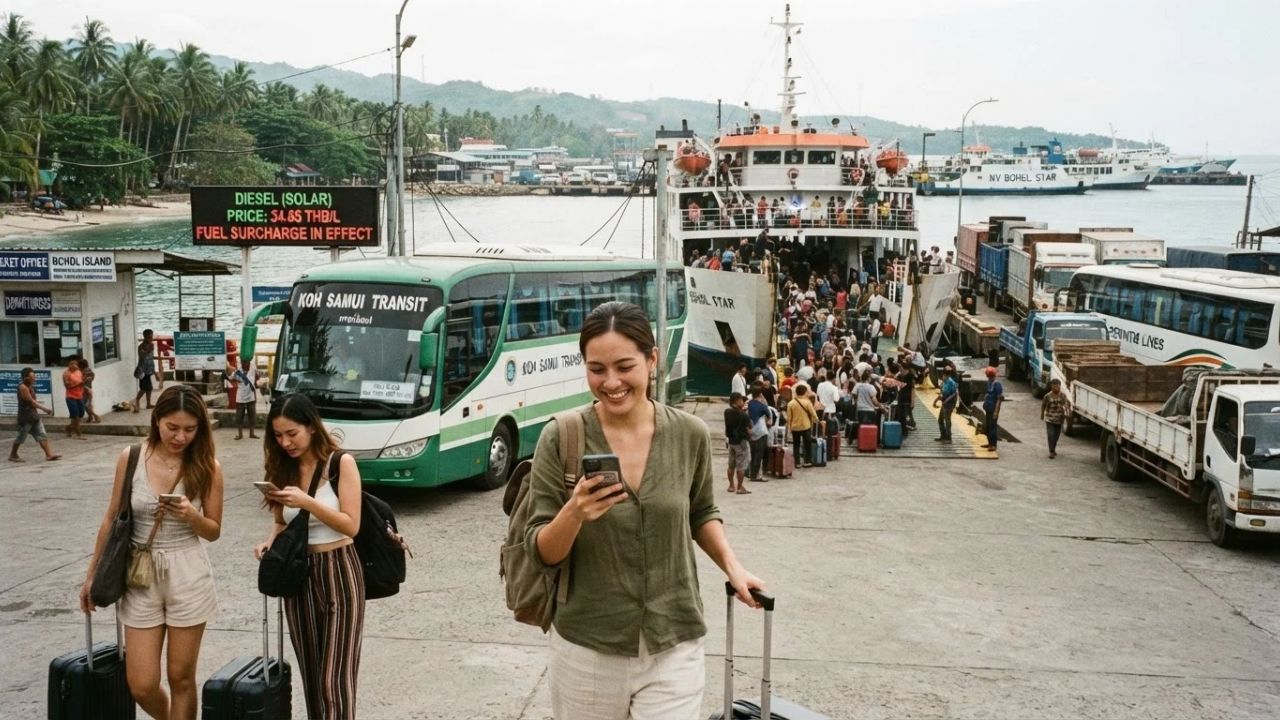
Image generated by AI
Across the iconic island-hopping and overland corridors of Southeast Asia, diesel fuel now swallows between 35 and 55 per cent of operating expenses for intercity coaches and high-speed catamarans, triggering an unprecedented wave of fuel surcharges and timetable restructuring. While international aviation headlines focus on jet kerosene spikes, ground transport fleets and domestic passenger ferries across Thailand, Indonesia, Malaysia, and the Philippines are battling strict government fare caps, thin operating margins, and escalating fuel costs. From the Gulf of Thailand, where through-ticket prices between Bangkok and Koh Samui jumped 18 to 25 per cent, to the busy roll-on/roll-off ferry crossings of the Bali Strait and the Philippine Western Nautical Highway, surface travel is undergoing a structural realignment. Independent travelers who rely on budget sleeper coaches and fast ferries are witnessing the quiet end of cheap, unhedged transport, prompting a widespread pivot toward electrified rail trunk lines and fuel-efficient feeder networks.
The Fuel Surcharge Cascade: How Rising Diesel Reshapes Regional Arteries
The economic mechanics governing Southeast Asia’s ground and marine transport differ sharply from commercial aviation. Airlines use sophisticated multi-year fuel hedging and dynamic yield-management software to adjust airfares instantly. In contrast, interprovincial bus operators, state-owned ferry corporations, and private vessel operators purchase diesel on short credit or direct cash terms at retail fuel pumps and marine bunkering docks. When wholesale diesel prices climb, operators cannot unilaterally raise ticket prices without protracted regulatory hearings before transport ministries.
This friction has produced a widespread surcharge cascade across four major regional corridors:
In Thailand, the Department of Land Transport strictly regulates Category 2 (Bangkok to provincial capitals) and Category 3 (interprovincial) bus fares. When diesel climbed to 39.84 baht per litre—well above the statutory baseline threshold of 34.00 baht—the Central Land Transport Control Board approved an official fare increase of 3 satang (0.03 THB) per kilometre per seat, effective 15 September 2026. For a 650-kilometre journey from Bangkok's Mo Chit 2 or Sai Tai Mai terminals to Surat Thani, base fares rose by 19.50 baht. At sea, private catamaran operators like Lomprayah High Speed Ferries, operating with greater tariff flexibility, instituted floating bunker surcharges, while vehicle ferry giants Seatran and Raja Ferry absorbed higher operating expenses at Don Sak Pier.
In Indonesia, the maritime artery crossing the Bali Strait between Ketapang Port in East Java and Gilimanuk in Bali, operated by state-owned PT ASDP Indonesia Ferry (Persero), faces similar strain. As commercial diesel climbed, ASDP enforced tiered crossing tariffs across vehicle classes: medium passenger buses (Golongan VA) pay Rp 426,900 per vessel crossing, while large 45-seat intercity coaches (Golongan VIA) pay Rp 647,100, and freight logistics trailers (Golongan VII) pay Rp 664,100. To preserve margins, long-distance coach operators (AKAP) are now consolidating passenger manifests at Ketapang rather than sailing half-empty buses across the strait.
In the Philippines, where the Western Nautical Highway links Metro Manila to Boracay via Batangas Port, Calapan, Roxas, and Caticlan Jetty Port, Maritime Industry Authority (MARINA) Administrator Sonia B. Malaluan issued Advisory No. 2026-10 on 7 March 2026. The directive capped temporary emergency fuel surcharges at 20 per cent of base fares for FastCraft catamarans and Ro-Ro liners operated by FastCat, Starlite Ferries, and 2GO Group, while offering operators a 75 per cent discount on vessel inspection certificates to avert mass route abandonments. Meanwhile, on cross-border ferry routes connecting Singapore and Malaysia to Indonesia's Batam and Bintan, operators levy mandatory fuel surcharges of SGD 6.00 alongside SGD 10.00 terminal fees, with Indonesian return legs imposing fuel surcharges ranging from IDR 65,000 to IDR 100,000.
What Makes Surface and Maritime Transit Different in 2026
The physical realities of overland and marine transit create thermodynamic challenges that aviation avoids. Unlike airliners cruising efficiently at high altitudes, heavy 45-passenger coaches battle continuous stop-and-start traffic and high tropical heat loads on air conditioning, consuming 28 to 35 litres of diesel per 100 kilometres. At high speeds, passenger catamarans face non-linear hydrodynamic drag, driving fuel to over 50 per cent of daily operating costs when cruising at 25 to 30 knots.
Consequently, transport operators have restructured their business models. Midday off-peak bus departures, where seat occupancy often dips below the 72 per cent break-even threshold, have been widely eliminated in favor of morning and evening runs. In addition, Destination Management Companies (DMCs) and tour operators have shifted away from 45-seater coaches, switching to 9-to-14-seater VIP executive minivans like the Toyota HiAce Commuter, which consume just 9 to 12 litres per 100 kilometres and cut fuel expenditures by up to 60 per cent.
Simultaneously, long-distance sleeper buses are yielding to electrified rail. In Thailand, double-tracking investments by the State Railway of Thailand along the Southern Line from Krung Thep Aphiwat Central Terminal have made trains the preferred trunk spine, with private bus operators transforming into regional feeder shuttles connecting Surat Thani Railway Station directly to island ferry piers. In Indonesia, the Whoosh high-speed rail line and Trans-Java rail upgrades are similarly converting long-haul highway coaches into regional rail-to-port connectors.
Visitor Insider Tips: Navigating Island and Overland Routes
To avoid surprise cash fees and travel delays across Southeast Asian transit corridors, keep these field-tested strategies in mind:
- Book Digital Through-Tickets with Live API Pricing: Skip buying paper tickets from street-side tourist kiosks. Book through digital aggregators like 12Go Asia, Bookaway, or Easybook, which ingest real-time fuel levies directly into the online checkout. This prevents surprise "bunkering fees" or cash surcharges demanded at pier check-in desks.
- Pivot to the Rail-and-Ferry Alternative: Instead of enduring a bumpy 14-hour overnight bus from Bangkok to the southern islands, book an air-conditioned sleeper berth on the State Railway of Thailand down to Chumphon or Surat Thani. You avoid highway fuel surcharges, enjoy a comfortable flat bed, and catch a direct morning shuttle to Lomprayah catamarans at Don Sak.
- Mind the Cash Buffer at Regional Ferry Piers: When traveling across the Philippine Western Nautical Highway or taking ferries between Singapore and Batam/Bintan, always carry small local currency cash (Philippine Pesos or Indonesian Rupiah). Terminal departure fees, municipal environmental taxes, and local port dues are frequently billed separately from base ferry tickets.
- Sample Regional Flavors at Transit Junctions: Turn transit stops into culinary highlights. At Surat Thani station, pick up fragrant sticky rice wrapped in banana leaves with sweet custard. At Ketapang Port in Banyuwangi, sample spicy East Javanese rawon (beef soup colored with black keluak nuts), while at Batangas Port terminal stalls, sip hot kape barako alongside warm pandesal.
- Allow Three-Hour Buffers for Ferry-to-Flight Connections: With operators combining manifests and consolidating departures to conserve fuel, schedule delays of 30 to 90 minutes are common during low-occupancy shoulder periods. Never schedule a regional flight departing within less than three hours of your scheduled ferry arrival.
Cultural and Environmental Context: Decoupling from Fossil Fuels
The ongoing fuel squeeze has accelerated an essential ecological transition across Southeast Asian transport networks. In Thailand, the Bangkok E-Bus Program, operated by Thai Smile Bus (TSB) in partnership with Energy Absolute, has deployed hundreds of battery-electric buses across 122 public transport concessions. Supported by an international carbon-finance framework under Article 6 of the Paris Agreement with Switzerland's KliK Foundation, commercial electric buses operate at energy costs 50 to 65 per cent lower than diesel vehicles, permanently insulating urban transit fares from global oil shocks.
Along archipelagic coastlines recognized by the Tourism Authority of Thailand and Indonesian tourism boards, marine conservation is equally vital. High-speed vessels churning through shallow coral straits around Koh Tao, Boracay, and Nusa Penida generate underwater noise and wake erosion. As operators prune redundant ferry schedules to cut fuel burn, marine ecosystems experience reduced vessel traffic, offering a welcome breathing space for fragile coral gardens and nesting sea turtles.
By choosing electrified rail travel, riding certified electric urban buses, and packing light to reduce transport deadweight, independent voyagers play an active role in steering Southeast Asia toward a resilient, low-emission travel future.
FAQ: Navigating Southeast Asia Buses and Ferries 2026
Why have bus and ferry fares increased across Thailand and the Philippines?
Surging diesel prices, which account for up to 55 per cent of ferry operating costs, led authorities like Thailand's DLT and the Philippines' MARINA to authorize statutory fare hikes and fuel surcharges up to 20 per cent.
What is the most cost-effective way to travel from Bangkok to Koh Samui in 2026?
Take an overnight sleeper train on the State Railway of Thailand from Krung Thep Aphiwat Central Terminal to Surat Thani, followed by a combined feeder bus and ferry ticket booked in advance online.
Are ferry fuel surcharges included in online ticket bookings?
Major booking platforms like 12Go Asia now incorporate official fuel surcharges directly into online checkouts, though local municipal pier taxes and port environmental fees may still require cash payment at the boarding terminal.
How are transport operators coping with high fuel expenses?
Operators are eliminating unprofitable midday off-peak departures, pooling passengers onto shared vessels, switching to 9-to-14-seat executive minivans, and acting as feeder shuttles for electrified rail corridors.
From the gentle click of rail tracks rolling south from Bangkok to the salty spray of a Bali Strait ferry, traveling across Southeast Asia reminds us that the journey itself is the destination.
Related Travel Guides
Disclaimer
This article is for informational and educational purposes only. It does not constitute legal, financial, or professional advice. While we strive to provide accurate and up-to-date information, travel policies, regulations, and conditions change rapidly. Always verify information with official sources before making travel decisions. Nomad Lawyer makes no representations about the accuracy, reliability, completeness, or suitability of the information provided. Readers should consult qualified professionals for advice specific to their circumstances. The views expressed in this article are those of the author and do not necessarily reflect the views of Nomad Lawyer.
Raushan Kumar
Founder & Lead Developer
Full-stack developer with 11+ years of experience and a passionate traveller. Raushan built Nomad Lawyer from the ground up with a vision to create the best travel and law experience on the web.
Learn more about our team →