
Delta Air Lines Lagos to Atlanta Route Suffers Back-to-Back Cancellations in August 2026
Consecutive cancellations of Delta flight DL9895 between Lagos and Atlanta left passengers stranded for days due to technical failures and crew shortages.

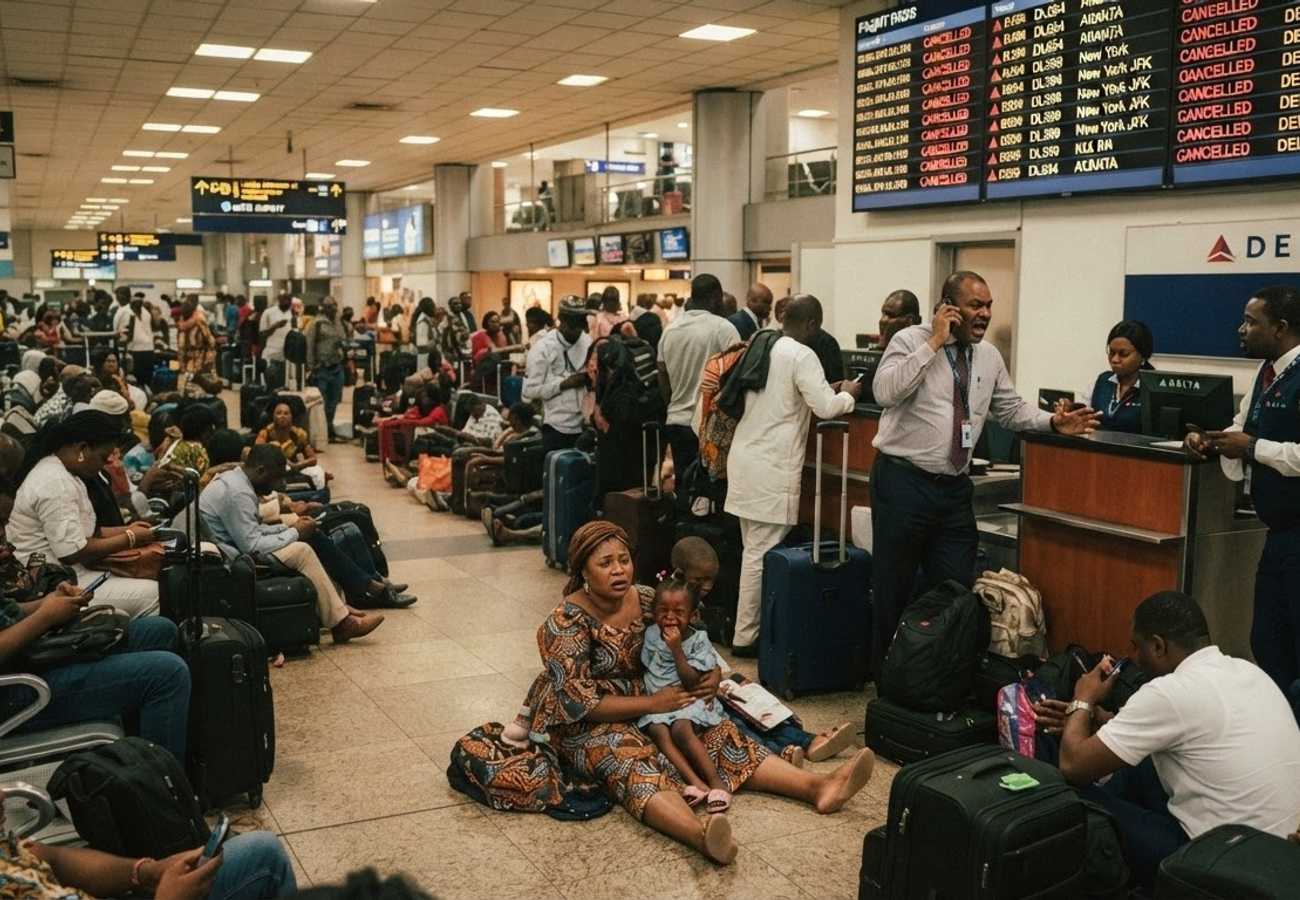
Image generated by AI
Consecutive cancellations of Delta Air Lines flights between Lagos and Atlanta in late August left scores of transatlantic passengers stranded at Murtala Muhammed International Airport. The disruption highlights critical vulnerabilities in one of West Africa’s primary links to the United States.
Transatlantic Service Collapse: Lagos to Atlanta
Flight tracking systems and Nigerian aviation reports confirm that Delta flight DL9895, operating from Murtala Muhammed International Airport (LOS) to Hartsfield–Jackson Atlanta International Airport (ATL), was cancelled twice within a three-day window during the final week of August 2026.
The first disruption occurred on Sunday, August 23. Many passengers had already checked in and reached the terminal before the airline announced the flight would not operate. Affected travelers were subsequently rebooked for a Tuesday, August 25 departure. However, this second operation—carrying the same flight number, DL9895—also failed to depart, extending the ordeal for passengers connecting to various U.S. destinations.
Our analysis of flight-status databases indicates a broader pattern of instability on this corridor. In addition to the late-August failures, a related operation, DL9905, was recorded as cancelled on August 3, suggesting significant operational volatility throughout the month.
Operational Breakdown and Root Causes
The airline cited two distinct reasons for the consecutive failures, according to communications shared with passengers:
- August 23 Cancellation: Attributed to technical and maintenance-related issues. The aircraft was deemed unfit for the approximately 12-hour transatlantic crossing.
- August 25 Cancellation: Attributed to limited crew availability. The airline stated it was unable to staff the flight, preventing the rebooked service from departing.
The sequence of a mechanical failure followed by a staffing shortage created a cascading effect. Because long-haul flights require strict adherence to crew duty-hour regulations, the inability to position a replacement crew in Lagos led to the second collapse.
Passenger Impact and Airport Conditions
Reports from the international departures area in Lagos describe crowded conditions and significant gaps in passenger care. The disruption caused several critical issues for travelers:
- Accommodation Shortfalls: Some passengers reported a lack of immediate hotel support or meal vouchers following the first cancellation on August 23.
- Out-of-Pocket Costs: Due to the lack of prompt rebooking, several travelers purchased new tickets on Middle Eastern or European carriers to maintain time-sensitive commitments in North America.
- Baggage Access: A significant number of passengers had already checked their luggage. With suitcases held in airline custody, travelers were forced to navigate rebooking and overnight stays without their personal belongings.
Passenger Rights & Advisory: Compensation Guide
For the affected passenger, these specific disruptions—mechanical failure and crew shortages—are generally classified as "within the airline's control." Unlike weather events or air traffic control strikes, these are operational failures.
Our analysis of aviation policy suggests the following for affected travelers:
- Duty of Care: Under most international aviation frameworks, if a flight is cancelled, the carrier must provide meals, refreshments, and hotel accommodation (including transport) if an overnight stay is required. If you paid for your own hotel in Lagos, you are entitled to reimbursement.
- Compensation Eligibility: Because the cancellations occurred less than seven days before departure and were caused by technical/staffing issues, passengers may be eligible for monetary compensation.
- Rebooking vs. Refund: Passengers had the right to choose between a full refund of the unused ticket or re-routing to their final destination at the earliest opportunity.
- Expense Documentation: To secure reimbursement, passengers must retain:
- Original boarding passes and the cancellation notice.
- Itemized receipts for hotels, meals, and emergency transport.
- Proof of any new tickets purchased from third-party carriers.
The Lagos–Atlanta route is a high-stakes corridor for business, medical, and student travel. The failure of DL9895 underscores the fragility of "outstation" long-haul operations. When an aircraft fails at a hub like Atlanta, replacements are readily available. When a failure occurs in Lagos, the airline must fly in a replacement aircraft and a fresh crew—a process that is highly susceptible to cascading delays.
The repeated nature of these cancellations suggests a lack of robust contingency planning for the West African market during the peak late-summer travel window.
Operational reliability remains the primary metric for transatlantic competitiveness in 2026.
Related Travel Guides
Disclaimer
This article is for informational and educational purposes only. It does not constitute legal, financial, or professional advice. While we strive to provide accurate and up-to-date information, travel policies, regulations, and conditions change rapidly. Always verify information with official sources before making travel decisions. Nomad Lawyer makes no representations about the accuracy, reliability, completeness, or suitability of the information provided. Readers should consult qualified professionals for advice specific to their circumstances. The views expressed in this article are those of the author and do not necessarily reflect the views of Nomad Lawyer.
Raushan Kumar
Founder & Lead Developer
Full-stack developer with 11+ years of experience and a passionate traveller. Raushan built Nomad Lawyer from the ground up with a vision to create the best travel and law experience on the web.
Learn more about our team →