
Kosovo's European Travel Breakthrough: Wizz Air Opens Pristina Base, Connecting the Balkans to Western Europe
Handling over 4.6 million passengers in 2025, Pristina International Airport welcomes a new Wizz Air base with an Airbus A321neo, linking Kosovo to Brussels, Basel, and Germany.

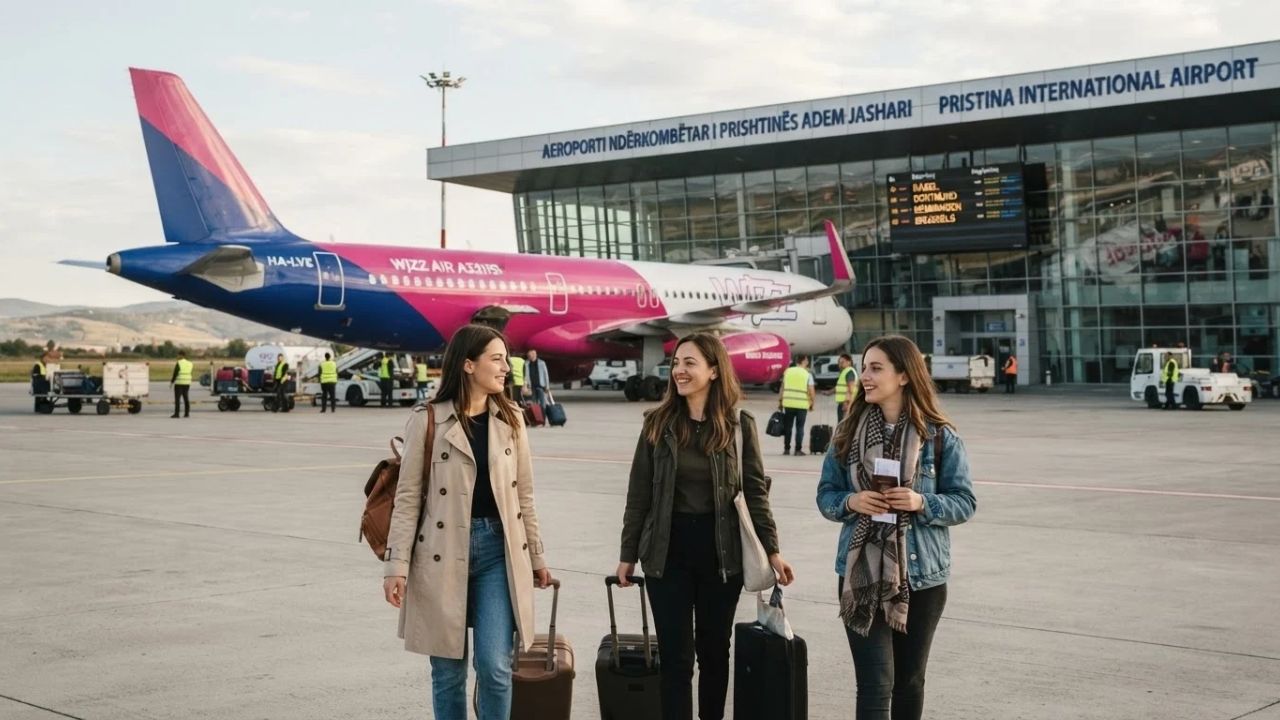
Image generated by AI
Despite being one of Europe’s smallest landlocked republics without an operational international rail connection, Pristina International Airport Adem Jashari processed more than 4.6 million passengers in 2025, cementing Kosovo’s standing as the fastest-growing aviation hub in the Western Balkans. Accelerating this transformation, low-cost carrier Wizz Air has officially confirmed the establishment of a permanent operational base at Pristina starting in November 2026. By stationing a brand-new Airbus A321neo aircraft in the capital, the airline is introducing direct, affordable connections to Brussels Charleroi in Belgium, Karlsruhe/Baden-Baden in Germany, and Basel-Mulhouse in Switzerland. Expected to create approximately 40 direct aviation jobs and support roughly 350 indirect employment opportunities, the investment bridges Kosovo’s extensive European diaspora while inviting independent cultural travelers to discover an uncrowded Balkan sanctuary of Ottoman fortresses, alpine canyons, and world-class cafe culture.
The Low-Cost Bridge: How Wizz Air’s Pristina Base Rewrites Balkan Mobility
The arrival of a permanently based Airbus A321neo in Pristina marks a defining milestone in Kosovo’s post-independence integration into the wider European transport grid. For years, international travelers navigating the Western Balkans faced geographical friction caused by fragmented railway links and winding mountain highways. Air connectivity has consequently become the indispensable lifeline for the young republic, allowing both leisure explorers and business travelers to bypass lengthy cross-border ground transfers.
The newly announced routes strategically target key economic and demographic gateways. Germany, Switzerland, and Belgium host some of the largest Kosovar diaspora populations in the world, generating sustained year-round demand for family reunions, cultural visits, and commercial partnerships. By opening direct point-to-point services from regional low-cost airports like Brussels Charleroi, Karlsruhe/Baden-Baden, and EuroAirport Basel-Mulhouse, the expansion eliminates the necessity of purchasing expensive connecting itineraries through congested continental megahubs.
As documented by the Civil Aviation Authority of Kosovo, Pristina International Airport’s record throughput of over 4.6 million passengers reflects surging regional vitality. Concurrently, data from the Kosovo Agency of Statistics confirms sustained upticks in guest nights and hospitality demand. For the domestic tourism economy, these flights provide an affordable, accessible springboard for cultural sightseers, mountain hikers, and weekend city-breakers eager to explore an affordable European destination before mass commercialization takes hold.
What Makes Kosovo Different: Europe’s Most Youthful, Unfiltered Cultural Frontier
Kosovo possesses an extraordinary civic energy driven by the fact that it is home to Europe’s youngest demographic, with more than half of its population under the age of thirty. In the capital city of Pristina, this youthful optimism radiates across wide pedestrian boulevards. The famous Newborn Monument—unveiled upon declaring independence in 2008 and repainted annually with fresh civic and artistic motifs—stands near the brutalist architecture of the National Library of Kosovo, whose dramatic grid of metal honeycomb domes creates one of the most distinctive architectural profiles in Europe. Along Mother Teresa Boulevard, open-air cafes serve velvety espresso and macchiatos that locals fiercely defend as superior to anything found in Italy, priced at just €1 to €1.50 per cup.
Just an hour’s drive south lies Prizren, the cultural jewel of the country. Resting beneath the alpine ridges of the Sharr Mountains, Prizren feels centuries removed from the modern bustle of the capital. The town is traversed by the shallow Bistrica River, crossed by an elegant sixteenth-century Ottoman stone bridge. Here, the soaring minaret of the Sinan Pasha Mosque rises beside medieval Orthodox stone churches and traditional red-tiled merchant townhouses. Climbing the cobblestone footpath to the hilltop Kalaja Fortress rewards travelers with a breathtaking sunset vista stretching across the Dukagjini valley.
To the west, the historic gateway city of Peja opens into the dramatic heights of Rugova Canyon in the Accursed Mountains (Bjeshkët e Nemuna). Towering vertical limestone cliffs, cold glacial streams, and suspended iron bridges provide access to thrilling via ferrata routes and the world-renowned Peaks of the Balkans long-distance hiking trail. Tucked deep within the river gorge sits the Patriarchate of Peć, part of the UNESCO World Heritage Centre listed Medieval Monuments in Kosovo, where vibrant fourteenth-century Byzantine frescoes cover interior stone vaults in dazzling gold and lapis lazuli tones.
Visitor Insider Tips: Navigating Kosovo on Foot, Bus, and Fork
To experience the authentic cadence of daily Kosovar life without logistical stress, keep these practical insider strategies in mind:
- Affordable Airport Transit: Pristina International Airport Adem Jashari is located roughly 18 kilometers southwest of the city center. Rather than paying private taxi drivers €20 to €25, take the official municipal Airport Bus (Line 1A). It departs directly outside the terminal doors every hour on the hour, delivering travelers straight to the central Pristina Bus Station for just €3 per passenger.
- Cash is King (The Euro Economy): Although Kosovo is not an official member of the European Union or the Eurozone, it adopted the Euro (€) as its de facto legal currency. While credit cards are widely accepted at modern hotels and supermarkets in Pristina, independent bakeries, rural mountain huts, and neighborhood cafes operate exclusively in cash. Keep small denominations (€5, €10, and €20 notes) on hand at all times.
- The Macchiato and Cafe Ritual: Coffee in Kosovo is an unhurried cultural institution rather than a quick morning caffeine fix. Locals sit for hours on outdoor terraces discussing art, politics, and daily life. Do not ask for coffee to-go; instead, take a seat, order a "makiato e madhe" (large macchiato), and soak in the neighborhood atmosphere. Leaving a 20 to 50 cent coin tip on the saucer is standard etiquette.
- Intercity Bus Connections: Kosovo’s regional bus network is efficient, highly affordable, and frequent. Coaches depart every 20 to 30 minutes from Pristina Bus Station to Prizren, Peja, and Gjakova. One-way tickets cost between €4 and €6, purchased directly from the conductor aboard the bus, making regional day trips effortless.
- Savor Traditional Kosovar Flavors: Seek out traditional mountain taverns (te qebaptorja) to taste flija—Kosovo’s culinary masterpiece made of dozens of paper-thin crepe layers brushed with rich clotted cream (kaymak) and slow-baked for hours under an outdoor wood-fired metal lid (sac). Pair it with freshly grilled qebapa (seasoned minced beef sausages) served with warm, pillowy somun bread, spicy pickled peppers, and a glass of homemade quince raki.
Cultural and Environmental Context: Diaspora Bridges, Alpine Preservation, and Eco-Trails
The steady influx of diaspora travelers visiting family in Kosovo creates an economic foundation that directly sustains regional communities. During summer festival seasons like Dokufest in Prizren—one of the premier international documentary film festivals in Southeast Europe—returning emigrants and international backpackers pour essential revenue into family-operated guesthouses, artisan filigree jewelry workshops, and independent cultural venues.
Concurrently, Kosovo's developing tourism sector faces critical environmental responsibilities. The pristine alpine ecosystems of the Sharr Mountains and the Accursed Mountains shelter rare brown bears, Balkan lynx, and wild chamois. To prevent unmanaged commercial exploitation, community-based tourism associations promote regenerative trail systems like the Peaks of the Balkans, encouraging low-impact hiking that keeps travelers on marked trails while generating income for remote shepherd families who host hikers in traditional stone fortified tower-houses (kullas).
At the heart of this cultural exchange is the ancient Albanian code of Besa—a sacred pledge of honour guaranteeing hospitality and protection to any traveler who crosses a family's threshold. By supporting local guides, respecting sacred multiconfessional heritage sites, and traveling during the quieter spring and autumn shoulder seasons, visitors help ensure that Kosovo’s unique cultural fabric and untamed alpine wilderness remain protected for generations to come.
FAQ: Visiting Kosovo in 2026
Do international travelers need a visa to visit Kosovo?
Citizens of the United States, Canada, the European Union, the United Kingdom, and Australia can enter Kosovo visa-free for tourist stays of up to 90 days within a 180-day period with a valid passport.
Is Kosovo safe for solo and independent travelers?
Yes. Kosovo is widely recognized as one of the safest destinations in Europe, characterized by very low rates of violent crime, hospitable locals, and lively, well-lit pedestrian streets in urban centers.
How do visitors travel between Pristina and Prizren?
Comfortable intercity buses run every 20 to 30 minutes between Pristina Bus Station and Prizren. The scenic journey takes approximately 1 hour and 45 minutes, with tickets costing around €4 to €5.
What is the best time of year to visit Kosovo?
May through June and September through October offer ideal conditions, with sunny weather, mild temperatures (18°C to 24°C), and comfortable walking conditions across historical towns and alpine trails.
In a continent where so many capitals feel rehearsed for tourists, Kosovo’s vibrant mountain trails and generous spirit remind travelers what authentic discovery truly feels like.
Related Travel Guides
- Puerto Rico Air Connectivity Expands in 2026: American, JetBlue, and Southwest Add Direct Routes to San Juan, Aguadilla, and Ponce
- Dubai Leads the Global Aviation Comeback: Emirates Route Restorations and Insider Stopover Guide 2026
- Malta Historic Architecture and Islands: Exploring Valletta, Mdina, and the Untamed Charm of Gozo
Disclaimer
This article is for informational and educational purposes only. It does not constitute legal, financial, or professional advice. While we strive to provide accurate and up-to-date information, travel policies, regulations, and conditions change rapidly. Always verify information with official sources before making travel decisions. Nomad Lawyer makes no representations about the accuracy, reliability, completeness, or suitability of the information provided. Readers should consult qualified professionals for advice specific to their circumstances. The views expressed in this article are those of the author and do not necessarily reflect the views of Nomad Lawyer.
Raushan Kumar
Founder & Lead Developer
Full-stack developer with 11+ years of experience and a passionate traveller. Raushan built Nomad Lawyer from the ground up with a vision to create the best travel and law experience on the web.
Learn more about our team →