
Kenya Aviation Workers Strike Strands Thousands at Jomo Kenyatta International Airport in 2026
A nationwide aviation strike in Kenya has paralyzed Jomo Kenyatta International Airport and coastal hubs, leaving thousands of passengers stranded and disrupting regional tourism.

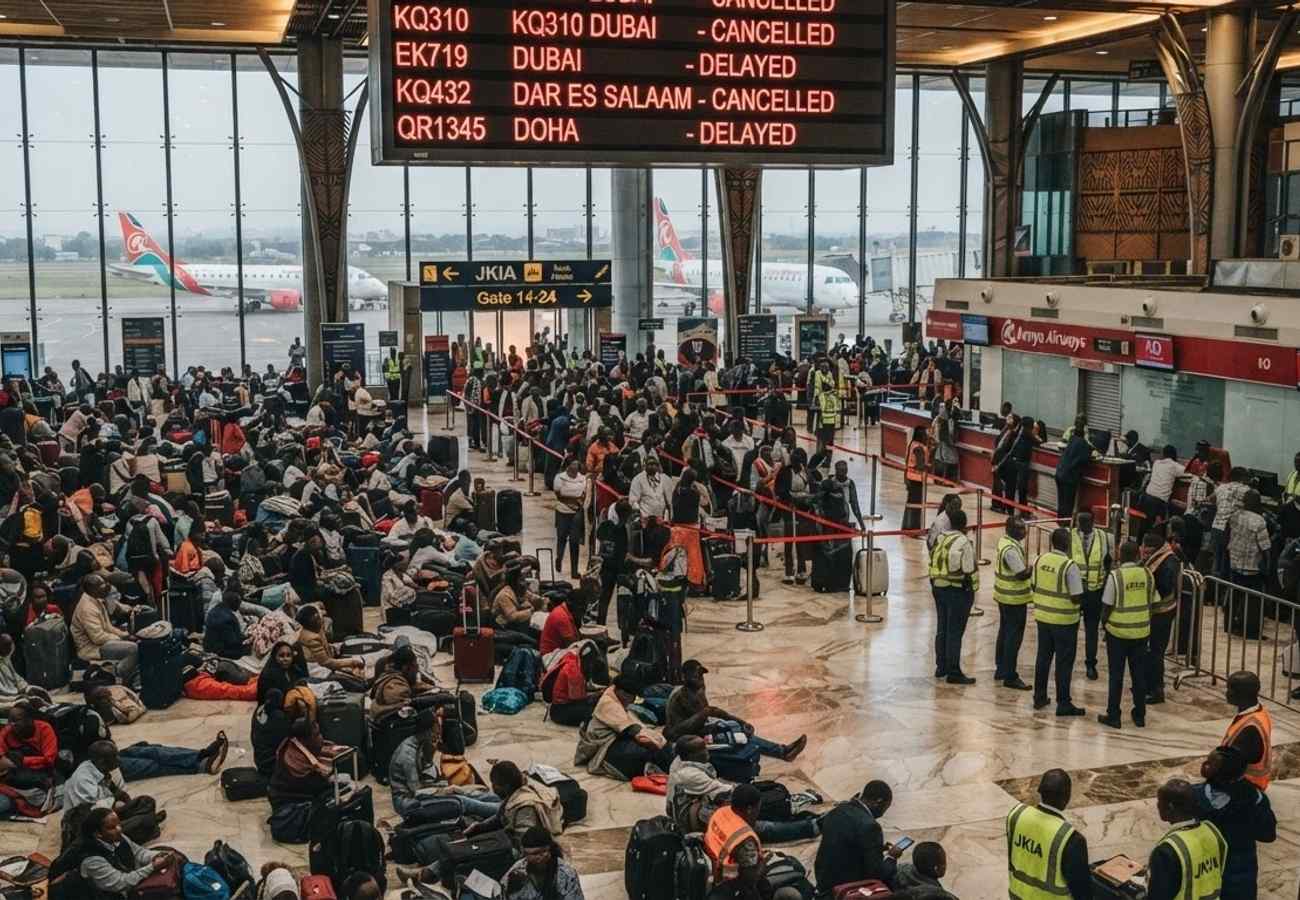
Image generated by AI
Nationwide industrial action by aviation staff has paralyzed Kenya's primary air gateways, leaving thousands of travelers stranded at Jomo Kenyatta International Airport (JKIA) and coastal hubs. The disruption has severely impacted regional connectivity and high-value tourism itineraries across East Africa.
The industrial action was launched by the Kenya Aviation Workers Union (KAWU) on Sunday, August 30, 2026. The walkout involved air traffic controllers, ground handlers, and essential airport staff, effectively creating a bottleneck at critical operational points.
The strike continued through August 31 and spilled into September 1 and 2 as a massive backlog of delayed and canceled flights accumulated. Despite a court order attempting to block the action, workers proceeded with the strike, citing unfulfilled commitments regarding salary adjustments, chronic staffing shortages, and poor management.
Our analysis of operational reports indicates the following impact across the Kenyan aviation network:
- Jomo Kenyatta International Airport (JKIA): Operations reached a near-standstill. Long-haul, regional, and domestic routes faced widespread cancellations. Terminals reported extreme congestion with passengers forced to sleep on floors.
- Moi International Airport (Mombasa): Serious disruptions at the primary coastal gateway, grounding domestic flights and forcing travelers to seek overland transfers.
- Regional Hubs: Airports in Kisumu and Eldoret experienced significant delays and grounded services.
- International Connectivity: Foreign carriers utilizing Nairobi as a transfer hub reported stranded passengers globally due to canceled onward legs to Kenya.
- Cargo Impact: Time-sensitive exports, specifically fresh produce and flowers destined for European and Middle Eastern markets, suffered significant delays.
Passenger Rights & Advisory
For the affected passenger, this disruption creates complex legal and financial questions regarding compensation. Because the strike involved airport staff (third-party providers) rather than airline crew, the "extraordinary circumstances" clause is often invoked by carriers to avoid paying cash compensation.
Our analysis of aviation policy suggests the following actionable steps for travelers:
- Duty of Care: Regardless of the cause of the delay, airlines are generally required to provide "duty of care." This includes vouchers for meals, refreshments, and hotel accommodation if an overnight stay is required. If you paid for these out-of-pocket, retain every receipt for reimbursement.
- Rebooking vs. Refunds: For passengers on multi-segment itineraries, the responsibility for rebooking varies. If the disruption occurred on a single ticket (PNR), the issuing airline is responsible for rerouting you. For separate tickets, you must coordinate with each carrier individually.
- EU261/2004 Application: For passengers flying into or out of the EU on an EU-based carrier, the strike of airport staff may be viewed as an "extraordinary circumstance," exempting the airline from fixed compensation. However, the right to a full refund or rerouting remains intact.
- Travel Insurance: Check if your policy covers "Industrial Action." Many standard policies do, provided the strike was officially announced. This can cover non-refundable safari deposits or missed hotel bookings.
This event underscores a systemic vulnerability in Kenya's aviation infrastructure. By relying heavily on JKIA as a regional "super-hub," any labor instability at this single point creates a domino effect across East African airspace.
The fact that the strike proceeded despite a court order indicates a breakdown in labor relations that exceeds simple pay disputes. For the industry, this serves as a warning that without durable reforms in staffing levels and safety margins, Kenya risks losing its competitive edge to other regional hubs. The economic fallout extends beyond passenger tickets, impacting the critical agricultural export chain which relies on precise air-logistics.
While a return-to-work agreement was reached on September 1, the "recovery phase" typically takes 3-5 days to fully stabilize as aircraft and crew are repositioned. Travelers should expect residual delays through the first week of September.
Flight operations are normalizing, but flexibility remains the only reliable strategy for East African transit.
Related Travel Guides
Disclaimer
This article is for informational and educational purposes only. It does not constitute legal, financial, or professional advice. While we strive to provide accurate and up-to-date information, travel policies, regulations, and conditions change rapidly. Always verify information with official sources before making travel decisions. Nomad Lawyer makes no representations about the accuracy, reliability, completeness, or suitability of the information provided. Readers should consult qualified professionals for advice specific to their circumstances. The views expressed in this article are those of the author and do not necessarily reflect the views of Nomad Lawyer.
Raushan Kumar
Founder & Lead Developer
Full-stack developer with 11+ years of experience and a passionate traveller. Raushan built Nomad Lawyer from the ground up with a vision to create the best travel and law experience on the web.
Learn more about our team →