
Kenya Aviation Strike Strands Thousands as Jomo Kenyatta International Airport Resumes Operations
A two-day industrial action by aviation workers at Nairobi's Jomo Kenyatta International Airport has caused widespread flight cancellations and stranded thousands of passengers across East Africa.
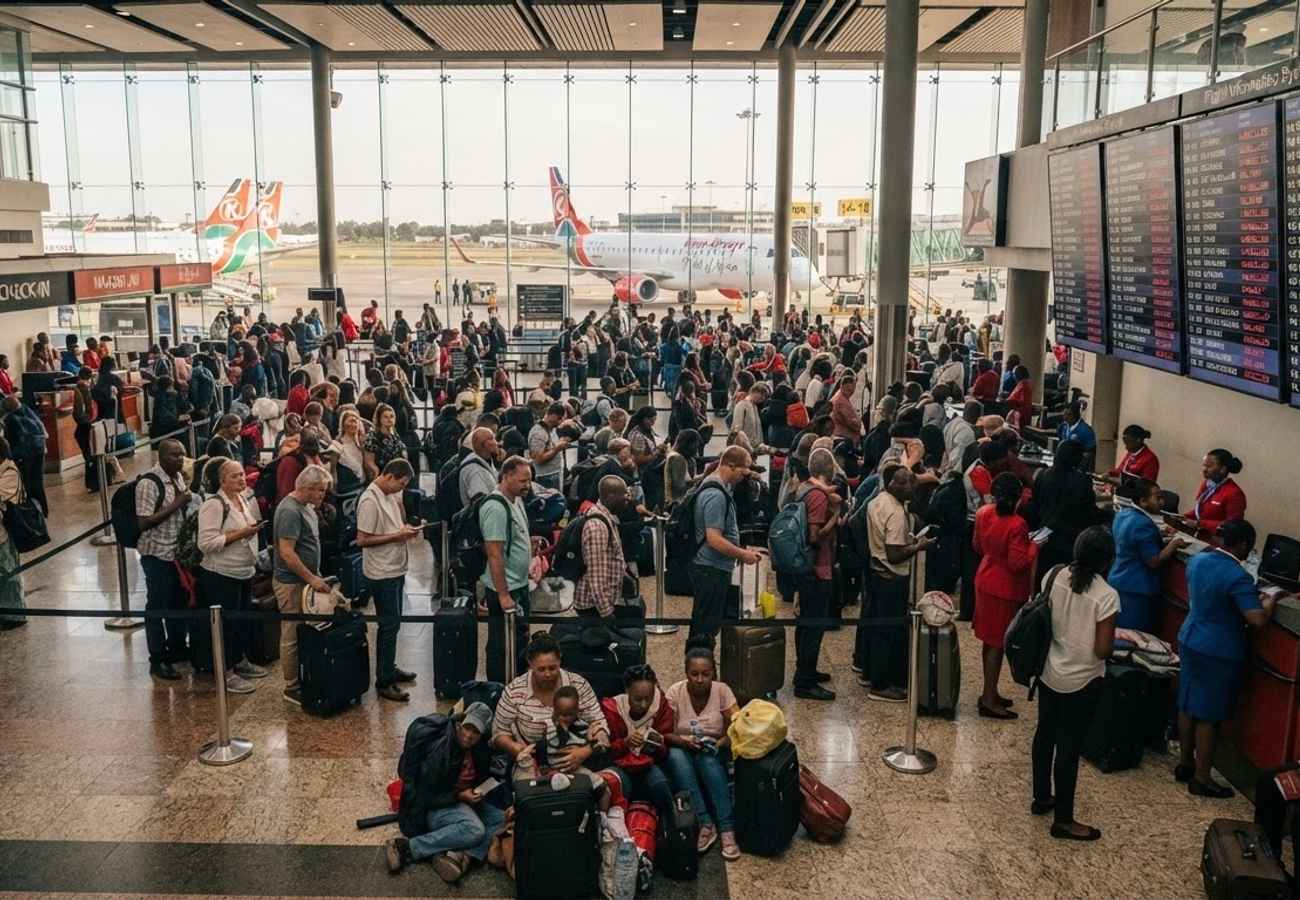
Image generated by AI
Thousands of travelers were left stranded across East Africa following a targeted two-day "go-slow" by aviation personnel. While a return-to-work agreement is now in place, the operational backlog continues to plague Nairobi's primary gateway.
Industrial Action Paralyzes East Africa's Aviation Hub
Flight operations at Jomo Kenyatta International Airport (JKIA) and several other national hubs faced severe instability starting Sunday, August 30, 2026. Members of the Kenya Aviation Workers Union implemented a "go-slow" strategy, which intentionally decelerated essential airport functions rather than initiating a total walkout.
This tactical disruption targeted critical operational pillars, including:
- Passenger check-in processes
- Baggage handling systems
- Air traffic control (ATC) coordination
The impact was immediate. Because JKIA serves as the primary conduit for long-haul traffic connecting Europe, Asia, and the Middle East to Africa, the bottleneck in Nairobi created a domino effect. Disruption quickly spread to other key facilities, including Moi International (Mombasa), Eldoret International, and Kisumu International.
Passenger Impact and Network Cascades
The industrial action coincided with a peak travel season, amplifying the chaos. Thousands of passengers reported hours-long delays, with many forced to spend the night on terminal floors as rolling cancellations eliminated their options for departure.
The crisis was particularly acute for transit passengers. Many missed critical long-haul connections to North America and Europe, with some rebookings pushed back by several days. National carrier Kenya Airways and its low-cost arm, Jambojet, bore the brunt of the disruption, issuing warnings of multi-hour delays and urging travelers to seek flexible alternatives.
The local economy felt the ripple effects immediately. Hotels surrounding JKIA reported a sudden surge in occupancy as stranded travelers sought emergency lodging, while confusion over real-time flight status left many passengers stranded without clear guidance.
Labor Disputes: The Root of the Crisis
The Kenya Aviation Workers Union cited deep-seated grievances with the Kenya Civil Aviation Authority, the Kenya Airports Authority, and various airline operators. The strike was not a spontaneous event but the result of years of stalled negotiations.
Primary points of contention included:
- Collective Bargaining: The absence of finalized agreements for various staff tiers.
- Compensation: Disputes over pay and benefits that failed to keep pace with the post-pandemic traffic rebound.
- Working Conditions: Concerns regarding staffing levels, specifically within safety-critical air traffic management roles.
- Career Progression: Demands for formalized recognition frameworks and improved rostering practices.
Industry analysts suggest this friction is symptomatic of a global trend where passenger volumes have recovered faster than the workforce capacity and wage structures can support.
Recovery Timeline and Operational Status
A resolution was reached on Tuesday, September 1, 2026, after the union signed a return-to-work agreement with government agencies. This deal commits all parties to resume negotiations regarding salaries, benefits, and the long-overdue collective bargaining agreement.
Despite the agreement, the "recovery phase" is expected to be slow. Airlines are currently struggling with:
- Aircraft Repositioning: Moving planes back to their scheduled starting points.
- Crew Scheduling: Realigning staff who were displaced by the two-day disruption.
- Backlog Clearance: Processing the thousands of passengers who missed their original windows.
Travelers are strongly advised to use digital flight-status tools and arrive at airports significantly earlier than usual to account for lingering congestion.
Regional Economic and Tourism Implications
The timing of the strike poses a risk to Kenya's reputation as a stable transit hub. As a gateway to major safari destinations and coastal resorts, any instability at JKIA directly impacts the tourism supply chain.
Beyond ticket revenue, the disruption affects:
- Hospitality: Reduced hotel occupancy due to missed arrivals.
- Trade: Delays in time-sensitive cargo and perishable exports.
- Logistics: Disrupted schedules for regional business conferences and tourism itineraries.
While historical data suggests that regional aviation strikes typically result in only temporary traffic dips, the event highlights the fragility of the network when labor shocks hit critical infrastructure.
Summary of Disruption Timeline
| Date | Event | Impact Level | Primary Effect |
|---|---|---|---|
| August 30, 2026 | Go-slow begins | High | Check-in and ATC delays at JKIA |
| August 31, 2026 | Second day of action | Severe | Rolling cancellations; stranded passengers |
| September 1, 2026 | Return-to-work deal | Moderate | Operations resume; backlog clearance begins |
| September 2, 2026 | Recovery phase | Improving | Ongoing rescheduling and crew repositioning |
Key Takeaways
- Tactical Strike: A "go-slow" by the Kenya Aviation Workers Union disrupted JKIA and regional airports from Aug 30 to Sept 1.
- Widespread Chaos: Thousands were stranded, affecting Kenya Airways and Jambojet specifically.
- Core Issues: The dispute centered on unpaid benefits, outdated contracts, and poor working conditions.
- Slow Recovery: While the strike ended Sept 1, flight schedules remain unstable as airlines reposition assets.
FAQ
Are flights currently operating at JKIA? Yes, a return-to-work agreement was signed on September 1, 2026. However, delays are still common as airlines clear the backlog.
What should I do if my flight was cancelled during the strike? Contact your airline (such as Kenya Airways or Jambojet) immediately to explore rebooking options or request a refund.
Which other airports were affected? While JKIA was the epicenter, Moi International (Mombasa), Eldoret International, and Kisumu International also experienced disruptions.
Travelers are encouraged to maintain flexible itineraries when navigating regional hubs during peak seasons.
Related Travel Guides
Disclaimer
This article is for informational and educational purposes only. It does not constitute legal, financial, or professional advice. While we strive to provide accurate and up-to-date information, travel policies, regulations, and conditions change rapidly. Always verify information with official sources before making travel decisions. Nomad Lawyer makes no representations about the accuracy, reliability, completeness, or suitability of the information provided. Readers should consult qualified professionals for advice specific to their circumstances. The views expressed in this article are those of the author and do not necessarily reflect the views of Nomad Lawyer.