
JR Kyushu to Power Shinkansen Kagoshima Route via Solar Energy PPA Starting August 2027
JR Kyushu will implement its first renewable energy system for Shinkansen operations in August 2027, utilizing an off-site PPA to reduce annual CO2 emissions by 4,600 tons.

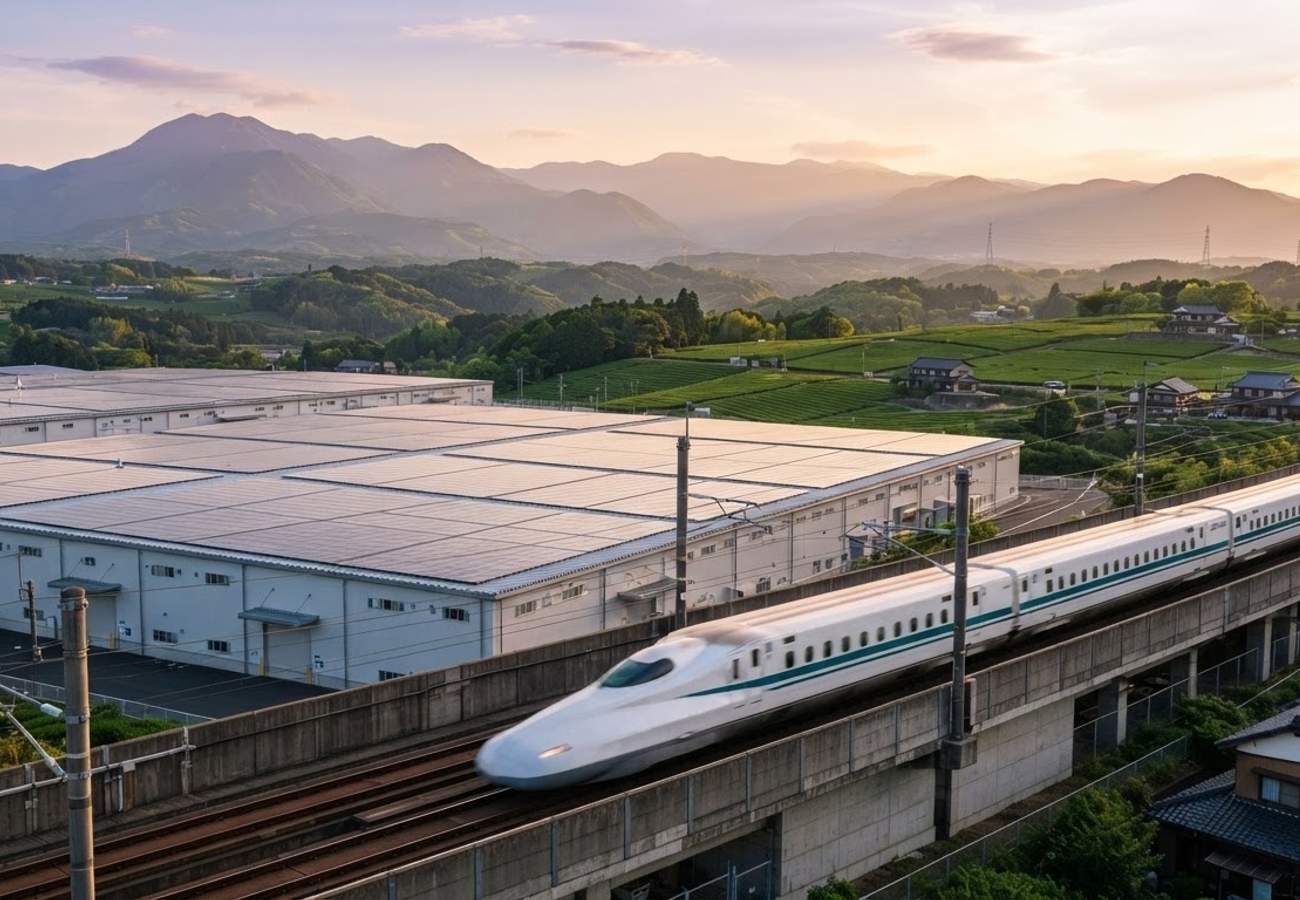
Image generated by AI
JR Kyushu will begin powering the Kyushu Shinkansen Kagoshima line with renewable solar energy in August 2027, marking the operator's first venture into renewable-powered rail operations.
Transition to Renewable Energy Infrastructure
JR Kyushu has announced a strategic shift in its energy procurement to support the Kyushu Shinkansen. Starting in August 2027, the operator will gradually integrate electricity generated from solar plants into the Kagoshima route. This transition is facilitated through a partnership involving Kyushu Electric Power, Enbio Holdings, Fuyo General Lease, and CRE.
The technical framework for this initiative is an off-site Power Purchase Agreement (PPA). Unlike traditional onsite installations, an off-site PPA allows JR Kyushu to procure renewable energy generated at external facilities and transmit it through existing retail electricity networks. In this specific case, solar arrays have been installed on the rooftops of logistics facilities located in the Fukuoka and Saga prefectures.
Technical Specifications and Environmental Impact
The project is designed to significantly lower the carbon footprint of high-speed rail in southern Japan. By utilizing logistics facility rooftops for energy generation, the project maximizes existing urban infrastructure without requiring additional land clearing for solar farms.
Solar Energy Output and Emission Reductions
| Parameter | Specification |
|---|---|
| Implementation Date | August 2027 (Gradual Rollout) |
| Primary Route Affected | Kyushu Shinkansen Kagoshima Line |
| Output Capacity | Approximately 8,000 kilowatts |
| Annual Electricity Generation | Approximately 9.8 million kilowatt-hours |
| Estimated Annual CO2 Reduction | Approximately 4,600 tons |
| Household Emission Equivalent | Approximately 1,800 average households |
| Energy Procurement Model | Off-site Power Purchase Agreement (PPA) |
Traveler Logistics Guide
From a ground-level perspective, the transition to solar power will be invisible to the passenger. There are no changes to ticketing, boarding procedures, or train schedules. However, for the environmentally conscious traveler, this update changes the "carbon cost" of the journey.
Navigating the Kyushu Shinkansen:
- Booking: Continue using official JR Kyushu channels or the SmartEX app for reservations. The energy transition does not affect seat availability or pricing.
- Optimal Routing: The Kagoshima route remains the primary artery for southern Japan. When planning multi-city trips (e.g., Fukuoka to Kagoshima), ensure your Japan Rail Pass or regional Kyushu Pass is validated before the August 2027 rollout to maximize the utility of these greener routes.
- Digital Transit: Utilize the integrated digital ticketing systems to avoid queues at ticket offices, allowing more time to explore the sustainable infrastructure of the region.
Infrastructure Impact and Long-Term Strategy
This initiative is a tactical component of the "JR Kyushu Group Environmental Vision 2050," formulated in February 2025. The company has set aggressive benchmarks to modernize its energy consumption and align with national climate goals.
JR Kyushu Sustainability Benchmarks:
- 2035 Target: Reduce greenhouse gas emissions by 60% compared to fiscal year 2023 levels.
- 2050 Target: Achieve full net-zero emissions.
By adopting the off-site PPA model, JR Kyushu provides a blueprint for other regional rail operators who may lack the physical space to install onsite solar arrays at stations or depots. This decouple’s energy production from rail infrastructure, allowing for scalable growth in renewable adoption.
Regional Tourism Implications
The Kyushu Shinkansen is a vital link for tourism in southern Japan, connecting heritage sites and natural landscapes. As global travel trends shift toward "slow travel" and carbon-neutral transit, the integration of renewable energy strengthens Japan's appeal as a sustainable destination. This move reduces the overall environmental impact of the tourism value chain, making the region more attractive to eco-conscious international visitors.
A significant step toward a carbon-neutral horizon for Japanese high-speed rail.
Related Travel Guides
Disclaimer
This article is for informational and educational purposes only. It does not constitute legal, financial, or professional advice. While we strive to provide accurate and up-to-date information, travel policies, regulations, and conditions change rapidly. Always verify information with official sources before making travel decisions. Nomad Lawyer makes no representations about the accuracy, reliability, completeness, or suitability of the information provided. Readers should consult qualified professionals for advice specific to their circumstances. The views expressed in this article are those of the author and do not necessarily reflect the views of Nomad Lawyer.
Preeti Gunjan
Contributor & Community Manager
A passionate traveller and community builder. Preeti helps grow the Nomad Lawyer community, fostering engagement and bringing the reader experience to life.
Learn more about our team →