
Uzbekistan Leads Central Asia Silk Road Tourism Boom: Rail Routes, UNESCO Sites Drive 2027 Travel Surge
Uzbekistan, Kazakhstan, Kyrgyzstan, Tajikistan, Turkmenistan, and China are experiencing unprecedented demand for Silk Road rail journeys and cultural heritage tourism in 2027.

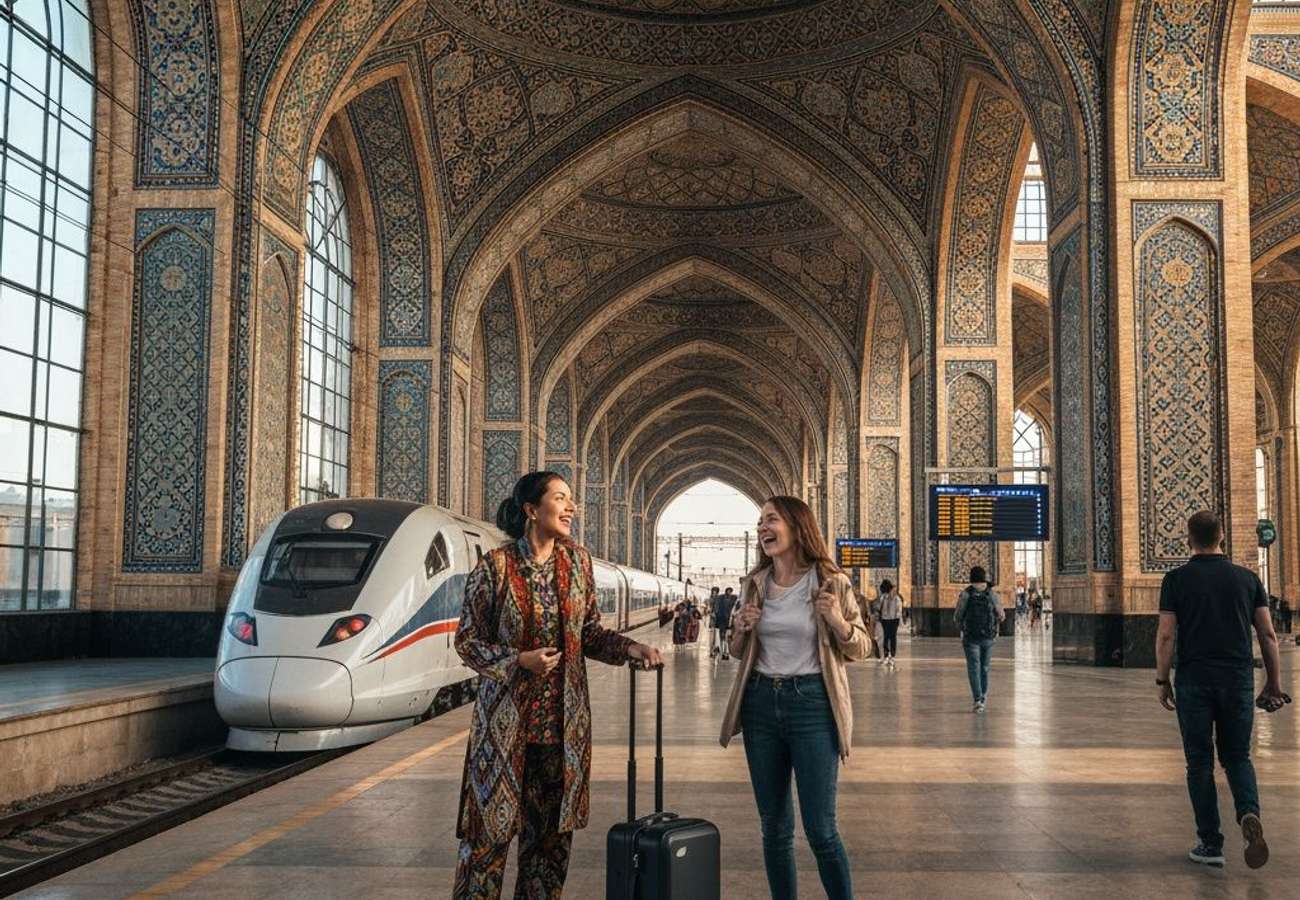
Image generated by AI
The Silk Road Renaissance: Why Central Asia Is Travel's Next Big Frontier
The ancient trading routes that once connected Asia to Europe are experiencing a modern awakening. Uzbekistan, Kazakhstan, Kyrgyzstan, Tajikistan, Turkmenistan, and western China are collectively emerging as one of the world's most compelling emerging tourism corridors, driven by restored rail infrastructure, UNESCO World Heritage preservation, and travelers hungry for authentic cultural immersion.
What's driving this sudden explosion? A potent combination of improved transport networks, government-backed tourism initiatives, and growing global awareness that the Silk Road offers something increasingly rare: destinations that blend spectacular landscapes, genuine heritage experiences, and meaningful historical narratives.
Reddit: "Just booked a two-week Silk Road rail journey. The reviews about Samarkand are insane—it's like stepping into a painting." — r/travel
Uzbekistan: The Jewel in the Central Asian Crown
At the epicenter of this tourism renaissance sits Uzbekistan, where historic cities are experiencing their own cultural revival. Samarkand and Bukhara—names that echoed across medieval trade routes—are now welcoming international visitors at unprecedented rates.
Samarkand's architectural splendor is almost overwhelming. The turquoise domes of the Registan complex, the intricate tilework, the monumental squares—these aren't museum pieces frozen in time. They're living testaments to centuries of cultural sophistication that continue to captivate visitors seeking depth over Instagram moments.
Khiva offers something equally rare: a nearly intact medieval walled city where you can navigate the same streets merchants traversed 500 years ago. The preservation isn't sterile or reconstructed—it maintains an organic character that makes history tangible.
Modern rail services have transformed accessibility. Trains now connect these heritage cities with efficiency and comfort that simply didn't exist a decade ago. Travelers can move seamlessly between Tashkent, Samarkand, Bukhara, and Khiva without the fatigue of lengthy road journeys, making multi-city itineraries genuinely feasible.
The Rail Revolution: Sustainable Travel Meets Immersive Discovery
Here's what separates 2027 Silk Road travel from past decades: the infrastructure backbone is finally matching the destinations' appeal.
Uzbekistan's expanding rail network has become the regional model. These aren't vintage heritage railways—they're modern services designed for comfort and efficiency. Luxury rail experiences are gaining serious traction, offering travelers the holy trinity of modern tourism: sustainability, comfort, and cultural engagement. You're minimizing your carbon footprint while experiencing landscapes and communities at a pace that actually allows comprehension.
China's high-speed rail expansion into western provinces has unlocked access to Kashgar and Urumqi—destinations historically associated with Silk Road commerce but previously difficult for most travelers to reach. The connectivity transformation is remarkable.
Reddit: "Took the overnight train from Uzbekistan into Tajikistan. Woke up surrounded by the Pamirs. Best sleep of my life and I saved a flight." — r/trains
Rail tourism aligns with broader shifts in how travelers think about journeys. The slow-travel movement isn't just about saving time—it's about experiencing transition, witnessing landscape changes, and genuinely connecting with the places you're moving through.
Beyond Samarkand: The Diverse Appeal of Central Asia
While Uzbekistan dominates heritage itineraries, the broader region offers distinct experiences that create genuinely comprehensive journeys.
Kazakhstan's appeal lies in dramatic contrast: vast steppes, canyon landscapes, and the urban sophistication of Almaty. Travelers seeking outdoor exploration combined with cultural discovery are finding unexpected depth here. Charyn Canyon rivals any landscape feature in the region for sheer visual impact.
Kyrgyzstan has positioned itself as Central Asia's adventure epicenter. Issyk-Kul Lake and the surrounding alpine regions provide trekking, horseback riding, and something increasingly rare: authentic nomadic experiences. Traditional yurt stays aren't romanticized tourism theater—they're genuine cultural encounters where visitors learn lifestyles that have remained remarkably consistent for generations.
Tajikistan's Pamir region attracts travelers willing to venture beyond conventional circuits. The mountain scenery is literally spectacular—among the most dramatic landscapes anywhere along the Silk Road corridor.
Turkmenistan remains the region's most enigmatic destination. Ancient archaeological sites, distinctive geological formations, and a deliberate approach to tourism development create an experience fundamentally different from its neighbors.
This diversity matters. A serious Silk Road journey isn't a single-country experience anymore—it's a carefully choreographed multi-country exploration that leverages improved rail connectivity to move between completely different landscapes, cultures, and historical narratives.
The UNESCO Factor: Heritage Preservation Meets Tourism Growth
International recognition matters more than many travelers realize. UNESCO World Heritage designations serve dual purposes: they encourage preservation while simultaneously driving visitor awareness and tourism infrastructure development.
UNESCO-recognized sites across Central Asia remain among the region's strongest assets. Their protection isn't merely symbolic—it drives real investment in conservation, visitor facilities, and regional development.
But here's the critical distinction emerging in 2027: authentic cultural experiences are outpacing conventional sightseeing. Cooking demonstrations with local families, traditional music performances, artisan workshops, village homestays—these create genuine cultural exchange rather than passive observation.
This shift benefits local communities directly. Tourism revenue distributes beyond major hotels and guide companies, reaching rural regions and artisan communities that preserve the traditions defining the Silk Road's unique identity.
What 2027 Means for Central Asia Tourism
The numbers tell the story, even if aggregate statistics aren't publicly extensive. Hotel construction, rail service expansion, and airline route development indicate serious operator confidence in sustained growth. Government initiatives across the region—particularly in Uzbekistan—demonstrate commitment to tourism development as economic strategy.
The convergence of factors is unlikely to reverse: improved infrastructure, international awareness, genuine heritage appeal, sustainability alignment, and growing travel sophistication among consumers who want depth, not just destinations.
This isn't a bubble. It's a fundamental repositioning of Central Asia from "distant" to "accessible," and from "historic monument preservation" to "experiential cultural tourism."
The Silk Road isn't returning—it's being reborn for travelers who understand that the most meaningful journeys happen when ancient history meets modern comfort.
Related Travel Guides
Disclaimer
This article is for informational and educational purposes only. It does not constitute legal, financial, or professional advice. While we strive to provide accurate and up-to-date information, travel policies, regulations, and conditions change rapidly. Always verify information with official sources before making travel decisions. Nomad Lawyer makes no representations about the accuracy, reliability, completeness, or suitability of the information provided. Readers should consult qualified professionals for advice specific to their circumstances. The views expressed in this article are those of the author and do not necessarily reflect the views of Nomad Lawyer.
Kunal K Choudhary
Co-Founder & Contributor
A passionate traveller and tech enthusiast. Kunal contributes to the vision and growth of Nomad Lawyer, bringing fresh perspectives and driving the community forward.
Learn more about our team →