
Amtrak Airo Trains Launch Pacific Northwest Route 2026: 125 MPH Speed, New Tech, 90% Lower Emissions
Amtrak's revolutionary Airo fleet debuts on the Cascades route in 2026 with 125 mph capability, panoramic windows, WiFi, and 90% lower emissions—transforming rail travel across the Pacific Northwest.

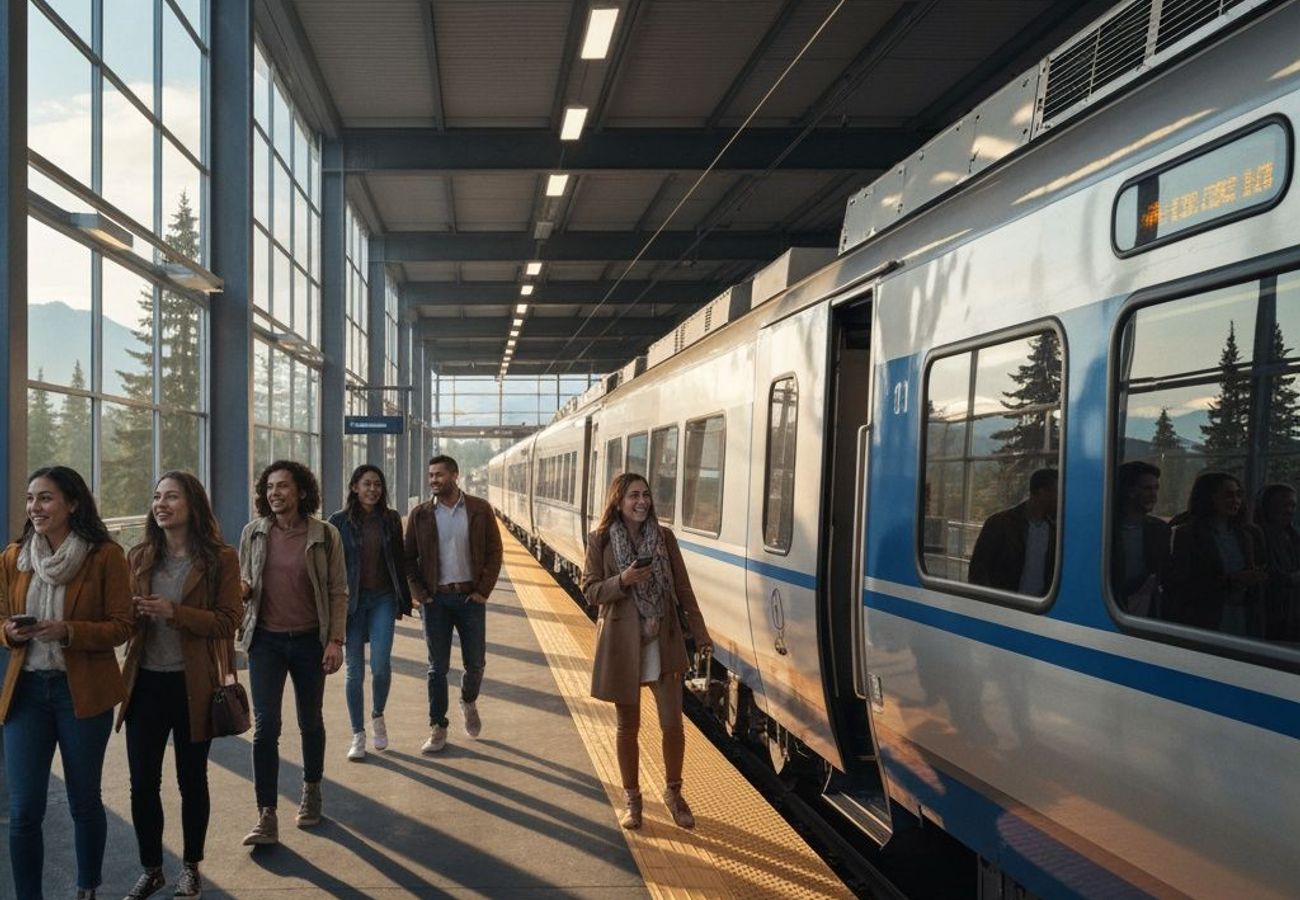
Image generated by AI
North America's Most Ambitious Rail Modernization Takes the Tracks
Amtrak is about to transform passenger rail travel across one of the continent's most scenic corridors. The highly anticipated Amtrak Airo fleet officially enters service in 2026, replacing aging equipment that's been in operation since the 1970s. What we're witnessing isn't just a cosmetic upgrade—it's a fundamental reimagining of what modern train travel should feel like.
The first completed Airo train arrived in Seattle during May 2026. Testing programs and crew training are underway, with inaugural service on the Amtrak Cascades route expected to roll out imminently. For rail enthusiasts and conscious travelers seeking alternatives to congested highways and carbon-heavy flights, this is the moment everything changes.
Reddit: "Finally, trains that don't feel like they're held together with duct tape and hope." — r/trains
Twenty-Five Years of Vision, Five Years of Engineering
Amtrak first unveiled the Airo program in 2021 as part of a long-term strategy to renew its passenger fleet. But the need runs deeper. For decades, many railcars across various routes functioned despite their advanced age, kept running by maintenance crews working overtime.
Growing passenger demand, changing technology standards, and rising expectations for comfort and sustainability created an undeniable business case for overhaul. Siemens, the German industrial giant, won the domestic manufacturing contract and designed trainsets engineered to meet 21st-century standards while preserving the irreplaceable appeal of rail travel.
The project focused on connectivity, reliability, efficiency, and passenger satisfaction. Both frequent travelers and first-timers would benefit from a more comfortable, technologically advanced environment.
The Passenger Experience Gets a Total Redesign
Step aboard an Amtrak Airo train and you'll immediately notice the difference.
Spacious interiors create an open, welcoming atmosphere. Large panoramic windows dominate the sightlines—because you're not just traveling through the Pacific Northwest, you're experiencing it. Mountain valleys, coastal regions, forests, rivers, and urban skylines unfold at eye level throughout your journey.
Seating has been completely reconsidered. Ergonomically designed arrangements include generous legroom for longer routes, adjustable headrests for proper support, dedicated cup holders, tablet supports integrated into seatbacks, and larger tray tables. These aren't minor tweaks—they're the difference between dreading a three-hour journey and actually looking forward to it.
Reddit: "The legroom alone makes this worth the trip. Flew here instead of taking Amtrak last time and honestly regretted it." — r/PNWtravel
Technology That Actually Works
Modern connectivity defines the Airo experience. Digital customer information systems provide real-time updates on schedules, stops, and journey progress. USB charging ports integrated into seating areas keep your devices powered throughout the journey. Onboard WiFi enables work, communication, or entertainment.
Touchless restroom controls reflect post-pandemic hygiene expectations that have become industry standard. The combination of digital services and passenger amenities reflects broader transportation industry trends: convenience and connectivity drive customer satisfaction.
Navigation has been simplified through a new color-coded signage system applied throughout the trainsets' interior and exterior. Finding your cabin or locating facilities no longer requires deciphering confusing corridor layouts.
Business Class Gets the Premium Treatment
Travelers choosing premium accommodations encounter significant improvements. The upgraded business class section features both single-seat and double-seat configurations—additional privacy for solo travelers while accommodating passengers traveling together. Improved cabin layouts and seating options create a more refined travel environment that justifies the premium fare.
Raw Power Meets Environmental Responsibility
Here's where engineering meets sustainability.
Siemens designed the Airo trainsets to achieve speeds of up to 125 miles per hour (approximately 201 kilometers per hour). That's not just faster—it's a significant enhancement in operational efficiency and journey quality. Higher speeds mean improved service reliability and quicker arrivals, critical advantages in a competitive transportation marketplace.
But environmental performance takes equal priority. According to Amtrak, the new trains generate approximately 90 percent fewer particulate emissions during diesel operations compared with older equipment. This reduction aligns with transportation industry efforts aimed at lowering environmental impacts across passenger networks.
For environmentally conscious travelers, this matters. Rail travel already produces significantly fewer emissions than driving or flying, and the Airo fleet strengthens that advantage considerably.
The Pacific Northwest Corridor: 460 Miles of Pure Scenery
The Amtrak Cascades route ranks among North America's most visually stunning rail corridors. Stretching approximately 740 kilometers, it connects Vancouver, British Columbia with Eugene, Oregon while passing through numerous communities across the Pacific Northwest.
The corridor offers travelers access to diverse landscapes: mountain ranges, coastal environments, rivers, forests, and vibrant urban centers. While no single train travels the entire route end-to-end, the network provides extensive connectivity throughout the region.
Major stops include Mount Vernon, Everett, Seattle, Tacoma, Kelso, Portland, Salem, and Eugene. Each destination contributes unique cultural, recreational, and tourism opportunities that enhance rail travel's overall appeal.
What You'll Actually See From Your Seat
Vancouver offers Gastown, Chinatown, Granville Island, Stanley Park, Coal Harbour, and outdoor recreation around Grouse Mountain. The city serves as the northern gateway to the entire corridor.
Seattle blends history, culture, and waterfront attractions. The Klondike Gold Rush Museum and Experience Music Project Museum attract visitors, while Pike Place Market, the Space Needle, and Puget Sound waterfront dominate the skyline visible from the Amtrak terminus.
Portland bridges Pacific Northwest charm with urban sophistication. Travelers access downtown attractions, Forest Park (one of America's largest urban forests), and the Columbia River Gorge—some of the Pacific Northwest's most dramatic geology—lies just east of the city.
The Amtrak Cascades officially serves as a vital transportation artery connecting these regional hubs, but it's evolved into something more: a scenic experience that competes with driving or flying on quality-of-life grounds alone.
The Broader Context: Why Rail Modernization Matters Now
Rail travel continues attracting growing interest among travelers seeking environmentally conscious and scenic transportation alternatives. The Airo arrival is being viewed as a significant milestone for both passengers and the transportation sector broadly.
Americans and Canadians are reconsidering their transportation choices. Congested highways, expensive flights, environmental concerns, and the desire for a different travel experience have created momentum behind rail expansion and modernization. The Federal Railroad Administration and Canadian transport authorities have signaled strong support for regional rail investment, and projects like Amtrak Airo validate that commitment.
The Pacific Northwest, with its geography, tourism infrastructure, and environmental consciousness, is an ideal proving ground for next-generation rail service.
What Comes Next
The Amtrak Airo fleet represents the first major modernization of Amtrak's long-distance and regional service in decades. This isn't the end—it's the beginning. Successful deployment on the Cascades route will likely lead to fleet expansion across other corridors.
For travelers planning Pacific Northwest trips in 2026 and beyond, the equation has fundamentally shifted. You can now experience world-class scenery, genuine comfort, modern technology, and genuine sustainability in a single journey. That's not hyperbole—that's the promise the Airo delivers.
The future of North American rail just pulled into the station—and it's leaving without you if you're still stuck on the highway.
Related Travel Guides
Disclaimer
This article is for informational and educational purposes only. It does not constitute legal, financial, or professional advice. While we strive to provide accurate and up-to-date information, travel policies, regulations, and conditions change rapidly. Always verify information with official sources before making travel decisions. Nomad Lawyer makes no representations about the accuracy, reliability, completeness, or suitability of the information provided. Readers should consult qualified professionals for advice specific to their circumstances. The views expressed in this article are those of the author and do not necessarily reflect the views of Nomad Lawyer.
Kunal K Choudhary
Co-Founder & Contributor
A passionate traveller and tech enthusiast. Kunal contributes to the vision and growth of Nomad Lawyer, bringing fresh perspectives and driving the community forward.
Learn more about our team →