
JR Kyushu Launches Temporary Train Hotel at Miyazaki Station for Hinatazaka46 Concert Event 2026
JR Kyushu has introduced a temporary Train Hotel at Miyazaki Station, converting railway carriages into overnight accommodations to support visitors attending the Hinatazaka46 concert event.

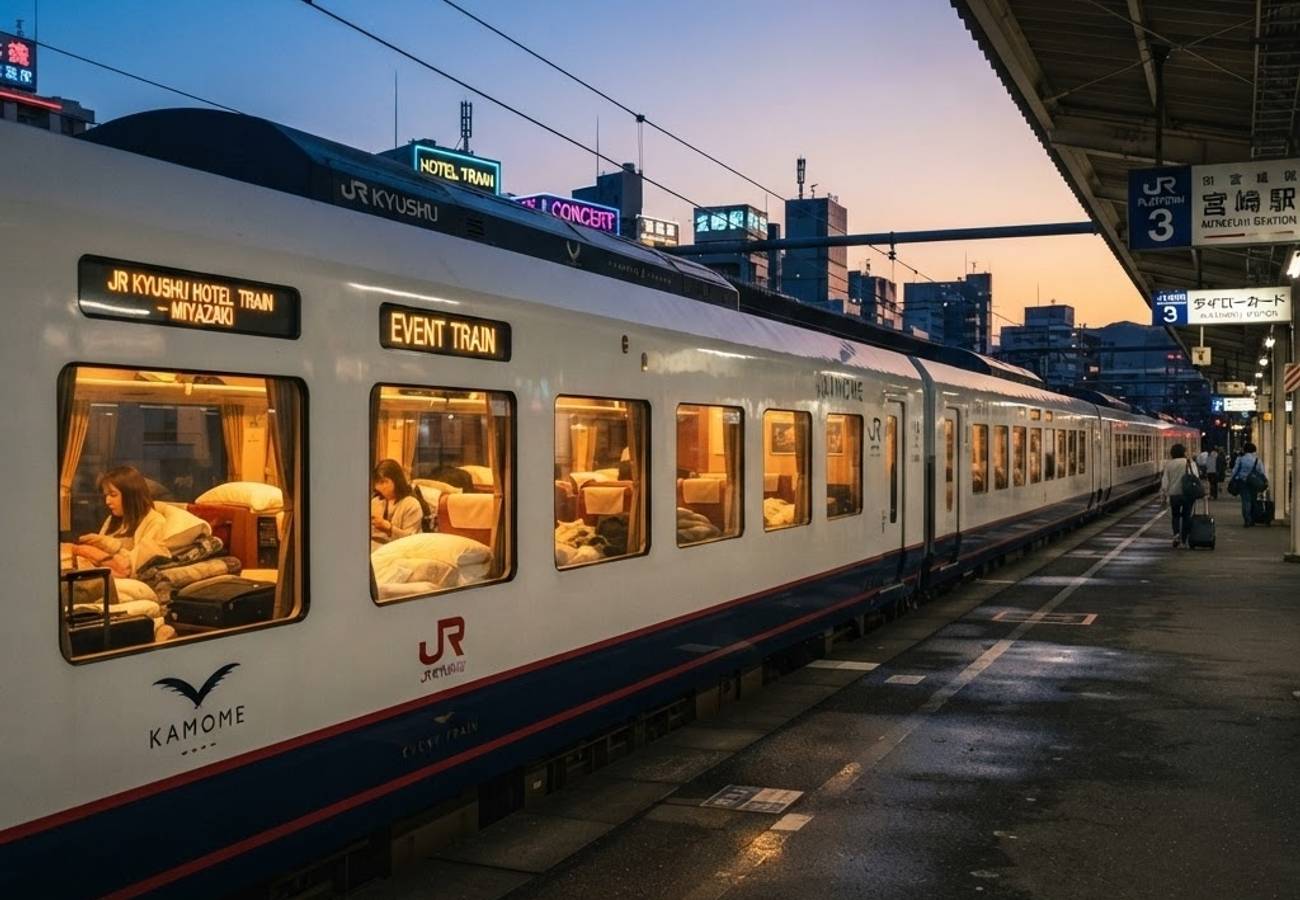
Image generated by AI
JR Kyushu has deployed a temporary Train Hotel at Miyazaki Station, transforming railway vehicles into overnight guest rooms to alleviate accommodation shortages during the Hinatazaka46 concert event.
The initiative marks a strategic shift in Japanese rail operations, where transportation assets are repurposed as hospitality infrastructure to meet sudden spikes in regional tourism demand. By converting stationary carriages into hotel spaces, JR Kyushu is integrating event management with transport logistics to provide a high-density housing solution in a regional hub.
Operational Details of the Train Hotel
The JR Kyushu Train Hotel is not a permanent fixture but a tactical response to the influx of visitors traveling to Miyazaki for the Hinatazaka46 performances. The experience allows guests to stay overnight within the train itself, situated directly at Miyazaki Station.
Key Service Components:
- Location: Directly integrated with Miyazaki Station, eliminating the need for secondary transit to hotels.
- Concept: Repurposing railway vehicles into temporary, themed hotel rooms.
- Purpose: Specifically timed to coincide with the Hinatazaka46 concert schedule.
- Experience: A blend of practical lodging and "railway nostalgia" designed for experiential travelers.
Strategic Logistics for Event Travelers
Large-scale entertainment events in regional Japan frequently exhaust local hotel inventories. This "Train Hotel" model solves two problems simultaneously: it increases the available bed count in Miyazaki and provides a novelty experience that appeals to the target demographic of concert-goers.
For those attending the event, the benefits are purely logistical:
- Immediate Proximity: Guests are already at the transport hub, simplifying arrival and departure.
- Capacity Relief: Reduces the pressure on traditional Miyazaki hotels during peak dates.
- Cultural Integration: Connects the visitor's stay with Japan's renowned rail culture.
The Shift Toward Experiential Railway Tourism
Our analysis of current Japanese travel trends indicates that railways are transitioning from mere conduits of movement to primary tourist destinations. JR Kyushu has a documented history of this approach, having developed various sightseeing trains focused on regional culture and scenery.
The Miyazaki project represents the next evolution: stationary experiential lodging. This allows regional areas to attract visitors who prioritize "unique memories" over standard luxury, effectively turning a logistical necessity (a place to sleep) into a travel highlight.
Critical Information for Prospective Guests
Because this is a temporary, event-linked operation, the booking process differs from standard hotel reservations. Travelers must adhere to the following:
- Availability: Limited to specific dates surrounding the Hinatazaka46 event.
- Booking: Reservations are handled via official JR Kyushu announcements rather than standard hotel aggregators.
- Planning: Guests are advised to verify specific carriage amenities and included services before confirming their stay.
Regional Impact on Miyazaki Tourism
Miyazaki, located on the island of Kyushu, is primarily known for its coastal landscapes and natural sites. By linking a major pop-culture event with innovative rail lodging, the region is positioning itself as a hub for tourism innovation. This strategy encourages visitors to explore destinations outside the Tokyo-Osaka-Kyoto "Golden Route," spreading economic benefits to regional prefectures.
The convergence of entertainment, transport, and hospitality is redefining the Japanese travel experience.
Related Travel Guides
Disclaimer
This article is for informational and educational purposes only. It does not constitute legal, financial, or professional advice. While we strive to provide accurate and up-to-date information, travel policies, regulations, and conditions change rapidly. Always verify information with official sources before making travel decisions. Nomad Lawyer makes no representations about the accuracy, reliability, completeness, or suitability of the information provided. Readers should consult qualified professionals for advice specific to their circumstances. The views expressed in this article are those of the author and do not necessarily reflect the views of Nomad Lawyer.
Preeti Gunjan
Contributor & Community Manager
A passionate traveller and community builder. Preeti helps grow the Nomad Lawyer community, fostering engagement and bringing the reader experience to life.
Learn more about our team →