
Jindabyne and Victorian Gateway Towns Lead Australian Snow Tourism Shift in 2026
Alpine gateway cities like Jindabyne and Mansfield are outpacing traditional resorts as the primary hubs for Australian snow tourism in 2026, driven by a demand for affordable accommodation and multi-season adventure.

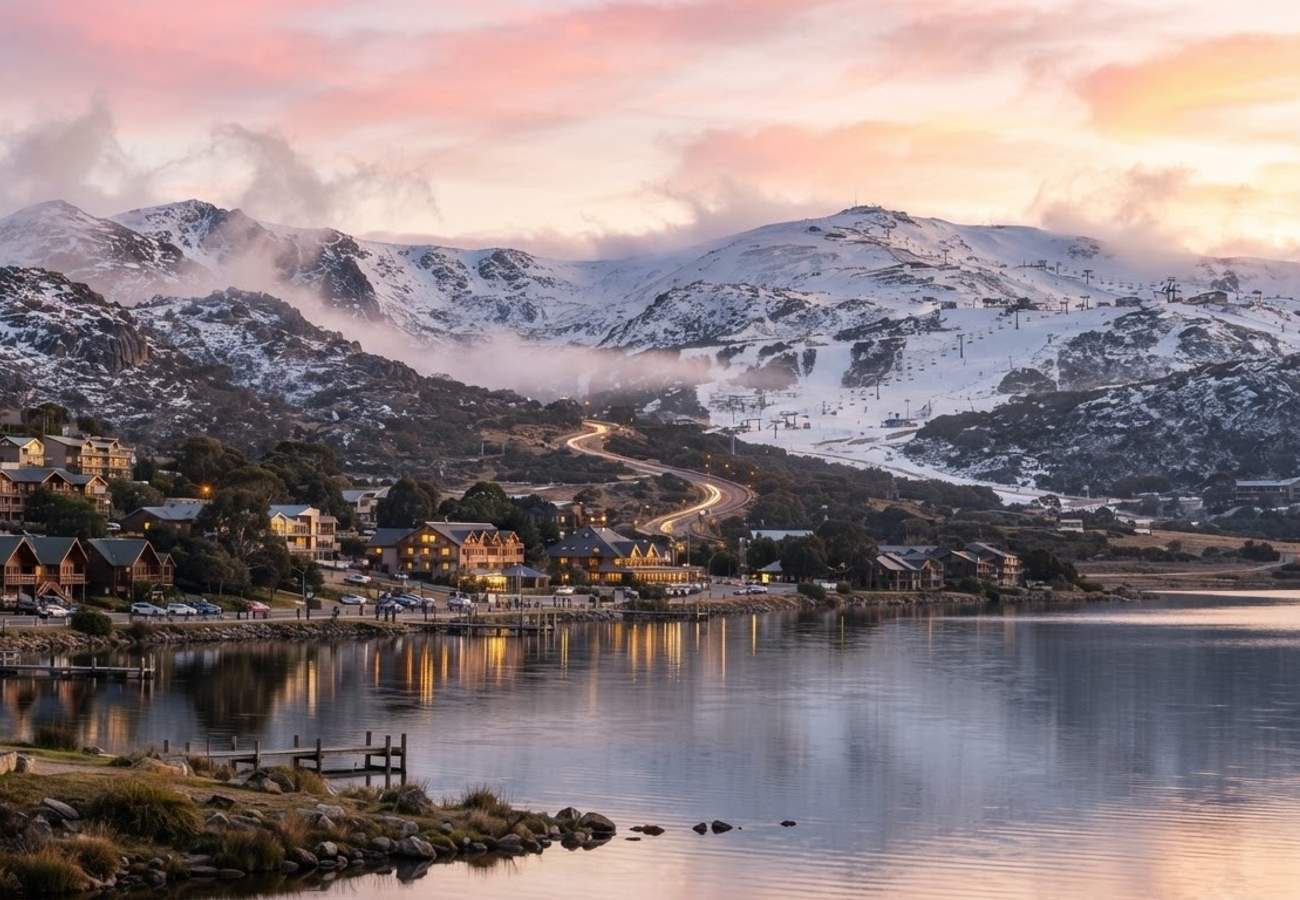
Image generated by AI
The Snowy Mountains region recorded 1.1 million domestic visitors and 2.1 million visitor nights for the year ending March 2026, signaling a massive structural shift in how travelers access the Australian Alps. This data indicates that the center of gravity for winter tourism is migrating away from the slopes themselves and toward "gateway" hubs. While traditional resorts like Perisher and Thredbo remain the primary activity anchors, the economic and logistical weight has shifted to surrounding towns that offer diversified lodging and year-round utility.
The Alpine Gateway Shift in Numbers
The 2026 data reveals a clear pattern: travelers are decoupling their accommodation from their activity. Rather than paying the premium for on-mountain lodges, a growing percentage of the market is utilizing towns like Jindabyne (NSW) and Mansfield (VIC) as operational bases. This movement is not merely about cost-cutting; it is a transition toward "multi-season" tourism.
In New South Wales, the Jindabyne-Thredbo-Perisher corridor has become the dominant axis of snow tourism. Jindabyne’s growth is specifically tied to its ability to serve as a flexible alternative to high-cost resort stays, attracting a younger demographic and larger family units who require more square footage and kitchen facilities than a standard alpine hotel provides.
Similarly, in Victoria, the rise of Mansfield and Mount Beauty indicates a similar trend. These towns are no longer viewed as mere transit points but as destinations in their own right. By integrating food tourism, cycling, and hiking into the winter itinerary, these hubs are extending the average length of stay, transforming a three-day ski trip into a week-long regional exploration.
Comparative Regional Performance 2026
The divergence between resort-centric stays and gateway-centric stays is most evident when comparing the New South Wales and Victorian markets. While the Snowy Mountains maintain the highest raw volume of visitors, the Victorian High Country is seeing a more aggressive push toward "four-season" diversification.
| Gateway Hub | Primary Resort Connection | Primary Growth Driver 2026 | Market Positioning |
|---|---|---|---|
| Jindabyne (NSW) | Thredbo / Perisher | Accommodation scalability & Lake Jindabyne | High-volume, family-centric base |
| Mansfield (VIC) | Mount Buller | Proximity to Melbourne & adventure tourism | Weekend-warrior / Short-break hub |
| Mount Beauty (VIC) | Falls Creek | Nature-based tourism & lifestyle appeal | Low-density, premium outdoor base |
| Bright (VIC) | High Country Snowfields | Culinary tourism & year-round cycling | Multi-season lifestyle destination |
| Canberra (ACT) | NSW Snowy Mountains | Urban-to-Alpine transit integration | Metropolitan hybrid base |
| Hobart (TAS) | Ben Lomond | Wilderness and unique regional winter appeal | Niche, alternative snow market |
This shift is partly a response to the volatility of natural snowfall. According to the World Tourism Organization (UNWTO), the global travel industry is increasingly adapting to climate variability by diversifying product offerings. Australia is following this benchmark; by investing in mountain bike parks and heritage tourism in towns like Cooma and Bright, the industry is hedging against shorter winter seasons.
What This Means for Travelers
For the individual traveler, the data suggests that the "resort-only" booking model is becoming an inefficient way to experience the Australian Alps. To maximize value and experience in 2026, the following strategies are recommended:
- Decouple Lodging from Lift Tickets: Booking accommodation in Jindabyne or Mansfield rather than on-mountain can reduce lodging costs by an estimated 30-50%, depending on the season. This allows for a longer trip duration without increasing the total budget.
- Plan for "Hybrid" Itineraries: With the growth of adventure products in gateway towns, travelers should allocate at least two days of their trip to non-snow activities. For instance, combining a Perisher ski trip with fishing or hiking around Lake Jindabyne.
- Leverage Urban Bases: For those seeking a luxury or cultural blend, using Canberra as a base allows for a combination of metropolitan dining and museum visits with day trips to the snowfields, reducing the need for expensive alpine-specific rentals.
- Monitor Regional Availability: Because gateway towns are seeing a surge in demand, the window for securing affordable family-sized rentals in Jindabyne is narrowing. Booking 12-16 weeks in advance is now the standard for the peak July-August window.
Forward Projection: The "Hub-and-Spoke" Model
The trajectory of Australian snow tourism is moving toward a "hub-and-spoke" model. In this scenario, the gateway town serves as the "hub" (providing the bed, the food, and the social experience), while the ski resorts serve as the "spokes" (providing the specific athletic activity).
We can expect further investment in infrastructure that connects these hubs. The proposed Jindabyne Mountain Bike and Adventure Park is a prime example of this trend. Once completed, it will likely shift the peak visitation window from a concentrated 12-week winter burst to a sustained 24-week seasonal cycle.
Furthermore, the expansion of Tasmania’s Ben Lomond region suggests that the "alternative snow" market is growing. Travelers are increasingly seeking "wilderness" experiences over "resort" experiences, which will likely drive growth in lower-density gateway towns across the country. This trend aligns with broader data from the International Air Transport Association (IATA) regarding the rise of regional tourism and the decentralization of travel hubs.
FAQ: Australia Snow Tourism 2026
Are on-mountain resorts still the best option for beginners? While resorts offer convenience, the 2026 trend shows that beginners are moving to gateway towns like Jindabyne to save on costs. The trade-off is a daily commute to the slopes, but the savings on accommodation often outweigh the transport costs.
Which town is best for a family-friendly winter break? Jindabyne is currently the strongest option due to its high volume of family-sized accommodations and proximity to both Thredbo and Perisher, offering the most flexibility for different skill levels.
Is it more expensive to stay in a gateway town than a resort? Generally, no. Gateway towns offer a wider range of pricing, from budget hostels to mid-range rentals, whereas on-mountain lodging typically commands a premium for the luxury of "ski-in/ski-out" access.
How has climate change affected these destinations? Predictability has decreased, leading towns like Bright and Mansfield to invest in "four-season" attractions. This ensures that the local economy remains stable even if the snow season is shorter than average.
The era of the isolated ski lodge is fading, replaced by a regional ecosystem where the town is the destination and the snow is the attraction.
Related Travel Guides
Disclaimer
This article is for informational and educational purposes only. It does not constitute legal, financial, or professional advice. While we strive to provide accurate and up-to-date information, travel policies, regulations, and conditions change rapidly. Always verify information with official sources before making travel decisions. Nomad Lawyer makes no representations about the accuracy, reliability, completeness, or suitability of the information provided. Readers should consult qualified professionals for advice specific to their circumstances. The views expressed in this article are those of the author and do not necessarily reflect the views of Nomad Lawyer.
Preeti Gunjan
Contributor & Community Manager
A passionate traveller and community builder. Preeti helps grow the Nomad Lawyer community, fostering engagement and bringing the reader experience to life.
Learn more about our team →