
Bangkok Airport Rail Link Extended to January 2027 Amid Thailand High-Speed Rail Transition
Thailand extends the Bangkok Airport Rail Link operation until January 31, 2027, preventing a critical transport gap between Suvarnabhumi Airport and the city center while the government finalizes long-term high-speed rail integration.

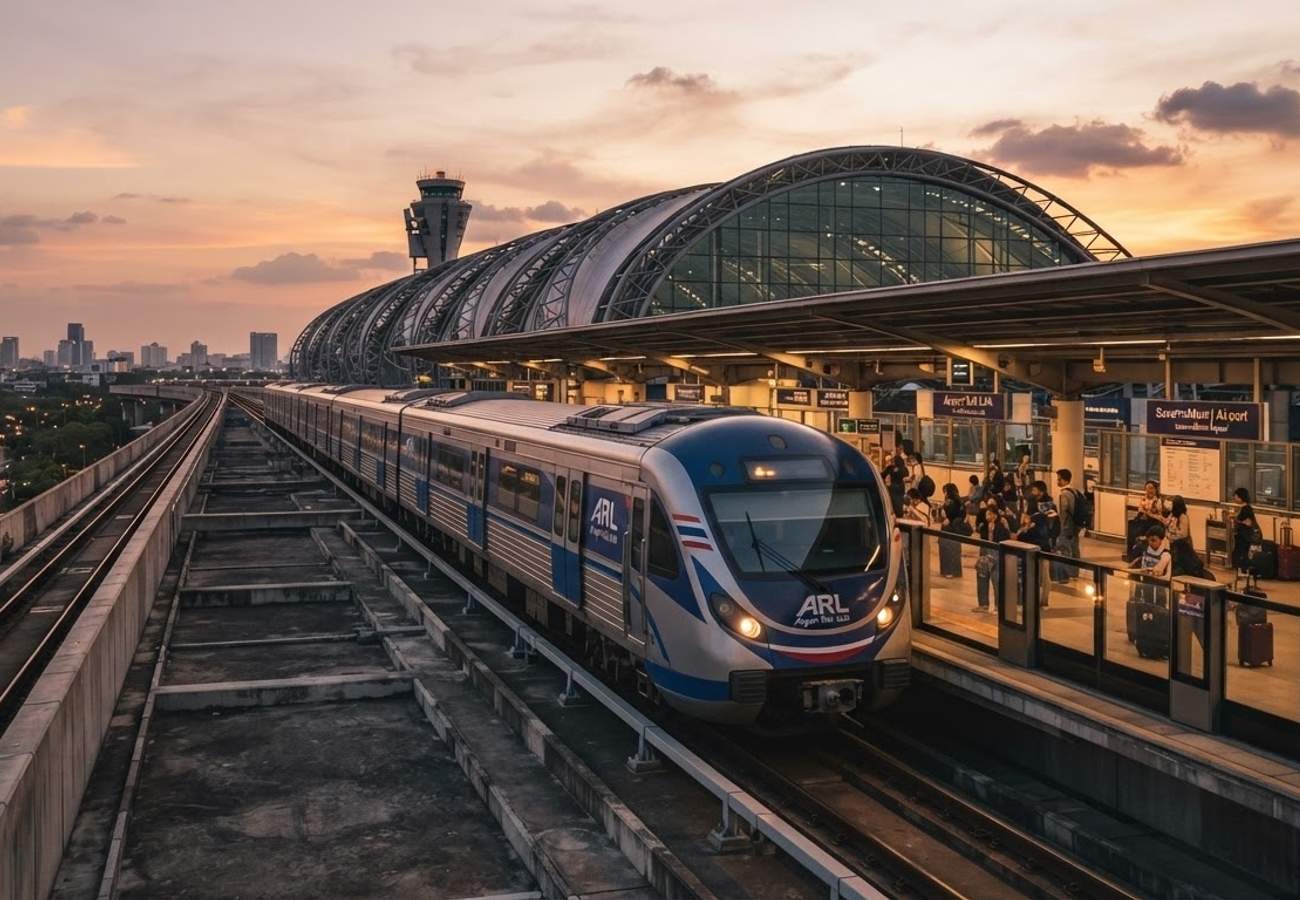
Image generated by AI
The operational window for the Bangkok Airport Rail Link has been pushed from September 30, 2026, to January 31, 2027—a four-month extension that prevents a potential transit collapse for millions of international arrivals. This strategic move by the Thai government ensures that the primary artery connecting Suvarnabhumi Airport to central Bangkok remains open while authorities navigate a complex contractual and operational transition.
The Transit Lifeline in Numbers
The decision to extend the service is a reaction to the critical role this specific rail corridor plays in Thailand's tourism economy. The Airport Rail Link serves as the primary high-capacity alternative to road transport, connecting the airport directly to the Phaya Thai station.
Key data points regarding this extension include:
- Original Expiry Date: September 30, 2026.
- New Temporary Deadline: January 31, 2027.
- Extension Duration: Exactly four months of continued service.
- Primary Route: Suvarnabhumi Airport to Phaya Thai station.
The extension is not merely a bureaucratic delay but a protective measure. Without this window, the sudden removal of rail capacity would force a massive shift in passenger volume toward taxis and buses, likely leading to unprecedented congestion at one of Asia's busiest aviation hubs. According to data trends often tracked by OAG, airport surface access is a primary driver of overall passenger satisfaction and operational efficiency.
Comparative Context: Local Transit vs. Regional Ambitions
The current struggle to finalize the long-term operation of the Airport Rail Link exists within a broader, more ambitious framework: the Three-Airport High-Speed Railway project. This massive infrastructure undertaking aims to unify Don Mueang International Airport, Suvarnabhumi Airport, and U-Tapao Airport into a single, seamless corridor.
While the temporary extension provides immediate stability, it highlights a gap between current operational capabilities and future goals. The State Railway of Thailand (SRT) is currently forced to develop contingency plans—including the potential use of railway subsidiaries—to ensure that if a primary agreement is not reached by early 2027, the trains do not simply stop running.
The following table compares the current temporary state of the Airport Rail Link against the projected regional integration goals.
| Metric | Current Airport Rail Link (Temporary) | Three-Airport High-Speed Rail (Projected) |
|---|---|---|
| Operational Status | Temporary Extension to Jan 2027 | Under Development / Phased Implementation |
| Primary Scope | Suvarnabhumi $\rightarrow$ Phaya Thai | Don Mueang $\rightarrow$ Suvarnabhumi $\rightarrow$ U-Tapao |
| Management | Transitional/SRT Contingency | Integrated High-Speed Network |
| Primary Goal | Immediate Passenger Stability | Regional Economic Corridor (EEC) Growth |
| Infrastructure | Existing Rail Assets | New High-Speed Dedicated Tracks |
This shift is part of a larger trend in Southeast Asia toward "intermodal connectivity," where airports are no longer treated as isolated destinations but as nodes in a wider rail network. For a benchmark on how these movements impact global tourism, the World Travel & Tourism Council (WTTC) frequently highlights the correlation between seamless transit and increased tourist spend.
What This Means for Travelers
For the individual traveler, the extension of the Airport Rail Link is a significant win for predictability. If you are booking travel to Bangkok for the final quarter of 2026 or the first month of 2027, you can continue to rely on the rail link as your primary transit method.
Actionable Booking Advice:
- Q4 2026 Arrivals: Do not switch your transit plans to private taxis or buses based on the previous September 2026 deadline. The rail link remains the fastest and most cost-effective route to the city center.
- January 2027 Travel: While the service is extended to January 31, this is a "temporary lifeline." Travelers arriving in late January should monitor official State Railway of Thailand announcements, as the transition to a new operator or system may cause short-term scheduling shifts.
- Budgeting: The rail link remains the most affordable high-speed option. Travelers should prioritize this over ride-sharing apps to avoid the notorious Bangkok traffic congestion, which typically peaks during the year-end holiday season.
Forward Projection: The Path to 2027 and Beyond
The trajectory of Bangkok's transport network suggests that the Airport Rail Link is transitioning from a standalone service into a component of a national high-speed grid. The current focus on fleet reliability—including urgent technical repairs and maintenance to the existing trains—indicates that the government intends to maximize the lifespan of current assets while the high-speed corridor is built.
We can expect two primary movements in the coming months: First, a shift in management. The State Railway of Thailand is reviewing staffing and resources to possibly take over operations directly or through a subsidiary. This suggests a move toward more centralized state control over critical tourism infrastructure.
Second, the integration of the Phaya Thai–Bang Sue connection. As the Thai-Chinese high-speed railway network progresses, the Airport Rail Link will likely be absorbed into a larger hub-and-spoke model centered around Bang Sue Grand Station. This will eventually reduce the reliance on the Phaya Thai terminus and distribute passenger flow more evenly across the city.
The stability provided by the January 2027 extension is a strategic pause. It allows the government to align the "temporary" Airport Rail Link with the "permanent" high-speed rail vision without risking a total shutdown of airport access.
FAQ: Bangkok Airport Rail Link 2027
Will ticket prices increase during the extension period? There is currently no data indicating a price hike for the period between October 2026 and January 2027. The extension is focused on operational continuity rather than revenue restructuring.
Is the rail link still the fastest way to the city? Yes. Despite maintenance issues, the rail link bypasses Bangkok's road traffic, making it significantly faster than taxis or buses during peak hours and holiday seasons.
What happens after January 31, 2027? The government is using this extension to finalize a long-term operational agreement. While a shutdown is unlikely given the economic risk, the service may transition to a new operator or be integrated into the high-speed rail network.
Which stations are affected by this extension? The entire line from Suvarnabhumi Airport to Phaya Thai station remains operational under the temporary extension.
The bridge between the runway and the city remains open, but the clock is ticking toward a total systemic overhaul.
Related Travel Guides
Disclaimer
This article is for informational and educational purposes only. It does not constitute legal, financial, or professional advice. While we strive to provide accurate and up-to-date information, travel policies, regulations, and conditions change rapidly. Always verify information with official sources before making travel decisions. Nomad Lawyer makes no representations about the accuracy, reliability, completeness, or suitability of the information provided. Readers should consult qualified professionals for advice specific to their circumstances. The views expressed in this article are those of the author and do not necessarily reflect the views of Nomad Lawyer.
Raushan Kumar
Founder & Lead Developer
Full-stack developer with 11+ years of experience and a passionate traveller. Raushan built Nomad Lawyer from the ground up with a vision to create the best travel and law experience on the web.
Learn more about our team →