
Jakarta and Ho Chi Minh City Tourism Boom Creates 2.1 Million Jobs in 2026 Record Surge
A massive tourism surge in Jakarta and Ho Chi Minh City has generated 2.1 million jobs in 2026, driven by aggressive infrastructure investment and new visa policies.

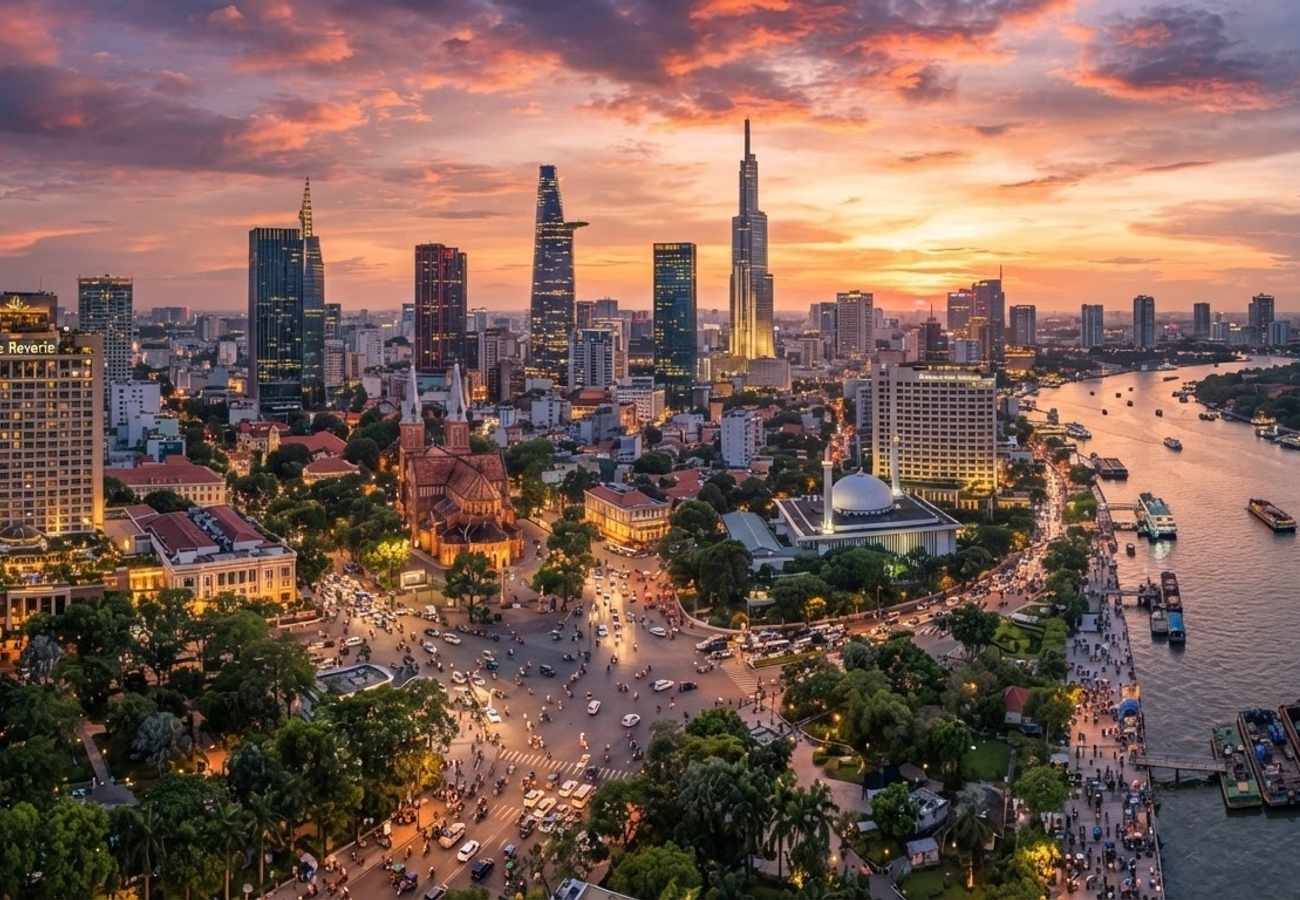
Image generated by AI
Two Southeast Asian megacities are currently spearheading a regional economic explosion, with Jakarta and Ho Chi Minh City projected to have generated 2.1 million new jobs in 2026. Government data from September 2026 reveals that record-breaking visitor numbers are revitalizing not only the hospitality sector but also the arts and travel infrastructure across both hubs.
The current surge transcends a simple post-pandemic recovery. Industry reports indicate that this growth is the direct result of aggressive government-led infrastructure spending and the implementation of innovative visa policies designed to attract high-yield international travelers. This shift signals a broader change in global travel patterns, as tourists move away from traditional Western hubs in favor of dynamic Asian urban centers.
Southeast Asia's 2026 Economic Transformation
The macroeconomic environment of the late 2020s has seen a fundamental pivot in how international travelers choose their destinations. By 2026, the Association of Southeast Asian Nations (ASEAN) has reached a critical turning point, fueled by a combination of strong domestic spending and coordinated international marketing. At the center of this resurgence is the dual-city phenomenon occurring in Jakarta and Ho Chi Minh City.
For years, these cities functioned primarily as commercial transit points or business hubs for Indonesia and Vietnam. However, they have successfully rebranded as standalone global destinations. This evolution is characterized by a move toward "high-yield" tourism—visitors who stay longer and spend more—and a significant increase in foreign direct investment into luxury hospitality. The convergence of digital travel tools, streamlined entry requirements, and modernized aviation strategies has created an ideal environment for this growth.
Shifting Global Demand Toward Asian Urban Centers
There is a visible trend of travelers bypassing overcrowded European capitals to seek out the cultural depth and modern efficiency of Southeast Asian metropolises. Jakarta and Ho Chi Minh City are perfectly positioned to capture this demand, offering a blend of deep historical heritage and hyper-modern amenities.
These cities provide world-class dining, expanding luxury hotel inventories, and a cost-to-value ratio that far exceeds Western equivalents. Because of their strategic locations, they serve as the primary gateways for the Asia-Pacific region, turning what were once brief layovers into multi-day urban excursions.
Vietnam's Record-Breaking Arrival Statistics
Vietnam has emerged as a global tourism powerhouse in 2026, with data from the General Statistics Office (GSO) showing a massive influx of visitors. In the first quarter of 2026, the country welcomed 6.76 million international tourists, a 12.4 per cent increase over the same period in 2025.
This momentum continued through the first half of the year. By July 2026, the Vietnam National Authority of Tourism (VNAT) confirmed that approximately 13.9 million foreign visitors had entered the country, marking a 13.8 per cent year-on-year rise. Ho Chi Minh City is the primary driver of these figures, with local authorities setting an ambitious target of 61 million total visitors for the 2026 calendar year, including 11 million international arrivals.
Financial Benchmarks and Urban Redevelopment in Ho Chi Minh City
The Vietnamese government has set aggressive targets to maintain this growth. For the full 2026 year, the goal is to attract 25 million international arrivals and 150 million domestic trips. The projected economic impact is substantial, with a total tourism revenue target of VND 1.125 quadrillion (approximately US$46 billion).
This capital injection is fueling a massive urban overhaul in Ho Chi Minh City. Current developments include:
- Construction of new luxury hotel complexes.
- Increased funding for the preservation of historical heritage sites.
- Modernization of public transit systems to accommodate higher passenger volumes.
Jakarta's Rebranding as a Cultural Hub
While Vietnam sees a surge in international arrivals, Jakarta is undergoing a profound transformation from a corporate megacity into a creative and cultural center. Data from Statistics Indonesia (BPS) confirms this shift. In May 2026, Indonesia recorded 1.38 million foreign arrivals, a 5.83 per cent increase year-on-year. Between January and May 2026, total foreign arrivals reached 6.07 million, a 7.68 per cent increase.
However, the most significant growth is occurring within the domestic market. BPS reports that domestic tourist trips across Indonesia hit 106.16 million in May 2026 alone. For the first five months of the year, domestic trips totaled a staggering 523.22 million. As the primary transit hub, Jakarta is the main beneficiary of this internal movement, driving demand for retail and entertainment.
Indonesia's Logistical and Transport Growth
The scale of movement within Indonesia reflects a highly healthy travel ecosystem. Jakarta's rail network, in particular, saw 46.96 million passengers in May 2026, an annual increase of 4.17 per cent. Sea transport also showed strength, with domestic ferry services carrying 4.51 million passengers and other domestic sea transport moving 2.66 million people in the same period. These figures validate the government's recent investments in connecting the capital to the wider archipelago.
Employment and Socioeconomic Impact Data
The most tangible result of the tourism boom in these two cities is the creation of employment. As of September 2026, the combined growth in Jakarta and Ho Chi Minh City has driven the creation of 2.1 million jobs. This employment surge spans multiple sectors, from high-end hospitality and aviation to local arts and small-scale entrepreneurship.
| Metric | Ho Chi Minh City / Vietnam (2026) | Jakarta / Indonesia (2026) |
|---|---|---|
| Q1 International Visitors | 6.76 Million | N/A |
| July Cumulative Visitors | 13.9 Million | N/A |
| Jan-May Foreign Arrivals | N/A | 6.07 Million |
| May Domestic Trips | N/A | 106.16 Million |
| Jan-May Domestic Trips | N/A | 523.22 Million |
| Annual Revenue Target | VND 1.125 Quadrillion (~$46B) | N/A |
| Projected Total Visitors | 61 Million (HCMC Target) | N/A |
| Jobs Created (Combined) | 2.1 Million (Combined) | 2.1 Million (Combined) |
Why This Matters: The Shift in Urban Travel
For the modern traveler and digital nomad, the rise of Jakarta and Ho Chi Minh City represents a shift toward "polycentric" travel. No longer are travelers tethered to a few global hubs; instead, they are seeking cities that offer high-speed connectivity and luxury at a lower cost of entry.
From a logistical standpoint, the massive investment in rail and sea transport in Indonesia and public transit in Vietnam reduces the "friction" of travel. For the visitor, this means easier navigation of megacities that were previously considered congested or inaccessible. Furthermore, the shift toward high-yield tourism means that the quality of infrastructure—from airport lounges to boutique hotels—is improving rapidly, making these cities viable for long-term business stays rather than just short-term tourism.
The economic gravity of global travel is officially shifting East, turning former industrial hubs into the new capitals of international tourism.
Related Travel Guides
Disclaimer
This article is for informational and educational purposes only. It does not constitute legal, financial, or professional advice. While we strive to provide accurate and up-to-date information, travel policies, regulations, and conditions change rapidly. Always verify information with official sources before making travel decisions. Nomad Lawyer makes no representations about the accuracy, reliability, completeness, or suitability of the information provided. Readers should consult qualified professionals for advice specific to their circumstances. The views expressed in this article are those of the author and do not necessarily reflect the views of Nomad Lawyer.
Raushan Kumar
Founder & Lead Developer
Full-stack developer with 11+ years of experience and a passionate traveller. Raushan built Nomad Lawyer from the ground up with a vision to create the best travel and law experience on the web.
Learn more about our team →