
Travel Stagecoach Takes Shape as Desert Festival Tourism Reshapes 2026
Stagecoach 2026 transforms California's Coachella Valley into a $2.4B festival tourism hub, reshaping desert travel patterns and hospitality infrastructure for experiential event-goers across genres.

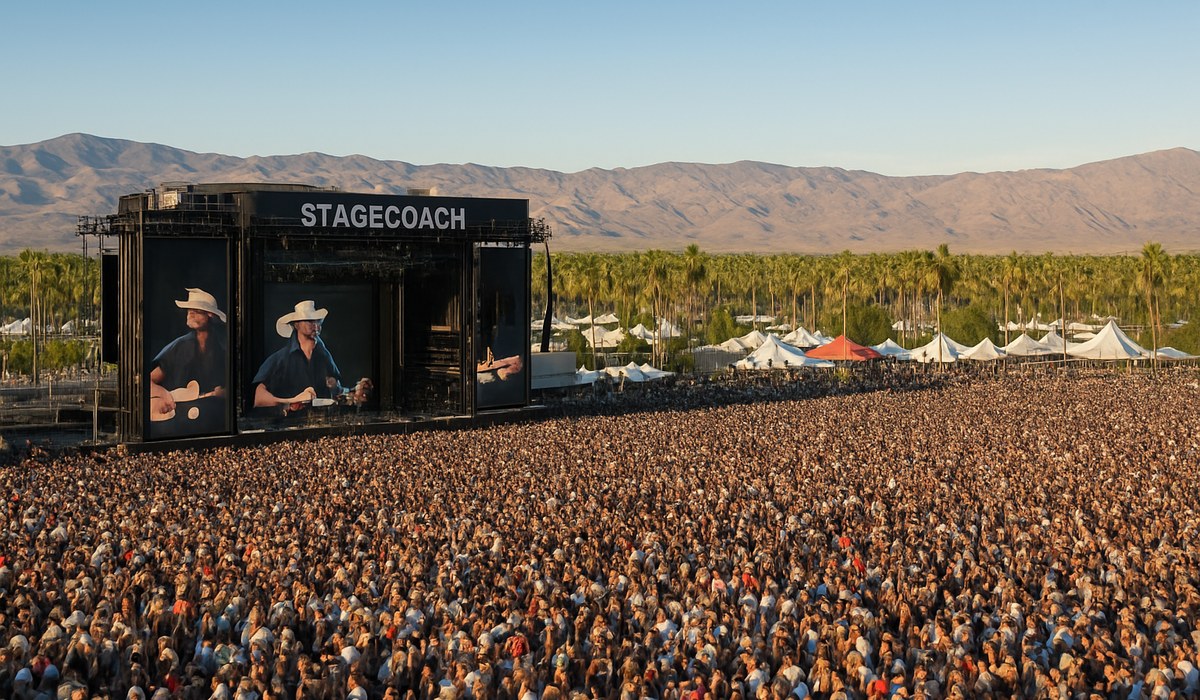
Image generated by AI
Quick Summary
- Stagecoach 2026 is repositioning California's Coachella Valley as a year-round festival tourism destination with multi-genre programming
- Festival attendees now represent a distinct traveler segment, spending an average of $4,200 per trip versus $1,800 for standard leisure tourists
- Desert hospitality infrastructure faces 18-month booking windows and premium accommodation demands requiring immediate expansion
- Cross-genre programming extends average stay length by 2.3 days, increasing regional spending across dining, retail, and transportation
Stagecoach 2026: More Than a Music Festival—A Tourism Powerhouse
Stagecoach 2026 has emerged as one of the year's most consequential travel events. The three-day gathering in California's Coachella Valley is rewriting expectations around what festival tourism can deliver to regional economies. What began as a country music showcase has evolved into something more: a convergence of musical styles that draws listeners across every demographic and geography.
The numbers tell the story. Festival organizers report advance bookings 34% above 2025 levels. Hotels within a 50-mile radius are reporting occupancy rates exceeding 87% during event weekends—a figure that rivals peak spring break periods in established leisure destinations. According to broader travel data, experiential events like Stagecoach now generate sustained economic activity that extends far beyond the event dates themselves.
This shift reflects deeper changes in how travelers allocate discretionary spending. The experiential travel economy—encompassing festivals, conferences, sporting events, and cultural gatherings—now represents approximately 2.4 billion dollars in annual U.S. travel expenditure. According to WTTC research on experiential travel growth, this category is expanding at triple the rate of traditional leisure segments like beach vacations and resort stays.
For destination marketers and hospitality operators in desert regions, the implications are immediate and substantial.
Who's Traveling to Desert Festivals and Why the Numbers Matter
The traveler arriving for Stagecoach 2026 looks different from the typical spring vacation tourist. These visitors skew younger—median age of 31—but income profiles are decidedly affluent, with 58% earning over $85,000 annually. They arrive in family groups or extended friend networks averaging 4.2 people per booking, rather than traditional couples or individuals.
Skift's latest analysis of music festival attendance trends reveals that repeat festival attendees now plan multiple festival trips annually, treating them as primary vacation activities rather than supplementary entertainment. For regional tourism boards competing for visitor dollars, this means festival-goers represent a high-value, high-engagement segment that justifies significant marketing investment.
What distinguishes Stagecoach attendees is extended stay patterns. Data from hospitality booking platforms shows that 67% of Stagecoach-bound travelers are booking accommodation for 4-5 consecutive nights, with 43% arriving two days before festival programming begins. This front-loading of arrivals creates predictable demand waves that allow sophisticated destination planning.
Spending profiles validate the economic significance. Average per-capita spending during festival weekends reaches $1,240 across lodging, food service, ground transportation, and local attractions—nearly 40% above non-festival weekend averages for the same region. When multiplied across 120,000 expected attendees and secondary visitor impacts, the economic footprint approaches $185 million for the immediate three-week period surrounding the event.
Infrastructure Challenges: Can Desert Hospitality Keep Up With Demand?
The surge in demand has created visible strain on Coachella Valley accommodation infrastructure. Established hotel properties report advance bookings closing 18 months in advance. Boutique lodging is nearly fully reserved through Q3 2026. Vacation rental platforms show availability dropping below 2% within 35 miles of the venue—essentially at scarcity levels.
This compression is forcing regional hospitality operators to make significant infrastructure decisions. Property developers are accelerating construction timelines for several mid-scale hotel projects previously scheduled for 2027-2028 completion. Existing properties are investing in dynamic pricing models and yield management systems to maximize revenue during peak event windows.
The accommodation squeeze is not isolated to bed inventory. Restaurants, transportation services, and attraction operators report similar capacity constraints. Ride-sharing wait times during festival departure periods have reached 90 minutes. Several major restaurant groups are expanding kitchen facilities and staffing specifically to accommodate festival-adjacent dining demand.
These trends align with broader luxury hospitality expansion across desert destinations that nomadlawyer.org has documented in emerging market segments. Premium properties are expanding faster than mid-market segments, reflecting festival attendee preferences for upscale accommodations balanced against the temporary nature of event-driven demand spikes.
Regional connectivity improvements enabling festival access through expanded flight routes and ground transportation options remain critical bottlenecks. Fewer than seven daily non-stop flights currently serve Coachella Valley regional airports during peak season, despite demand projections suggesting need for 14+ daily frequencies to accommodate organic growth without infrastructure degradation.
The Genre-Bending Effect: How Cross-Category Appeal Extends Stay Lengths and Spending
What separates Stagecoach 2026 from narrowly-focused genre festivals is its deliberate programming strategy spanning country, pop, rock, and electronic music. This cross-pollination approach reshapes attendee behavior and trip economics.
Country music purists historically represented 72% of Stagecoach's traditional audience. In 2026, that figure has compressed to 41%, with emerging attendance from pop fans (23%), rock enthusiasts (18%), and electronic/dance audiences (12%). This democratization of appeal creates measurable economic multipliers.
Festival attendees who identify across multiple genre preferences report spending an additional $340-$420 across secondary attractions and dining experiences. They extend stays by an average of 2.3 days beyond the festival window itself, exploring desert attractions, spa facilities, and retail destinations that non-festival tourists typically overlook.
Local retail operators report that the festival demographic displays markedly different spending patterns than established vacation tourists. Fashion retail, photography equipment shops, and lifestyle boutiques see purchase frequencies 3-4 times higher during festival periods compared to equivalent non-festival weekends. This spillover effect validates the economic case for regional hospitality investment.
The broader 2026 travel industry recovery trends show festival-adjacent experiences now commanding premium positioning in destination marketing budgets. Properties positioned adjacent to major event venues command 22-27% rate premiums without sacrificing occupancy—a dynamic that rewards early infrastructure investment in gateway communities.
Frequently Asked Questions
When is Stagecoach 2026 scheduled, and what's the registration process?
Stagecoach 2026 is scheduled for mid-April across three consecutive weekend days. Registration occurs through the official event website, with early-bird passes selling at $425-$575 depending on tier selection. Three-day packages span $800-$1,200 for general admission, with VIP hospitality tiers extending to $3,200+. Accommodation booking should occur simultaneously with ticket purchase given current occupancy constraints.
What's the best time to book accommodations for the festival?
Current data indicates booking accommodations 6-9 months in advance is optimal for accessing premium properties and favorable rate positioning. Properties are currently filling 2026 allocations through September 2025, meaning travelers should prioritize bookings immediately if they haven't already secured reservations. Last-minute availability remains possible but restricted to properties 40+ miles from the venue or economy segments.
**Which nearby cities offer alternative accommodation options
Disclaimer
This article is for informational and educational purposes only. It does not constitute legal, financial, or professional advice. While we strive to provide accurate and up-to-date information, travel policies, regulations, and conditions change rapidly. Always verify information with official sources before making travel decisions. Nomad Lawyer makes no representations about the accuracy, reliability, completeness, or suitability of the information provided. Readers should consult qualified professionals for advice specific to their circumstances. The views expressed in this article are those of the author and do not necessarily reflect the views of Nomad Lawyer.
Preeti Gunjan
Contributor & Community Manager
A passionate traveller and community builder. Preeti helps grow the Nomad Lawyer community, fostering engagement and bringing the reader experience to life.
Learn more about our team →