
Istanbul's T5 Golden Horn Tram Connects Eminönü to Alibeyköy Using Catenary-Free Tech in 2026
The T5 Eminönü–Alibeyköy Scenic Tram leverages catenary-free ground power technology to link Istanbul's historic Golden Horn districts without obstructing heritage views.

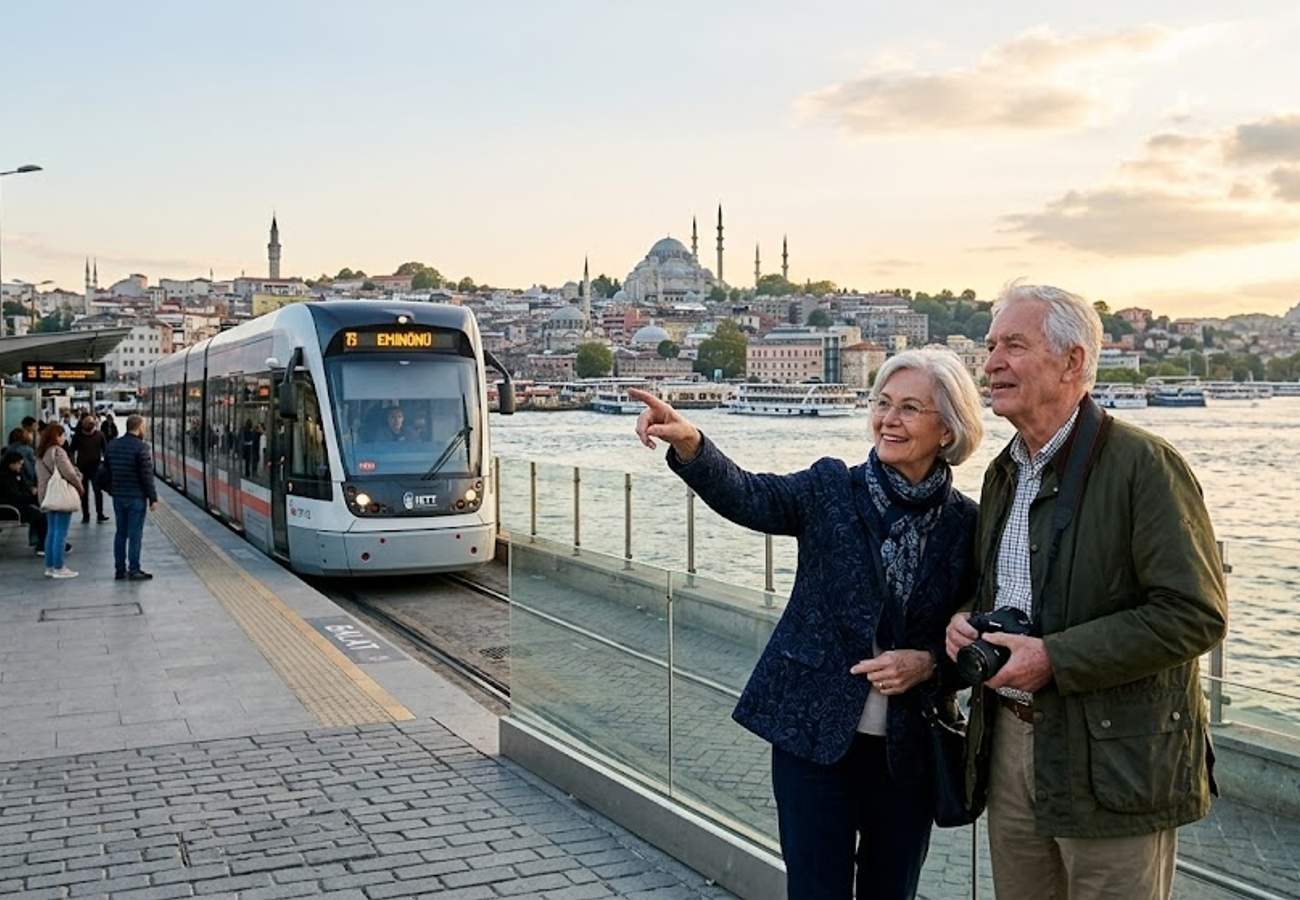
Image generated by AI
Istanbul has integrated the T5 Eminönü–Alibeyköy Golden Horn Scenic Tram into its urban fabric, creating a high-tech transport corridor that links the city's most significant historical districts while eliminating visual pollution.
The T5 line operates as more than a commuter service; it is a strategic tourism asset. By running along the shoreline of the Golden Horn (Haliç), the tram provides a direct link between the commercial hub of Eminönü and the residential and spiritual centers of Fener, Balat, and Eyüpsultan.
The project's defining technical achievement is the implementation of catenary-free ground power technology. By removing the need for overhead electrical wires, the city has preserved the unobstructed views of the Byzantine and Ottoman skylines, ensuring that modern mobility does not compromise the aesthetic integrity of UNESCO-recognized heritage sites.
Core Route and Connectivity
The T5 corridor functions as a linear gallery of Istanbul's evolution. The route begins at the high-traffic Eminönü Pier and proceeds through the following key stops:
- Cibali: Transition point into the historic waterfront.
- Fener: Home to the Fener Greek Patriarchate and steep, cobbled streets.
- Balat: Known for its brightly painted historic houses and antique shops.
- Eyüpsultan: A primary religious destination featuring the Eyüp Sultan Mosque.
- Alibeyköy: The terminus providing connections to wider metro and bus networks.
From the Eyüpsultan stop, passengers have immediate access to the Pierre Loti Cable Car, which transports visitors to a summit offering panoramic views of the entire Golden Horn basin.
Technical Specifications and Sustainable Impact
The adoption of ground-level power supply marks a shift toward "invisible" infrastructure. This approach reduces the visual clutter typical of urban rail systems and aligns with Türkiye's 2026 sustainability goals. By shifting tourist traffic from rental cars and taxis to a rail-based system, the city is actively reducing congestion in the narrow streets of the Fener and Balat districts.
Golden Horn Transit Logistics
| Feature | Detail |
|---|---|
| Route Path | Eminönü Pier $\rightarrow$ Cibali $\rightarrow$ Fener $\rightarrow$ Balat $\rightarrow$ Eyüpsultan $\rightarrow$ Alibeyköy |
| Power System | Catenary-free ground power (no overhead wires) |
| Key Connection 1 | Eminönü Ferry Terminal & T1 Tram |
| Key Connection 2 | Pierre Loti Cable Car (via Eyüpsultan) |
| Key Connection 3 | Alibeyköy Metro and Bus services |
| Airport Proximity | IST (~40 km) / SAW (~45 km) |
| Local Currency | Turkish Lira (TRY) |
Why This Matters: Industry Analysis
From a logistical perspective, the T5 tram solves a long-standing "last-mile" problem for Istanbul's cultural tourism. Historically, districts like Balat and Fener were difficult to access without navigating congested narrow roads or relying on fragmented bus routes.
Our analysis of the route map suggests that the T5 effectively decentralizes tourism. By making the Golden Horn as accessible as the Historic Peninsula, the city is distributing foot traffic and economic benefit to smaller, family-run businesses and independent galleries in the Fener and Balat neighborhoods. For the traveler, this means a shift from "checkpoint tourism" (visiting only the Blue Mosque or Hagia Sophia) to a more immersive, linear exploration of the city's multicultural history.
Forward Outlook
Market trends indicate that Istanbul will continue to prioritize "smart urban mobility" to protect its heritage assets. Beyond 2026, expect further integration of the T5 line with real-time digital tourism overlays and expanded sustainable transport links that further reduce the reliance on road vehicles in the city's core.
The T5 tram transforms a standard commute into a curated historical experience.
Related Travel Guides
Disclaimer
This article is for informational and educational purposes only. It does not constitute legal, financial, or professional advice. While we strive to provide accurate and up-to-date information, travel policies, regulations, and conditions change rapidly. Always verify information with official sources before making travel decisions. Nomad Lawyer makes no representations about the accuracy, reliability, completeness, or suitability of the information provided. Readers should consult qualified professionals for advice specific to their circumstances. The views expressed in this article are those of the author and do not necessarily reflect the views of Nomad Lawyer.
Raushan Kumar
Founder & Lead Developer
Full-stack developer with 11+ years of experience and a passionate traveller. Raushan built Nomad Lawyer from the ground up with a vision to create the best travel and law experience on the web.
Learn more about our team →