
4-Tap Scam Alert: How Fraudsters Are Targeting Summer Travelers
Travel fraud experts warn of a sophisticated four-step scam targeting holidaymakers through QR codes, fake booking emails, and reservation hijacking this summer season.

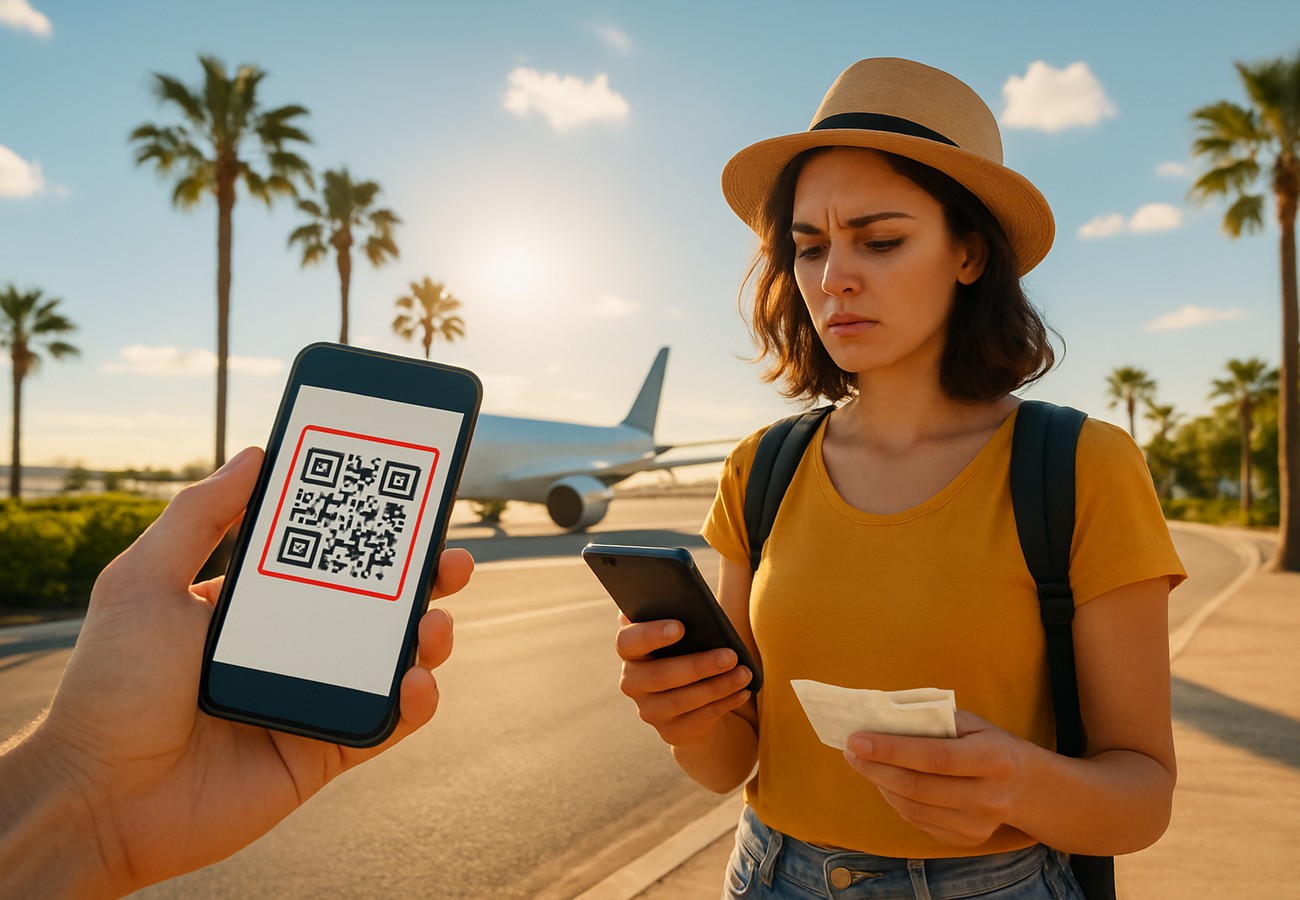
Image generated by AI
Millions of travelers are packing their bags for summer holidays—but scammers are already waiting in airports, hotel lobbies, and email inboxes. Travel safety experts are raising urgent alarms about the "4-tap scam," a deceptively simple fraud technique that catches out even cautious holidaymakers by exploiting the normal rhythm of travel transactions.
The attack works like this: scan a QR code, open a link, enter payment details, approve the transaction. Four taps. Done. Except you've just handed your money to criminals.
I've covered travel fraud for years, and what's striking about this wave is how seamlessly it blends into legitimate travel communications. Fake booking confirmations look identical to real ones. Fraudulent QR codes sit inches from legitimate ones. Phishing emails carry authentic logos and real booking references. As travel demand surges and security teams stretch thin, this is the fraud moment we all need to talk about.
The Anatomy of the 4-Tap Scam
The 4-tap scam operates on brutal simplicity: travelers complete four quick actions without pausing to verify the source. Scan. Click. Enter. Approve.
Travel expert Jürgen Himmelmann of Global Work & Travel identifies the core vulnerability: travelers are exhausted after flights, rushing through hotel check-ins, or juggling bags and documents. They feel time pressure. They trust that systems in public places—airports, hotels, restaurants—are legitimate. Fraudsters exploit all three.
The mechanics are straightforward, but the psychology is sophisticated. Scammers count on you not checking. And statistically, they're winning.
QR Code Fraud Is the New Security Blind Spot
QR codes have become ubiquitous in modern travel. Airport information desks display them. Hotels use them for check-in. Restaurants print them on bills. Transport hubs cover walls with them.
This convenience has created a massive security vulnerability. Fraudsters place counterfeit stickers over legitimate QR codes, redirecting travelers to fake payment portals or phishing websites designed to capture login credentials and banking information. Once you scan, you're often on a professional-looking fake site before you realize what happened.
Cybersecurity researchers call this "quishing"—phishing through QR codes. The attack bypasses traditional user caution because you cannot see the destination URL until after scanning and opening the page. By then, you're already committed psychologically to the action.
Reddit: "I scanned a QR code at my hotel for 'WiFi password' and ended up on a fake login page. Only realized when I checked my email and saw failed payment attempts 20 minutes later." — r/travel
The fundamental problem: QR codes feel trustworthy precisely because they appear in trusted locations. That's the entire con.
Fake Booking Confirmations: The Most Convincing Travel Scams
Fraudulent booking confirmation emails represent a different threat entirely—one that relies on impeccable mimicry rather than technological exploitation.
These emails often contain:
- Authentic-looking logos from major airlines, hotels, or OTA platforms
- Real-looking booking references and confirmation numbers
- Professional layouts and branding identical to legitimate communications
- Personalized details (your name, travel dates, specific locations)
- Language and tone that perfectly matches genuine confirmation emails
The message typically claims a payment issue, a reservation problem, or a need to verify details before arrival. Travelers click the embedded link—often without thinking twice—and arrive at a professional-looking booking platform that closely mirrors the genuine site.
According to travel safety analysis, once payment information is entered, criminals gain immediate access to funds or collect personal data for later fraud attempts. The damage extends beyond the initial theft.
Reservation Hijacking: When Real Data Becomes a Weapon
Reservation hijacking represents the newest and most psychologically effective travel scam because fraudsters use genuinely accurate booking information to make their requests appear legitimate.
Here's how it typically works: Criminals obtain limited reservation details through data breaches, compromised hotel systems, or phishing operations. They then contact travelers pretending to represent the accommodation provider.
The message includes accurate information: your actual travel dates, the real hotel name, your genuine booking reference number. Because the details are correct, recipients believe they're dealing with a legitimate provider. The psychological impact cannot be overstated. You're holding data that proves legitimacy.
Scammers then request:
- Additional security deposits
- Updated payment information
- Booking confirmation fees
- Pre-arrival verification payments
The inclusion of real travel information creates a powerful cognitive advantage for criminals. You're not dealing with an obvious scammer—you're dealing with someone who knows things about your reservation that only the hotel should know.
Urgency: The Psychological Weapon Driving All Modern Travel Scams
One consistent red flag runs through every variant of travel fraud: artificial urgency.
Messages claim your booking will be cancelled unless you pay immediately. Your flight reservation will be suspended. Your hotel room will be released. Your access will be revoked. All within the next hour.
This pressure is deliberately designed to trigger panic and bypass normal security checks. Genuine travel companies rarely demand immediate payment through random links sent via email or SMS. They use official billing systems, customer portals, and verified communication channels.
Himmelmann emphasizes the critical point: "Scammers create artificial time pressure because they know that critical thinking requires time. They are purchasing your panic with false deadlines."
Taking five extra minutes to verify a request independently—by opening the official app directly, by calling the hotel's main number, by checking your account on the company's verified website—costs nothing and prevents significant losses.
Your Defense Strategy: Four Practical Steps
Travel safety specialists agree on prevention as the most effective defense because recovering lost funds after payment is authorized remains frustratingly difficult.
Implement these protections:
1. Verify independently before any payment. Do not follow links in unexpected emails or text messages. Open the official airline, hotel, or booking platform app directly. Log into your account through the verified website. Check whether a payment request actually exists in your account.
2. Avoid scanning unfamiliar QR codes. If a QR code appears in an unexpected location, type the website address directly into your browser instead. Do not rely on QR codes for payment transactions.
3. Use virtual or limited-exposure payment methods. Consider virtual payment cards, prepaid travel cards, or accounts with built-in spending limits. If card details are compromised, your exposure is minimized.
4. Enable transaction alerts and keep apps updated. Real-time alerts notify you immediately if unusual activity occurs. Security updates patch vulnerabilities that scammers exploit.
The Insurance Gap: Why Recovery Becomes Your Problem
Here's a critical fact that many travelers discover too late: most travel insurance policies do not cover losses resulting from authorized payments made to scammers. The distinction matters legally.
When you authorize a payment—even to a fraudster—the transaction is considered authorized. Insurance companies classify this as user error rather than fraud. Banks, not insurers, become your primary route for recovery. And recovery remains slow, uncertain, and often incomplete.
Review your travel insurance policy carefully before departure. Understand exactly what's covered and what isn't. This knowledge prevents false confidence.
The Broader Trend: Why Scams Are Becoming Harder to Detect
The 4-tap scam and its variants reflect a fundamental shift in travel fraud strategy. Criminals have largely abandoned obvious schemes—the "Nigerian prince" emails, the transparent phishing attempts.
Instead, they're investing in convincing digital deception that perfectly mimics legitimate communications. They're obtaining real data from breaches and using it to build credibility. They're placing fake codes inches from legitimate ones in high-traffic locations. They're studying genuine communication templates and replicating them with precision.
The answer remains simple but requires discipline: verify everything through official channels before taking action. It's not about being paranoid. It's about being intentional instead of reactive. Pause. Check. Verify. Then approve.
The summer travel season brings peak demand for legitimate travel—and peak opportunity for criminals. The difference between losing thousands of dollars and staying safe often comes down to spending five extra minutes on verification.
Travel smart this summer, or spend the fall dealing with fraud recovery.
Related Travel Guides
Premium Economy Space Comparison: Why Demand Outpaces Supply on Long-Haul Routes in 2026
Cruise Ship Hantavirus Outbreak Strands Hundreds off Cabo Verde
Business Class Upgrades on Long-Haul Flights: What Passengers Actually Pay to Cross the Oceans
Disclaimer
This article is for informational and educational purposes only. It does not constitute legal, financial, or professional advice. While we strive to provide accurate and up-to-date information, travel policies, regulations, and conditions change rapidly. Always verify information with official sources before making travel decisions. Nomad Lawyer makes no representations about the accuracy, reliability, completeness, or suitability of the information provided. Readers should consult qualified professionals for advice specific to their circumstances. The views expressed in this article are those of the author and do not necessarily reflect the views of Nomad Lawyer.
Raushan Kumar
Founder & Lead Developer
Full-stack developer with 11+ years of experience and a passionate traveller. Raushan built Nomad Lawyer from the ground up with a vision to create the best travel and law experience on the web.
Learn more about our team →