
Aviation Updates: Influencer’s 35,000-Foot Yoga Stunt on Iberia Express Sparks Safety Outrage Amid Travel Chaos
A viral inflight yoga stunt aboard a fully packed Iberia Express A320 over Spain triggers massive safety concerns regarding disruptive social media behavior.

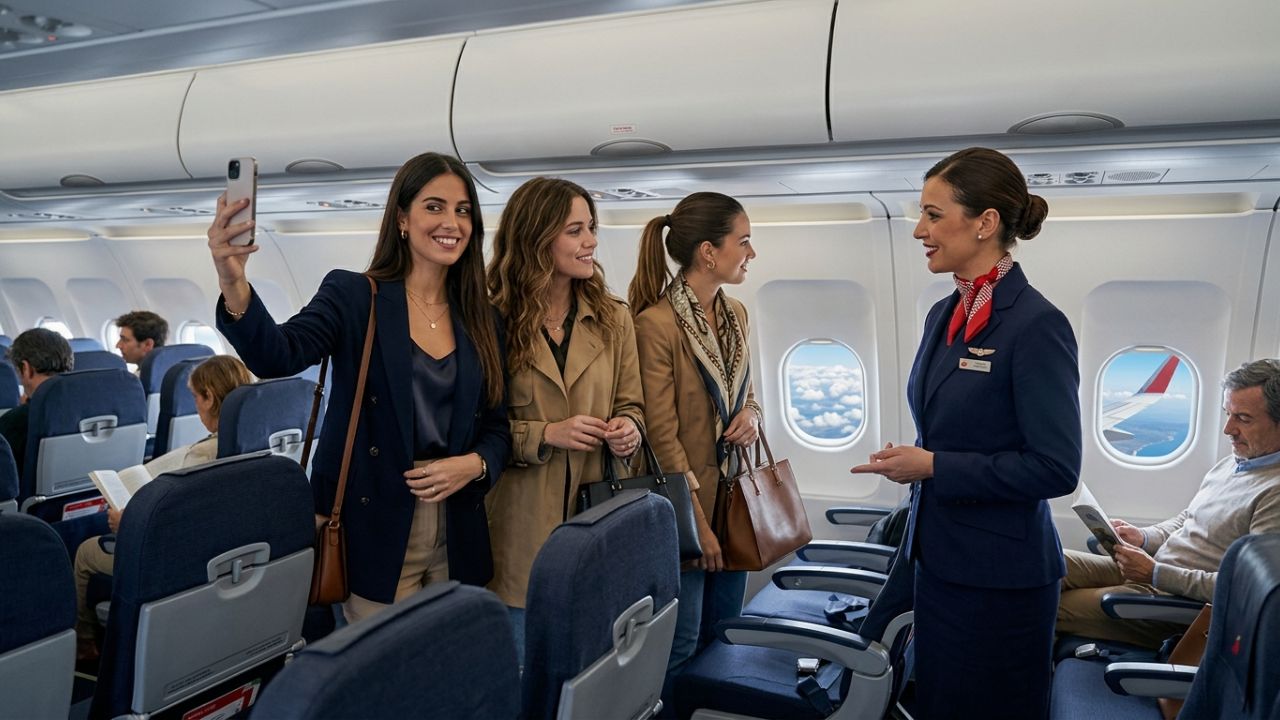
Image generated by AI
Aviation Updates: Influencer’s 35,000-Foot Yoga Stunt on Iberia Express Sparks Safety Outrage Amid Travel Chaos
As highly stressed flight crews across Europe aggressively battle massive peak-season passenger surges, a viral social media stunt executed mid-flight on a Spanish carrier has ignited a fierce, global debate over safety protocols and digital narcissism.
Image generated by AI
As mainstream airline news platforms and urgent aviation updates continuously document the suffocating wave of summer travel chaos and system-wide airport disruptions, a completely different type of onboard hazard is rapidly emerging. While major carriers frantically attempt to mitigate weather-related flight cancellations, an Iberia Express flight operating high over Spain recently fell victim to severe, self-inflicted passenger disruption. Cruising at an altitude of approximately 35,000 feet, a fully seated commercial Airbus A320 became the bizarre setting for a highly controversial influencer yoga stunt. By blatantly obstructing the narrow central aisle to execute complex physical performances, the incident has triggered an absolutely massive aviation safety panic. This jarring event immediately forces airlines, passengers, and strict European regulators to urgently confront how viral social media behavior is actively compromising emergency readiness and basic operational safety inside highly confined, highly pressurized commercial aircraft cabins.
Expanded Overview: The Viral Threat to Aviation Safety
When analyzing the modern intersection of digital culture and commercial aviation, the pursuit of extreme visibility content is becoming a massive structural liability.
The aviation environment is heavily regulated for a fundamental reason: aircraft cabins are incredibly dynamic, deeply sensitive transport systems. They are not controlled studios. The massive gap between reckless content creation culture and stringent aviation safety expectations is expanding at an alarming rate. Platforms like Instagram and TikTok aggressively reward highly unusual, “out-of-context” stunts in heavily confined environments. However, aviation safety frameworks meticulously established by bodies such as ICAO and strict European aviation regulators emphasize one absolute, non-negotiable core principle: cabin aisles must remain completely unobstructed during all flight operations. This Iberia Express incident exposes a terrifying behavioral trend where modern travelers are actively prioritizing personal engagement metrics over critical onboard safety etiquette, severely elevating inflight risk exposure for hundreds of trapped passengers.
Section-Wise Breakdown: The 35,000-Foot Disruption
The actual mechanics of the disruption reveal a total disregard for the physical realities of commercial flying.
Operating deep within Spanish airspace, the Iberia Express flight was executing a standard cruise phase when the incident occurred. A social media influencer, known online as “rosa.adventures,” deliberately hijacked the aircraft's central aisle to aggressively perform a series of complex yoga movements. The extremely disruptive routine included one-legged balance poses, full handstand attempts, and elaborate stretching sequences. What makes this execution particularly egregious is that the cabin was operating at maximum capacity. Fully occupied in a standard, high-density economy configuration, the aircraft's single, narrow central aisle was the absolute only shared movement corridor legally available for passengers and cabin crew. The resulting viral footage instantly ignited a fierce aviation debate, transforming a standard flight into a highly public safety controversy.
Section-Wise Breakdown: The Airbus A320 Reality
Aviation experts are raising massive alarms specifically because of the strict physical limitations inherent to the aircraft model involved.
The Airbus A320-family is an absolute workhorse, ranking as one of the most widely utilized short-to-medium haul aircraft in all of Europe. However, its brilliant engineering is fundamentally restrictive regarding open passenger movement. Characterized by a single-aisle configuration and an incredibly tight seat pitch in economy class, there is absolutely zero physical buffer between seated passengers and aisle traffic. Any non-standard movement instantly paralyzes service trolley movement and, critically, totally blocks emergency evacuation pathways. In this specific incident, massive concerns were raised because highly vulnerable passengers, including families traveling with infants, were seated in extremely close proximity to the flailing activity, massively increasing the sensitivity around physical safety.
Flight Details: Inflight Disturbance Matrix
The exact operational telemetry outlining this highly controversial inflight disruption, detailing the specific aircraft environment and the safety violation, has been consolidated into the mandatory matrix below.
Iberia Express Inflight Disturbance Matrix
| Incident Detail | Aviation Data |
|---|---|
| Operating Carrier | Iberia Express |
| Aircraft Type | Airbus A320-family (Narrow-body) |
| Cabin Configuration | High-density Economy (Fully occupied) |
| Airspace Region | Spain (Cruising altitude) |
| Altitude at Time of Incident | Approximately 35,000 feet |
| Incident Type | Unobstructed aisle violation (Yoga stunt) |
| Social Media Handle Involved | "rosa.adventures" |
| Primary Safety Risk | Obstruction of emergency pathways & crew service |
Passenger Impact: The Clash of Comfort and Visibility
For the hundreds of passengers trapped onboard, an inflight stunt represents an immediate threat to both personal comfort and physical safety.
Airlines operating under strict EU aviation safety frameworks empower cabin crew to intervene immediately during unsafe passenger behavior. However, highly complex operational grey zones emerge when influencers frame their actions as “non-disruptive” art or physical discipline. Even in perfectly clear skies without severe turbulence, the risks are massive: sudden balance loss due to minor aircraft motion can result in severe collisions with cabin crew or devastating injuries to seated passengers. The reaction among observers remains sharply divided, exposing a massive cultural tension between deeply traditional aviation etiquette and the highly aggressive modern demand for social media expression. What was once a quiet, highly controlled travel environment is rapidly degrading into a chaotic stage for digital visibility.
Industry Analysis: The Regulatory Blind Spot
Aviation legal strategists explicitly warn that this Iberia Express incident exposes a massive, dangerous regulatory lag.
Current aviation rules brilliantly govern strict safety restraints, seatbelt compliance, and restricted cabin movement during active turbulence. However, they are terrifyingly vague regarding social media recording etiquette, performance-based movement, and short-duration “stunt actions” during smooth cruise phases. This massive regulatory blind spot forces highly stressed cabin crews to interpret and enforce behavioral boundaries in real time. As inflight content creation violently escalates across Europe, authorities are facing unprecedented pressure to immediately draft explicit physical activity limitations for high-density economy cabins, fundamentally closing the loophole that allows influencers to exploit commercial flights for viral fame.
Conclusion: Reclaiming the Cabin Aisle
Ultimately, the viral yoga stunt executed at 35,000 feet aboard an Iberia Express A320 serves as a massive, highly alarming wake-up call for the entire commercial aviation sector. As aircraft cabins become increasingly connected, the absolute boundaries of acceptable passenger behavior are being aggressively tested. Regulators, airlines, and passenger rights groups must immediately recognize that a narrow, single-aisle aircraft is a highly sensitive, critical safety corridor—not a digital performance space. If the global aviation industry fails to implement stricter enforcement and explicit global guidance against inflight social media stunts, they risk severely compromising passenger safety and exacerbating the massive operational stress currently breaking the modern travel network.
Key Takeaways
- Inflight Disruption: An influencer known as "rosa.adventures" executed a highly disruptive yoga stunt mid-flight on a fully packed Iberia Express flight.
- A320 Limitations: The incident occurred on an Airbus A320, a narrow-body aircraft where the single aisle serves as the only vital emergency and service corridor.
- Safety Violations: Aviation safety frameworks established by ICAO and EU regulators strictly mandate that cabin aisles must remain unobstructed during flight operations.
- The Regulatory Gap: The incident exposes a massive blind spot in aviation law regarding the regulation of social media stunts and performance movement during the cruise phase.
- Elevated Risk: Even without turbulence, such stunts risk severe collisions with cabin crew and physical injury to passengers seated in extremely close proximity.
FAQ: Iberia Express Yoga Stunt Incident
What happened on the Iberia Express flight over Spain? A social media influencer known as "rosa.adventures" deliberately obstructed the narrow central aisle of a fully occupied Airbus A320 at 35,000 feet to perform a highly disruptive yoga routine, including handstands.
Why is an inflight yoga stunt considered a safety risk? Aviation authorities like ICAO strictly mandate that aisles must remain clear. Stunts obstruct emergency evacuation pathways, disrupt cabin crew service, and pose a severe collision risk if the aircraft encounters sudden turbulence.
Can airline crew stop passengers from filming social media stunts? Yes. Under EU aviation safety frameworks, cabin crew have absolute authority to immediately intervene and restrict movement if passenger behavior is deemed a threat to operational safety or standard cabin protocols.
Related Travel Guides
Boeing 777F Low Flyby Texas Travel Chaos 2026
United Airlines Fourth of July Travel Chaos 2026
European Passenger Rights Flight Delay Compensation Guide 2026
Disclaimer: This article is strictly for informational purposes. The aviation incident details, specific flight conditions (Iberia Express Airbus A320 at 35,000 feet), involved social media handles ("rosa.adventures"), and safety assessments are based on public video evidence and industry reports available at the time of publication. EU aviation safety frameworks, specific airline cabin crew enforcement policies, and ICAO regulations regarding unobstructed aisles are highly dynamic and subject to strict regulatory oversight. Passengers must explicitly comply with all instructions provided by active flight crews during commercial aviation travel to ensure the safety and security of the entire aircraft cabin.
Disclaimer
This article is for informational and educational purposes only. It does not constitute legal, financial, or professional advice. While we strive to provide accurate and up-to-date information, travel policies, regulations, and conditions change rapidly. Always verify information with official sources before making travel decisions. Nomad Lawyer makes no representations about the accuracy, reliability, completeness, or suitability of the information provided. Readers should consult qualified professionals for advice specific to their circumstances. The views expressed in this article are those of the author and do not necessarily reflect the views of Nomad Lawyer.
Kunal K Choudhary
Co-Founder & Contributor
A passionate traveller and tech enthusiast. Kunal contributes to the vision and growth of Nomad Lawyer, bringing fresh perspectives and driving the community forward.
Learn more about our team →