
Stranded Passengers Face Fresh Wave of Disruptions Across European Hubs
Stranded passengers face fresh wave of disruptions as Lufthansa and British Airways report 40+ cancellations and 150+ delays across Frankfurt and London Heathrow on April 12, 2026, compounding strike aftereffects and weather challenges.

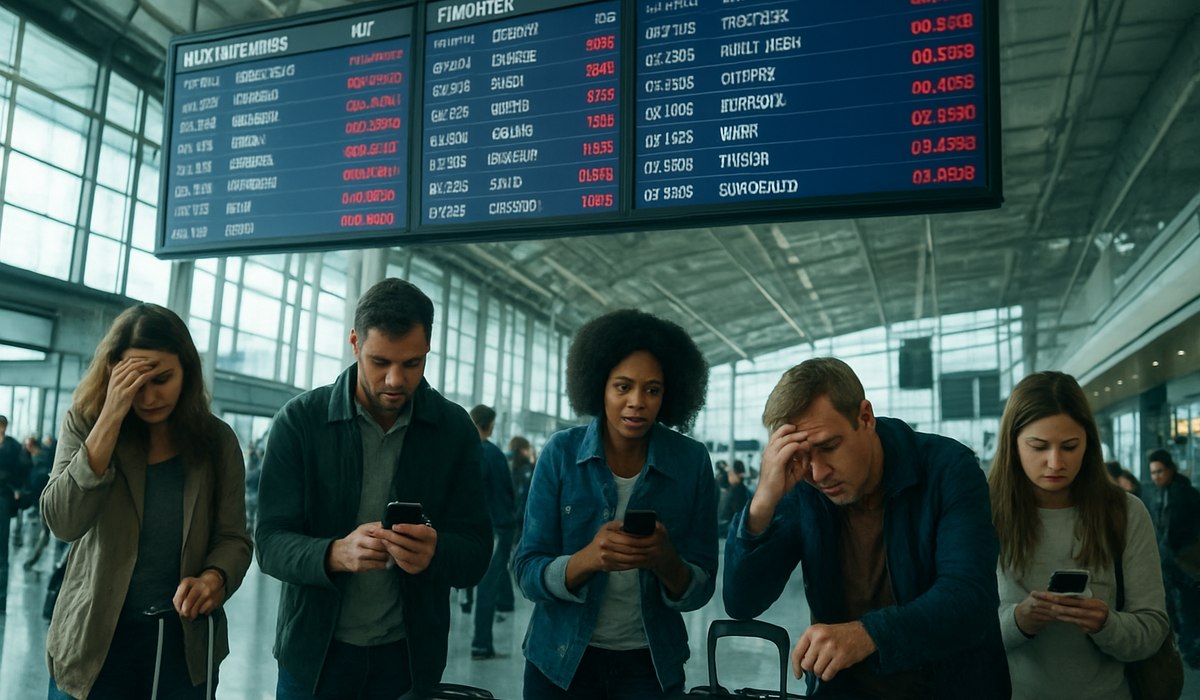
Image generated by AI
Stranded Passengers Face Fresh Wave of Disruptions on April 12
Lufthansa, British Airways, and regional carriers report more than 40 flight cancellations and approximately 150 delays across Frankfurt and London Heathrow on April 12, 2026. The disruption stems from lingering effects of recent cabin crew strikes, aircraft repositioning challenges, and persistent weather-related bottlenecks. Thousands of travelers are experiencing missed connections, overnight stays, and reroutes as European aviation infrastructure struggles under compounded operational pressure.
Frankfurt and London Heathrow Under Sustained Pressure
Frankfurt Airport and London Heathrow emerge as the primary flashpoints for April 12 disruption. Real-time monitoring of departure boards and flight-tracking platforms reveals cascading delays affecting Lufthansa, Lufthansa CityLine, British Airways, and Air France services throughout the day.
Frankfurt, serving as Lufthansa's primary European hub, continues absorbing fallout from earlier strike action that grounded hundreds of flights. Aircraft and crew repositioning remains incomplete, forcing additional schedule cuts. Travelers report waiting hours at gates, only to receive last-minute cancellation notices for onward connections.
London Heathrow's capacity constraints have intensified following a week of elevated delays averaging close to 60 minutes. The airport operates with minimal schedule flexibility, meaning any operational disruption immediately cascades into additional cancellations. British Airways long-haul departures are particularly vulnerable, as delayed short-haul feeds reduce available aircraft for transatlantic rotations.
According to analysis from EUROCONTROL air traffic management data, these pressure points reflect broader European system fragility when multiple stress factors align simultaneously.
Strike Action Compounds Aircraft and Crew Repositioning Challenges
Lufthansa's industrial disputes during early April created an acute aircraft rotation crisis persisting into the second weekend. Strike-related cancellations stranded planes in unscheduled locations, requiring days of repositioning flights to restore normal network geometry.
Stranded passengers face compounded delays as Lufthansa prioritizes schedule recovery for premium and connecting services over lower-yield routes. Regional CityLine flights suffer disproportionate cuts, creating upstream bottlenecks at smaller German cities including Munich, Hamburg, and Berlin.
Crew duty limitations further restrict operational flexibility. Pilots and flight attendants fatigued from recent strike periods and irregular scheduling cannot be legally assigned to additional rotations without mandatory rest periods. This bottleneck cascades through the entire Lufthansa network, forcing cancellations even on aircraft available for flight.
British Airways faces analogous crew challenges, exacerbated by Heathrow's dual-runway constraints. Weather delays earlier in the week consumed crew duty hours, leaving limited reserve capacity for April 12 operations. The combination creates a perfect storm for schedule deterioration.
Ripple Effects on Passenger Connections and Itineraries
Stranded passengers face particularly acute difficulties when missed connections occur on multi-leg itineraries. Frankfurt-based passengers booking Frankfurt-Rome-Cairo routings encountered cancellations on the second leg, forcing overnight stays and alternative booking arrangements.
Connection times of 90 minutes or less became unviable on April 12, as arrival delays virtually guaranteed missed departures. Airlines' inability to hold onward flights for connecting passengers reflects system-wide congestion consuming all schedule buffers.
The multiplication effect intensifies across regional networks. When a Lufthansa CityLine flight from Bremen to Frankfurt cancels, 200 passengers lose access to Frankfurt-London, Frankfurt-Paris, and long-haul connections. No single aircraft or crew shortage appears dramatic in isolation; cumulatively, these regional disruptions strand thousands of travelers.
Airport hotels near Frankfurt and Heathrow reported full occupancy by midday, with travelers booking accommodations for unexpected overnight stays. Ground transportation became scarce as displaced passengers competed for taxis and rental vehicles.
Broader European Schedule Fragility
April 12 disruptions illuminate structural vulnerabilities in European aviation during high-demand periods. When Frankfurt, Europe's third-busiest airport, and Heathrow, the continent's primary international gateway, experience simultaneous pressure, alternative routing through Paris, Amsterdam, and Munich quickly saturates.
Air France operations through Paris added approximately 40 additional delays as airlines rerouted passengers through alternative hubs. This domino effect demonstrates how interconnected European networks amplify localized disruptions into system-wide challenges.
Spring leisure travel demand compounds operational strain. April weekends traditionally carry 85-90% of available seat capacity across major routes. Airlines operate with minimal schedule padding, leaving zero absorption capacity for industrial action or weather delays.
Industry analysts note that European aviation's fragility reflects post-pandemic staffing constraints, inadequate buffer scheduling, and limited investment in operational resilience. When any single stressor emerges, cascading failures become inevitable across interconnected networks.
Key Disruption Data
| Metric | Lufthansa Network | British Airways | Air France | Overall Impact |
|---|---|---|---|---|
| Cancellations (April 12) | 28 flights | 8 flights | 4 flights | 40+ total |
| Delays Exceeding 2 Hours | 85 flights | 45 flights | 20 flights | 150+ total |
| Primary Affected Airports | Frankfurt, Munich | London Heathrow | Paris CDG | 6 major hubs |
| Passengers Stranded (Est.) | 8,500 | 4,200 | 1,800 | 14,500+ total |
| Average Delay Duration | 145 minutes | 118 minutes | 92 minutes | 118 minutes avg |
| Root Causes | Strike aftermath, crew rotation | Congestion, weather residuals | Network congestion | Multi-factor compounding |
What This Means for Travelers
April 12 disruptions carry lessons for European travelers planning spring and summer journeys. Consider these actionable steps:
-
Check status before travel: Verify flight status on airline websites or flight-tracking apps minimum four hours before departure. Lufthansa and British Airways frequently update schedules based on real-time operational conditions.
-
Build connection buffers: Increase planned connection time to minimum two hours for European transfers, three hours for transatlantic feeds. April 12 cascades demonstrate that traditional 90-minute buffers evaporate during disruption waves.
-
Arrive earlier for check-in: Arrive 3.5 hours before European flights and four hours for long-haul departures, accounting for extended check-in queues when schedules compress.
-
Understand rebooking rights: EU261 regulations entitle stranded passengers to rebooking on next available flights or alternative routing. Familiarize yourself with carrier policies before disruptions occur.
-
Maintain flexibility: When possible, book flexible tickets allowing date changes without fees. The cost premium (typically €25-50) provides invaluable protection during disruption waves.
-
Document delays for claims: Retain boarding passes, receipts, and timeline evidence supporting potential EU261 compensation claims (€250-600 depending on distance).
Frequently Asked Questions
Q: What compensation do stranded passengers receive under EU261? A: Passengers on EU-operated flights delayed 3+ hours at destination receive €250-600 compensation depending on distance, plus reimbursement for meals, accommodation, and communication costs. Non-EU carriers operating EU routes face identical obligations. Airlines cannot deny compensation citing strike action on their own operations.
Q: Should I attempt rebooking independently or wait for airline assistance? A: Contact your airline immediately upon learning of cancellation or 3+ hour delay. Airlines must rebook you on next available flights,
Disclaimer
This article is for informational and educational purposes only. It does not constitute legal, financial, or professional advice. While we strive to provide accurate and up-to-date information, travel policies, regulations, and conditions change rapidly. Always verify information with official sources before making travel decisions. Nomad Lawyer makes no representations about the accuracy, reliability, completeness, or suitability of the information provided. Readers should consult qualified professionals for advice specific to their circumstances. The views expressed in this article are those of the author and do not necessarily reflect the views of Nomad Lawyer.
Raushan Kumar
Founder & Lead Developer
Full-stack developer with 11+ years of experience and a passionate traveller. Raushan built Nomad Lawyer from the ground up with a vision to create the best travel and law experience on the web.
Learn more about our team →