
Flight Attendant Packing Secrets: How 20 Years of Aviation Experience Can Optimize Your Suitcase in 2026
Learn the precise luggage systems used by veteran flight attendants to handle unpredictable schedules, extreme weather shifts, and long-haul layovers using professional space-saving techniques.

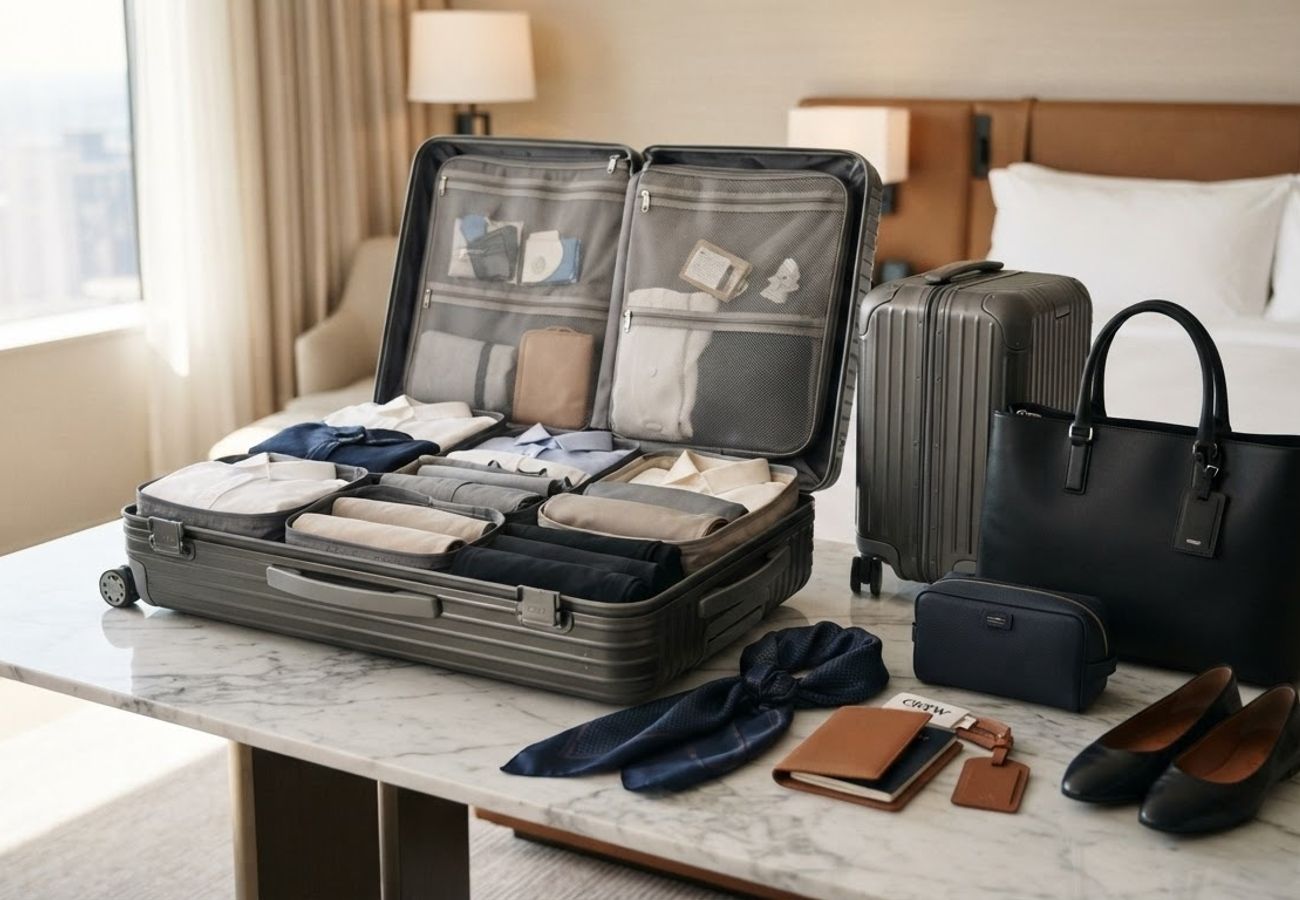
Image generated by AI
Flight attendants often maintain a "permanent" suitcase that stays packed and ready, meaning they can deploy for a standby assignment to any climate in the world with zero notice. This level of readiness is not about overpacking, but about a rigid, modular system developed over decades of navigating the pressures of aviation. For those who fly up to six long-haul trips a month or handle multiple short-haul layovers weekly, the suitcase is not just luggage—it is a mobile survival kit.
The Crew Luggage Ecosystem: Three Tiers of Gear
Professional crew members do not rely on a single bag; they utilize a tiered system designed for specific access windows. For short-haul missions, the setup consists of a small trolley bag, a crew bag that slides over the trolley handle, and a personal shoulder bag. Long-haul journeys add a large suitcase, which is stored in a dedicated crew section of the aircraft hold.
Many airlines partner with durable brands like Samsonite or Delsey to ensure uniformity and resilience, as these bags are subjected to extreme handling. The distribution of items across these bags is strategic:
- The Shoulder Bag: Reserved for high-security essentials including passports, licenses, keys, and currency.
- The Crew Bag: This is the "active" bag. It contains in-flight necessities such as service waistcoats, spare compression hosiery, and flat shoes for cabin work. It also houses safety gear like CPR masks and torches.
- The Trolley Bag: Used for unscheduled layovers or short trips. It holds a spare uniform, one casual outfit, and a minimal toiletry kit. For scheduled stops, this expands to include pajamas and gym or swim gear.
- The Large Suitcase: Used exclusively for long-haul trips, this bag stores the bulk of the wardrobe and specialized comfort items.
Mastering the Long-Haul Wardrobe
When crossing multiple time zones over a three-to-five-day trip, veteran crew members avoid the temptation to pack for every possible scenario. Instead, they rely on a three-outfit rotation: one casual set, one smart-casual outfit for crew dinners, and a reliable pair of jeans with a versatile top.
Footwear is strictly limited to one pair for sightseeing, one for evening outings, and flip-flops for hotel rooms. To handle varying climates, a single lightweight jacket is the standard addition. The goal is to maintain a lightweight load, leaving significant volume in the suitcase for souvenirs or planned purchases at the destination.
For those flying long-haul, the trolley bag transforms into a comfort station. It often contains a travel pillow, a compact duvet or blanket, and a mini hot water bottle to combat the chill of crew rest areas. Some crew members avoid onboard catering entirely, packing their own water bottles and snacks to maintain their dietary preferences.
Visitor Insider Tips: The Pro-Traveler's Playbook
To pack like a 20-year aviation veteran, you must shift your mindset from "what might I need" to "what is the absolute minimum required for function."
The "Delsey Dine" and Pantry Hacks Save money and time by practicing "Delsey Dining"—bringing your own high-quality snacks for midnight cravings. A pro tip is to collect small sachets of salt, pepper, coffee, and tea from hotels to use on future trips. Keep a small set of reusable utensils and a corkscrew or tin opener in your kit to avoid relying on hotel amenities.
The Grooming Kit Combat the dehydrating effects of cabin pressure with a dedicated "freshen-up" kit. This should include eye drops, lip balm, face mist, and a herbal inhaler. To save space, decant your favorite shampoos and creams into small, refillable bottles rather than buying multiple travel-sized versions.
The Emergency Toolkit A miniature sewing kit is non-negotiable—buttons frequently fail during flights. Your first aid kit should be targeted: band-aids for blisters, paracetamol, and cooling gel for burns. For security, some crew members carry a door wedge or a portable door-locking device for added peace of mind in unfamiliar hotels.
Packing Logistics Choose clothing that is multipurpose, resists creases, and is easily washable. While some prefer packing cubes for strict compartmentalization, others swear by rolling clothes to maximize space and minimize wrinkles. Always check local customs and weather before departing; for instance, ensure you have modest clothing if visiting a monastery or mosque.
Cultural and Environmental Context
The lifestyle of a flight attendant is a constant negotiation between professional rigidity and personal adaptability. Because they operate in a global environment, cultural awareness is a core part of their packing strategy. The ability to pivot a wardrobe from a corporate uniform to culturally respectful attire is a necessity for maintaining professional relationships and respecting local heritage.
Furthermore, the reliance on high-quality, long-lasting luggage reflects a shift toward durability over disposable fashion. By using bags that last for years despite heavy use, crew members reduce the environmental impact of frequently replacing damaged luggage. However, the habit of collecting hotel miniatures—while practical for the traveler—highlights the ongoing challenge of single-use plastics in the hospitality industry.
FAQ: Visiting Destinations in 2026
What is the best way to avoid packing too much? Stick to the "three-outfit rule": one casual, one smart-casual, and one versatile base (like jeans). Choose multipurpose items that can be layered and prioritize fabrics that do not crease.
How do I handle hotel security in unfamiliar cities? Follow the crew method: perform a quick security check of the room immediately upon entry while propping the door open with your suitcase. Use the "Do Not Disturb" sign consistently to ensure privacy.
What are the essential items for long-haul comfort? Invest in an eye mask, earplugs, and a compact travel blanket. These are essential for managing jet lag and sleeping in suboptimal environments like crew rest areas or noisy hotels.
How should I organize my toiletries to save space? Decant your preferred full-sized products into small, reusable bottles. This allows you to keep using your favorite brands without carrying bulky packaging.
Travel is not about what you take, but how efficiently you can live out of a bag.
Related Travel Guides
Disclaimer
This article is for informational and educational purposes only. It does not constitute legal, financial, or professional advice. While we strive to provide accurate and up-to-date information, travel policies, regulations, and conditions change rapidly. Always verify information with official sources before making travel decisions. Nomad Lawyer makes no representations about the accuracy, reliability, completeness, or suitability of the information provided. Readers should consult qualified professionals for advice specific to their circumstances. The views expressed in this article are those of the author and do not necessarily reflect the views of Nomad Lawyer.
Preeti Gunjan
Contributor & Community Manager
A passionate traveller and community builder. Preeti helps grow the Nomad Lawyer community, fostering engagement and bringing the reader experience to life.
Learn more about our team →