
Former CBP Supervisor Terry Liu Arrested for Modifying 46 Government Computers Near Canada Border 2026
A former U.S. Customs and Border Protection supervisor in Maine has been arrested for allegedly stripping 46 government computers of high-end parts and replacing them with inferior components for profit.

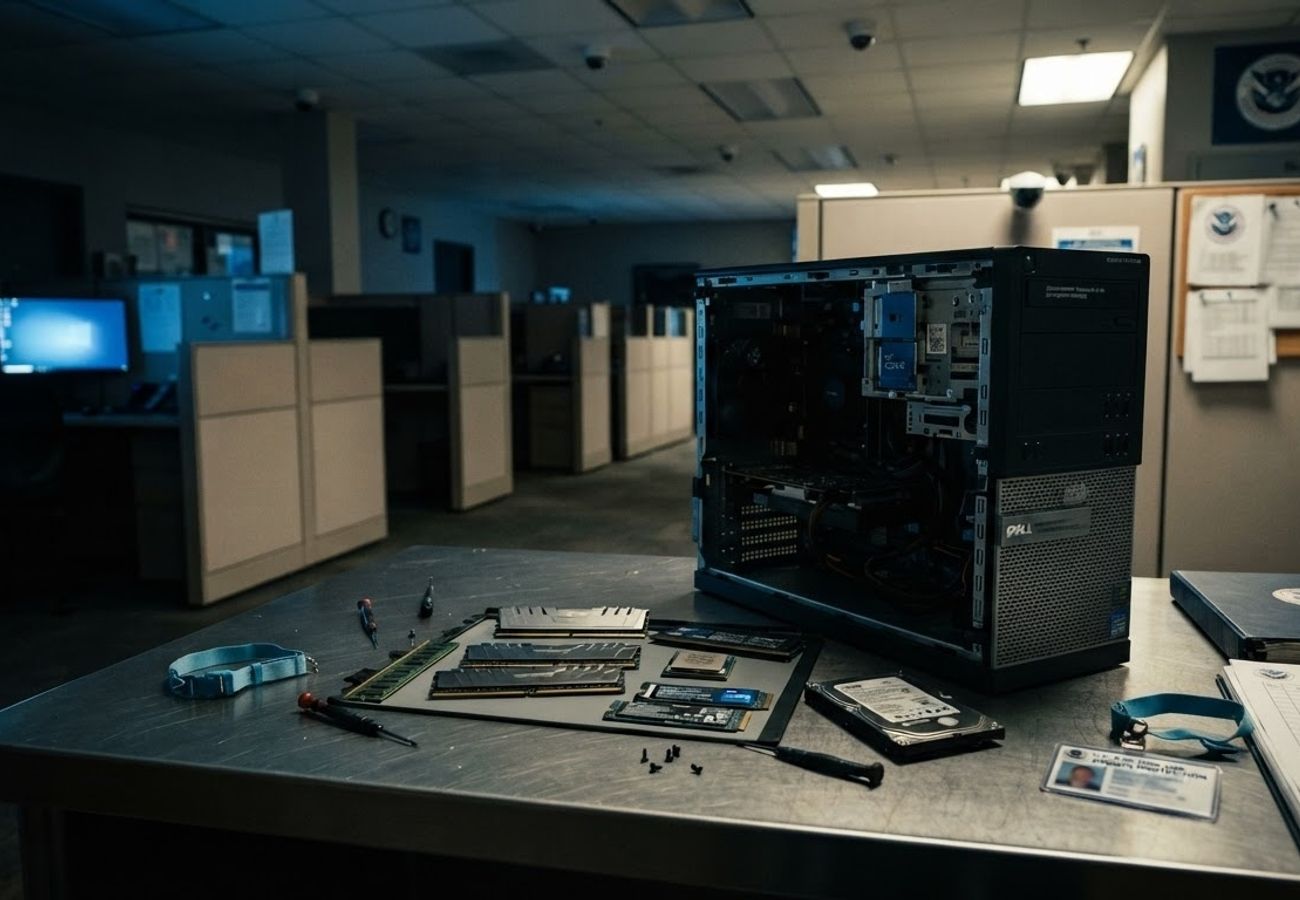
Image generated by AI
[Calais, September 15, 2026] — A former U.S. Customs and Border Protection (CBP) supervisor has been arrested after allegedly tampering with 46 government computers across three separate facilities in Maine. Terry “Jiajia” Liu, who operated in the border region near Canada, is accused of stripping high-value hardware from official workstations and replacing them with cheaper, inferior parts to generate personal profit.
The arrest follows an investigation into activities at CBP sites in Calais, Milltown, and Ferry Point. Federal authorities allege that Liu utilized his supervisory position and access to government facilities during overnight shifts to execute the hardware swaps. The scheme came to light through hidden camera footage and internal audits, leading to charges of theft and damage to government property.
The Hardware Theft Scheme
The investigation reveals a systematic effort to monetize government assets. According to court documents from the Maine District Court, Liu targeted high-performance components, specifically 14th-generation Intel Core i7 processors. Evidence suggests Liu performed this specific swap 16 times between May 2025 and July 2026.
Financial records indicate that Liu earned store credits ranging from $200 to $210 for each processor he removed. To hide the theft, he purchased lower-grade components from retail platforms including Amazon and Newegg, installing these cheaper parts into the government machines.
The financial toll on the agency is significant. Initial estimates show that $20,460 was spent attempting to restore the modified components. However, the total cost to fully replace the hardware across all 46 compromised computers is estimated at $105,800.
The misconduct persisted despite direct warnings from leadership. Port Director Theodore Cummings issued a formal complaint to Liu on March 18, 2025, explicitly instructing the supervisor not to move computers or parts and to report any technical deficiencies through the official work ticket process.
Security Risks and Flight Attempt
The proximity of the crimes to the Canadian border raised immediate red flags for federal prosecutors. Assistant U.S. Attorney Chris Ruge argued that Liu represented a high flight risk due to his international connections and substantial financial means.
Liu, a native of Guangzhou, China, had purchased a property on Poole Street in Calais in 2018. Prosecutors highlighted that living so close to the border provided a "significant opportunity" to evade U.S. jurisdiction.
The risk materialized when law enforcement intercepted Liu at Bangor International Airport (BIA). Authorities apprehended the former supervisor as he attempted to board a flight back to China. He is currently being held without bail pending a detention hearing.
Broader Context of CBP Conduct
This incident arrives amid a period of heightened scrutiny regarding the conduct of U.S. Customs and Border Protection (CBP) officers. Recent reports have highlighted aggressive tactics used at ports of entry, including the seizure of electronic devices from travelers.
Global Affairs Canada has previously issued warnings to its citizens regarding the broad powers held by U.S. border agents. The agency notes that CBP officers are authorized to search phones, tablets, and computers without providing a specific reason. Travelers who refuse to provide passwords may face the seizure of their devices, travel delays, or denial of entry into the United States for non-citizens.
Recent cases involving CBP include the revocation of a lawyer's Global Entry status after a refusal to provide device passwords and the detention of a Canadian university student over suspicious imagery found on a mobile device.
What This Means for Travelers
While the Terry Liu case involves internal administrative theft rather than direct passenger interaction, it underscores a broader atmosphere of instability and scrutiny within border agency operations. For the average traveler, the impact is twofold:
- Increased Scrutiny: When internal security breaches occur—especially those involving government computers—there is often a subsequent "crackdown" on security protocols. Travelers may experience more rigorous screenings as agencies attempt to prove they have regained control of their systems.
- Device Vulnerability: The reminder from Global Affairs Canada is critical. Travelers crossing from Canada into the U.S. should be aware that their digital privacy is limited at the border. If an officer requests a password, refusal can lead to immediate device confiscation or entry refusal.
Legal Ramifications and Next Steps
Liu faces severe penalties under federal law. According to CBP sanctions guidelines (§ 103.34), the improper disclosure of confidential information or the use of official capacity for valuable consideration is grounds for dismissal and criminal prosecution.
The FBI has already conducted interviews with Liu. While he admitted to the hardware swaps, he claimed his original intent was to "improve the computer's efficiency." He later told investigators he became frustrated when the cheaper replacement parts performed poorly and slowed down government operations.
The court will now determine if Liu's actions compromised sensitive border security data or if the theft was limited to hardware value. His immigration status remains a central point of the ongoing legal proceedings.
FAQ: CBP Border Security 2026
Can U.S. border agents legally demand my phone password? Yes. According to Global Affairs Canada and CBP regulations, agents can search electronic devices at the border without a warrant or a specific reason. Refusing to provide a password can result in the device being seized or the traveler being denied entry.
What happens if my device is seized at the U.S. border? If you refuse to cooperate with a search, CBP may confiscate the device for further forensic analysis. This can lead to significant delays in travel and may impact your future eligibility for programs like Global Entry.
Was sensitive government data leaked during the Terry Liu computer tampering? The current charges against Terry Liu focus on the theft of hardware (processors) and damage to government property. There has been no official confirmation that classified data was accessed or leaked during the hardware swaps.
How does this affect travel between Canada and the U.S. in 2026? While this specific criminal case is an internal matter, it reflects ongoing tensions and strict enforcement at the border. Travelers should expect standard but rigorous electronic device screenings at all land and air ports of entry.
Security at the border is only as strong as the officers entrusted to maintain it.
Related Travel Guides
Disclaimer
This article is for informational and educational purposes only. It does not constitute legal, financial, or professional advice. While we strive to provide accurate and up-to-date information, travel policies, regulations, and conditions change rapidly. Always verify information with official sources before making travel decisions. Nomad Lawyer makes no representations about the accuracy, reliability, completeness, or suitability of the information provided. Readers should consult qualified professionals for advice specific to their circumstances. The views expressed in this article are those of the author and do not necessarily reflect the views of Nomad Lawyer.
Naina Thakur
Contributor & Travel Specialist
Travel enthusiast and legal writer covering visa regulations, responsible tourism, and cultural journeys across global destinations.
Learn more about our team →