
Hantavirus Cruise Outbreak Kills 3 Aboard MV Hondius Near Cape Verde
A hantavirus cruise outbreak aboard the Dutch-flagged MV Hondius has killed three passengers and stranded 150 people off Cape Verde in 2026, transforming a polar expedition voyage into a severe public health crisis.

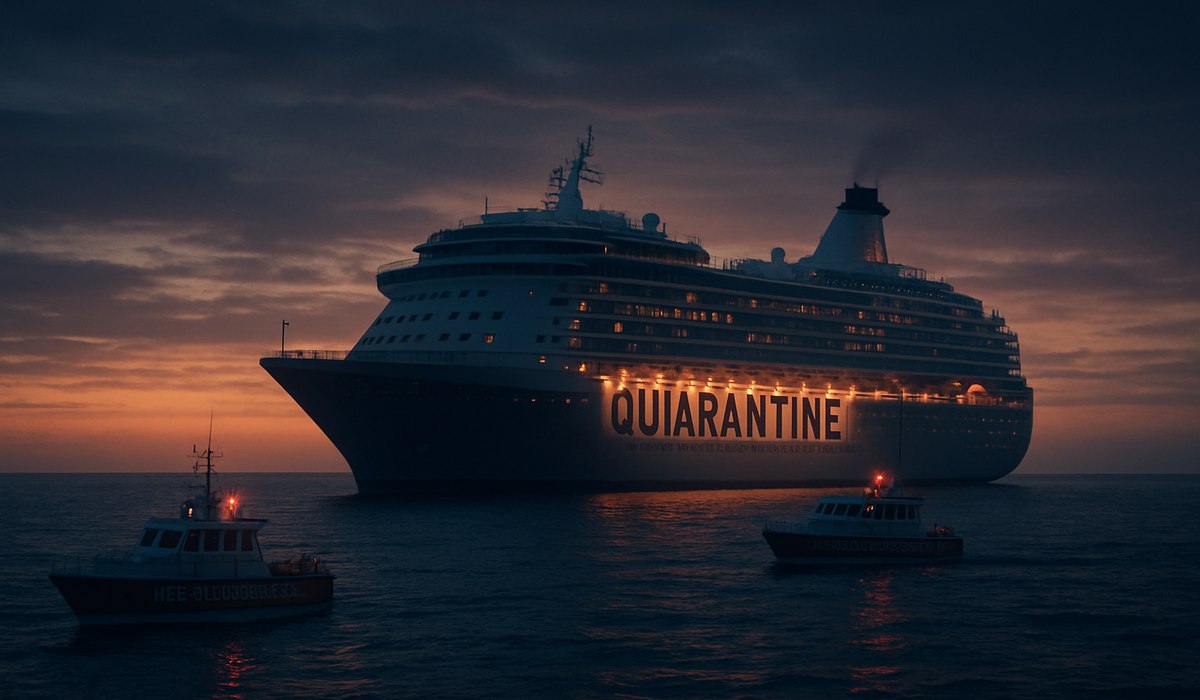
Image generated by AI
A Luxury Voyage Becomes a Medical Emergency
The MV Hondius, a Dutch-flagged polar expedition vessel, has become the focal point of an unprecedented hantavirus cruise outbreak that has claimed three lives and left nearly 150 passengers and crew stranded off the coast of Cape Verde in West Africa. What began as a once-in-a-lifetime Antarctic adventure in early April has transformed into a harrowing public health emergency, complete with medical teams in protective equipment, isolated passengers, and mounting international concern over disease containment.
The hantavirus cruise outbreak represents one of the most serious health crises involving modern cruise ships in recent years. As of early May 2026, confirmed cases and suspected infections continue to be documented, with authorities across multiple nations coordinating response efforts while passengers remain confined to cabins, awaiting clearance to disembark.
Cruise of a Lifetime Turns Into a Public Health Emergency
The MV Hondius departed from Ushuaia, Argentina, in early April 2026 on an ambitious polar expedition itinerary designed for adventure travelers seeking remote, untouched destinations. The voyage was marketed as an exclusive journey featuring stops in Antarctica, the Falkland Islands, isolated South Atlantic volcanic islands, and West African waters—each leg carefully planned for wildlife viewing and expedition activities.
According to available voyage data, the hantavirus cruise outbreak began manifesting around April 11, when an elderly Dutch passenger developed severe respiratory symptoms while the vessel was in the South Atlantic. The passenger's condition deteriorated rapidly, and he died aboard the ship. His body was not removed until nearly two weeks later when the MV Hondius made a call at Saint Helena, a British Overseas Territory.
In the days following this initial death, additional passengers fell ill with similar respiratory symptoms. The first victim's wife subsequently disembarked and sought medical care in South Africa, where laboratory tests confirmed hantavirus infection—a rare diagnosis that triggered immediate international health alerts. A British passenger was airlifted from Ascension Island to intensive care in South Africa as the scope of the hantavirus cruise outbreak became apparent to authorities.
Medical professionals emphasize that hantaviruses are typically transmitted through contact with infected rodent urine, droppings, or saliva. The exact source aboard the MV Hondius remains under investigation, though shipboard conditions and provisions storage are primary focuses for epidemiologists examining how the virus may have entered the vessel.
Stranded Off Cape Verde as Cases Rise
By early May 2026, the MV Hondius had anchored off Cape Verde, where local and regional health authorities requested the ship remain at sea pending a comprehensive assessment of the situation. International health agencies have documented seven confirmed or suspected cases linked to the vessel, including the three deaths, one critically ill passenger in South African intensive care, and several others showing milder symptoms aboard the ship.
The hantavirus cruise outbreak has created an unprecedented scenario aboard modern cruise infrastructure. Passenger accounts describe deserted lounges, cordoned-off corridors, and crew members moving methodically through common areas wearing masks and full protective gear. Approximately 150 people—a mix of international passengers from the United Kingdom, United States, Spain, Australia, and various European nations—remain largely confined to individual cabins.
Meal service continues to staterooms, but all group activities have been suspended. Testing protocols and isolation procedures have been implemented, though the lack of confirmed disembarkation dates has created significant uncertainty among passengers. Ship operators have publicly stated they are cooperating fully with health authorities in multiple jurisdictions and adhering to all guidance on isolation, testing, and potential evacuation procedures.
The hantavirus cruise outbreak has prompted questions about how such a serious health situation developed over several weeks without triggering earlier public disclosure. Some passengers have expressed frustration that the scale of the crisis only became clear weeks after the initial death, while the ship continued its planned itinerary across multiple ocean regions.
How the Outbreak Unfolded: Timeline of Cases
Understanding the progression of the hantavirus cruise outbreak helps illustrate the complexity of managing disease on a vessel far from major medical centers. The initial case appeared April 11 in the South Atlantic, where the elderly Dutch passenger developed severe respiratory distress. He died aboard the MV Hondius without immediate medical intervention beyond shipboard capabilities.
The body remained aboard until April 24-25, when the vessel called at Saint Helena. During this port stop, the deceased passenger was removed, and preliminary health assessments were conducted. However, at this stage, hantavirus was apparently not suspected, and the ship continued its planned route toward West Africa.
Subsequently, additional passengers developed respiratory symptoms consistent with hantavirus infection. The first victim's wife became ill after disembarking in South Africa, where confirmatory testing revealed hantavirus—initiating immediate alerts to maritime and public health authorities. A third death was confirmed following the British passenger's hospitalization in South Africa after airlifting from Ascension Island.
By May 6, 2026, the MV Hondius anchored off Cape Verde with seven confirmed or suspected cases documented, creating a containment scenario unprecedented in modern cruise operations.
Passenger Anxiety Grows Amid Uncertainty
Footage and accounts from passengers aboard the MV Hondius during the hantavirus cruise outbreak reveal mounting psychological strain alongside the medical emergency. Video recordings obtained by international media outlets show passengers expressing fear, confusion, and emotional distress as they remain confined to cabins with limited information about resolution timelines.
One American traveler was captured visibly breaking down while describing sleepless nights, constant activity from medical personnel in corridors, and the emotional burden of isolation thousands of miles from home. Another passenger documented video diaries chronicling the deteriorating atmosphere—from initial excitement about remote landscapes to expressions of anxiety about potential infection, separation from families, and disrupted professional obligations.
While reports indicate no widespread panic aboard the MV Hondius, the combination of strict cabin isolation, limited transparency regarding case progression, and the sobering reality of three confirmed deaths has created an atmosphere of profound stress and uncertainty. Passengers have questioned the timeline for disembarkation, availability of testing, and protocols for eventual evacuation or release.
Health experts stress that the broader public health risk remains limited, given that hantavirus transmission typically requires direct contact with infected rodent materials, and the ship's isolation prevents community spread in Cape Verde or other regions.
What Happens Next: Quarantine and Investigation
International maritime and public health authorities are coordinating a comprehensive response to the hantavirus cruise outbreak. Cape Verde's health ministry has not yet approved a formal disembarkation plan, citing the need for additional testing, epidemiological investigation, and coordination with passengers' countries of origin.
Likely next steps include continued isolation of symptomatic individuals, expanded testing of asymptomatic passengers and crew, thorough environmental sampling throughout the MV Hondius, and investigation into potential contamination sources. Epidemiologists will examine provisions, storage areas, galley operations, and ventilation systems as part of the root cause analysis.
Passenger repatriation will require careful coordination with multiple governments, airlines, and health authorities. Some passengers may remain on the vessel during quarantine periods, while others may be cleared for evacuation based on testing and symptom status. The exact timeline remains fluid as authorities assess evolving conditions.
The MV Hondius's parent company has committed to covering costs associated with extended voyages, medical care, and potential repatriation, though logistics remain complex given the remote location and scale of the hantavirus cruise outbreak.
Cruise Itinerary at a Glance
| Itinerary Element | Details |
|---|---|
| Vessel | MV Hondius (Dutch-flagged polar expedition cruiser) |
| Departure Port | Ushuaia, Argentina |
| Departure Date | Early April 2026 |
| Planned Destinations | Antarctica, Falkland Islands, South Atlantic volcanic islands, West Africa |
Disclaimer
This article is for informational and educational purposes only. It does not constitute legal, financial, or professional advice. While we strive to provide accurate and up-to-date information, travel policies, regulations, and conditions change rapidly. Always verify information with official sources before making travel decisions. Nomad Lawyer makes no representations about the accuracy, reliability, completeness, or suitability of the information provided. Readers should consult qualified professionals for advice specific to their circumstances. The views expressed in this article are those of the author and do not necessarily reflect the views of Nomad Lawyer.
Preeti Gunjan
Contributor & Community Manager
A passionate traveller and community builder. Preeti helps grow the Nomad Lawyer community, fostering engagement and bringing the reader experience to life.
Learn more about our team →