
Passengers stranded virus: 150 confined aboard Dutch cruise ship near Cape Verde
Nearly 150 passengers remain stranded aboard the MV Hondius off Cape Verde in 2026 as health authorities investigate three deaths and a suspected hantavirus outbreak. The vessel is anchored offshore while medical teams probe infections among crew and guests.

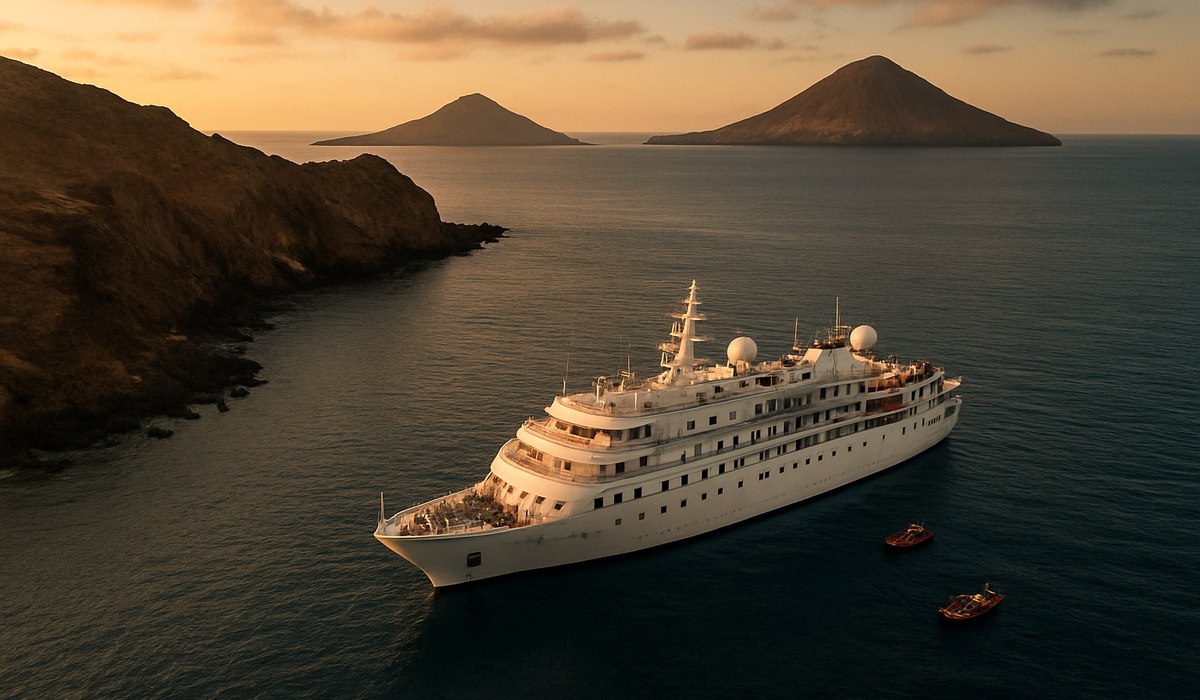
Image generated by AI
Expedition Cruise Emergency: 150 Passengers Stranded as Health Crisis Unfolds
The MV Hondius, a Dutch-flagged expedition cruise vessel operated by Lindblad Expeditions-National Geographic, remains anchored off Cape Verde's capital Praia with approximately 150 passengers and crew members confined aboard. Authorities have prohibited disembarkation after investigating three fatalities and multiple suspected hantavirus infections linked to the voyage. The situation marks one of 2026's most significant maritime health emergencies, with passengers stranded virus concerns escalating as medical teams work around the clock to contain potential spread.
The ship departed Ushuaia, Argentina, in March for an extended South Atlantic repositioning cruise destined for the Canary Islands. Cape Verde was designated as a critical resupply and crew change point before the final northbound passage. Instead, the vessel now sits in quarantine status, with passengers restricted to cabins and shared facilities either closed or under strict sanitization protocols.
Ship Held Offshore After Sudden Health Emergency
The MV Hondius first encountered serious illness in early April when a Dutch passenger developed acute respiratory symptoms while sailing through the South Atlantic. That individual died on April 11, with remains disembarked at St. Helena. A second passenger—reportedly the deceased traveler's spouse—departed at an intermediate port and collapsed during a connecting flight in Johannesburg on April 26, succumbing in a South African hospital days later.
A third fatality occurred on May 2 as the ship approached Cape Verde waters. Laboratory testing has confirmed hantavirus infection in at least two of the fatal cases, while investigators continue examining the third death. The rapid succession of health emergencies triggered immediate intervention by Cape Verde's port authority, which refused entry and ordered the vessel to maintain offshore anchorage pending full epidemiological assessment.
Medical teams have evacuated three critically ill patients via helicopter and sea launch to hospitals in South Africa and Europe equipped with specialized isolation facilities. The ship's onboard medical department, designed for routine expedition care, lacks resources to manage multiple severe respiratory cases simultaneously. Passengers stranded virus conditions have created significant psychological strain, with guests expressing anxiety about disembarkation timing and communicable disease containment.
Timeline of a Deadly Voyage
The outbreak timeline reveals how rapidly illness spread across the vessel during extended ocean passages:
- April 1-8: Initial respiratory symptoms reported among passengers during South Atlantic leg
- April 11: First confirmed fatality aboard ship; remains transferred at St. Helena
- April 12-18: Additional crew members develop fever and breathing difficulties
- April 26: Second passenger dies in Johannesburg hospital after intermediate disembarkation
- April 27-May 1: Ship continues toward Cape Verde; dozens of passengers disembark at multiple ports
- May 2: Third death confirmed aboard vessel
- May 3: Cape Verde authorities issue offshore holding order; passengers stranded virus containment protocols activated
- May 7: Laboratory confirmation of hantavirus in deceased passengers; international contact-tracing begins
The staggered nature of disembarkations at intermediate ports—including St. Helena and South African terminals—has complicated contact-tracing efforts across multiple jurisdictions. Health authorities in the Netherlands, Switzerland, South Africa, Canada, and other nations have launched investigations into travelers who spent time aboard or connected with infected individuals.
Medical Response and Evacuation Efforts
Healthcare coordination during the maritime quarantine involves multiple national agencies and specialized medical personnel. The World Health Organization issued situation reports noting at least seven confirmed and suspected infections, with three confirmed fatalities and additional cases under laboratory investigation.
Three critically ill passengers underwent emergency evacuation to land-based hospitals. Reports indicate the ship's doctor required evacuation, leaving medical decision-making to visiting healthcare teams who board via launch boats. Temperatures, oxygen saturation levels, and respiratory function are monitored continuously among the remaining 150 people aboard.
Crew members have implemented enhanced sanitation procedures including hourly disinfection of high-touch surfaces, mandatory mask usage in common areas, and complete isolation of symptomatic individuals. Meal service operates contactless, with staff leaving trays outside cabin doors rather than entering living spaces. The prolonged confinement has created tension despite crew professionalism and passenger cooperation.
Passenger Restrictions and Living Conditions
Passengers stranded virus constraints have severely limited onboard activities. Expedition decks designed for wildlife viewing remain closed. The dining room, lecture halls, and fitness facilities are off-limits except for brief, supervised access. Entertainment programming has been suspended, and naturalist presentations formerly central to Lindblad's expedition experience have ceased.
Cabin confinement policies permit bathroom and medical visits only. Food is delivered to individual staterooms three times daily. Internet connectivity has become vital for passenger morale, though bandwidth limitations aboard the vessel create frustration. Some guests have shared experiences via social media, describing anxiety, uncertainty about disembarkation dates, and concerns for elderly or immunocompromised traveling companions.
The ship's crew—typically 80-100 personnel aboard Lindblad vessels—operates under equivalent restrictions to prevent cross-contamination between guest and staff areas. Off-watch crew members remain in crew quarters. Essential personnel rotate through sanitization protocols before engaging with passengers.
Cruise Itinerary at a Glance
| Route Segment | Origin | Destination | Duration | Status |
|---|---|---|---|---|
| Full Repositioning | Ushuaia, Argentina | Canary Islands | 35 days | Disrupted |
| First Leg | Ushuaia | Falkland Islands | 5 days | Completed |
| Second Leg | Falkland Islands | South Georgia | 8 days | Completed |
| Third Leg | South Georgia | St. Helena | 12 days | Completed (outbreak begins) |
| Cape Verde Transit | St. Helena | Cape Verde | 10 days | Halted offshore |
| Final Leg | Cape Verde | Canary Islands | 7 days | Suspended indefinitely |
| Ship Class | Expedition-class | 50-passenger design | 100 berths utilized | Currently quarantined |
| Operator | Lindblad Expeditions | National Geographic Partnership | Premium naturalist cruising | Service interrupted |
For detailed cruise details and booking information, visit Lindblad Expeditions or consult Cruise Critic's expedition database.
MV Hondius Vessel Features and Specifications
The MV Hondius represents modern expedition cruising technology, accommodating 100 passengers in 50 cabins across ice-capable hull design. Built in 2019, the vessel includes panoramic observation areas, zodiac launch equipment for excursions, and comprehensive expedition amenities. Standard cabins feature private facilities, while suites offer expanded square footage and premium positioning.
Onboard amenities typically include a library, lecture theater, fitness center, and dining facilities emphasizing locally sourced menus. The expedition focus attracts nature photographers, wildlife enthusiasts, and cultural explorers seeking intimate travel experiences in remote regions. Naturalist guides from National Geographic normally accompany all voyages, providing specialist expertise in geology, marine biology, and regional history.
The ship's medical facility maintains basic pharmaceutical supplies, diagnostic equipment, and telemedicine connectivity for routine emergencies. During normal operations, this infrastructure proves sufficient for expedition travel. However, the hantavirus outbreak has exposed limitations when managing multiple critical respiratory cases in maritime isolation.
What This Means for Travelers
The passengers stranded virus situation carries implications for expedition cruise planning and maritime health preparedness:
- Verify pre-voyage health screening protocols with cruise operators. Request detailed information about onboard isolation capacity,
Disclaimer
This article is for informational and educational purposes only. It does not constitute legal, financial, or professional advice. While we strive to provide accurate and up-to-date information, travel policies, regulations, and conditions change rapidly. Always verify information with official sources before making travel decisions. Nomad Lawyer makes no representations about the accuracy, reliability, completeness, or suitability of the information provided. Readers should consult qualified professionals for advice specific to their circumstances. The views expressed in this article are those of the author and do not necessarily reflect the views of Nomad Lawyer.
Raushan Kumar
Founder & Lead Developer
Full-stack developer with 11+ years of experience and a passionate traveller. Raushan built Nomad Lawyer from the ground up with a vision to create the best travel and law experience on the web.
Learn more about our team →