
Auckland Airport Fog Restrictions Lift After 42 Flights Disrupted on August 26 2026
Dense morning fog at Auckland Airport triggered low-visibility procedures, disrupting 42 flights including regional services like NZ5966, highlighting the vulnerability of New Zealand's aviation hub.

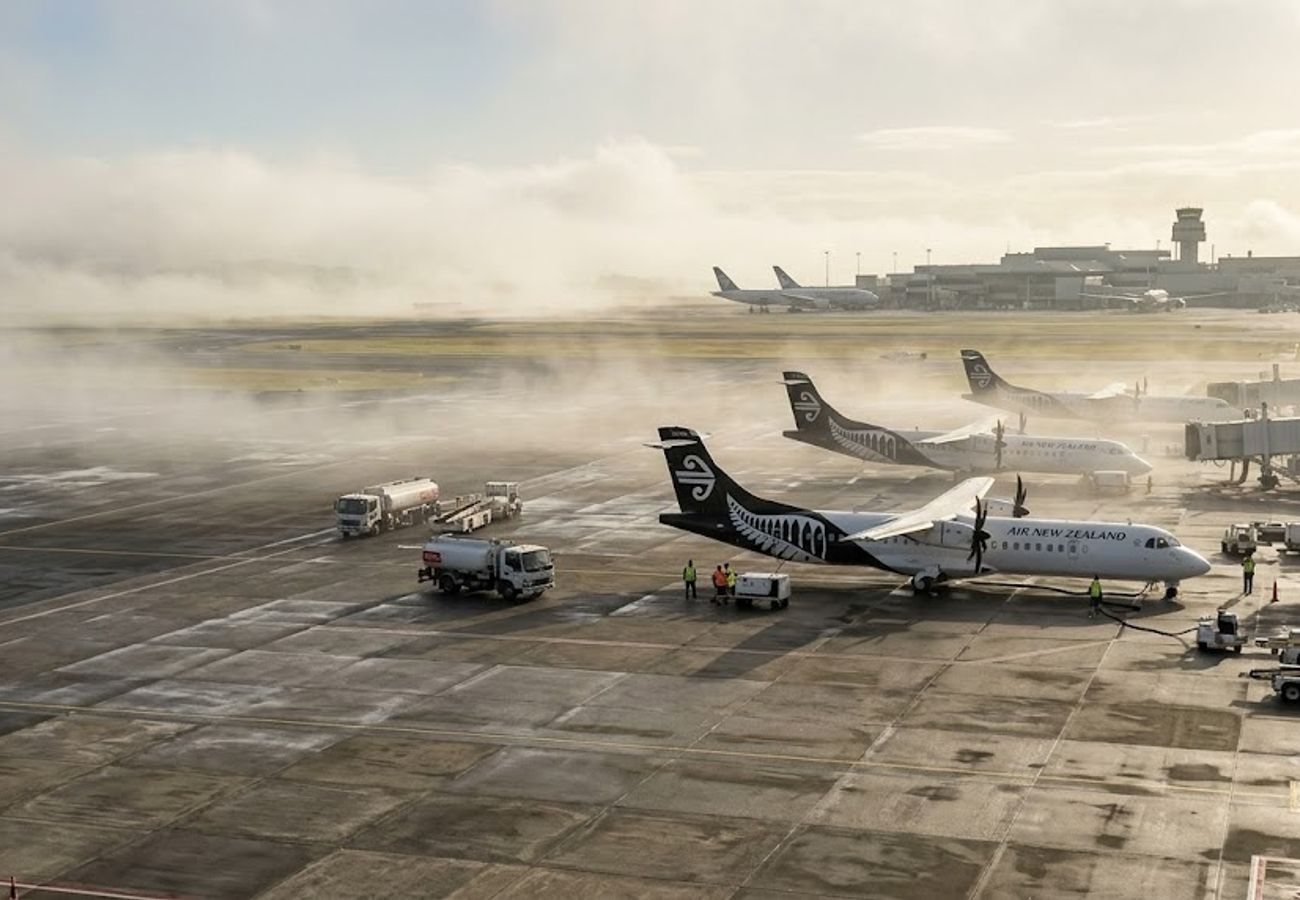
Image generated by AI
42 flights were cancelled or delayed on August 26, 2026, as dense morning fog forced Auckland Airport into low-visibility operating procedures. While international hubs recovered quickly, regional connections faced severe bottlenecks, underscoring the fragility of New Zealand's domestic aviation spokes.
The Morning Gridlock at Auckland’s Gateway
On Wednesday, August 26, 2026, Auckland Airport experienced a sharp reduction in visibility during the early morning peak. This atmospheric shift triggered immediate low-visibility operating procedures, which effectively slashed runway capacity and forced airlines to consolidate schedules.
Flight-status data confirms that 42 services were either cancelled outright or suffered significant delays. The disruption was not evenly distributed; while long-haul and trans-Tasman flights managed to maintain relative stability, the domestic network—specifically short-haul regional hops—bore the brunt of the weather event.
As visibility improved by late morning, the airport began a phased recovery. Mainline trunk routes serving Wellington and Christchurch were the first to stabilize, followed by a slower return to normalcy for regional links as crews and aircraft were repositioned.
Regional Vulnerability and the Domino Effect
The impact on regional aviation was disproportionate. Turboprop services operating on shorter sectors lack the fuel reserves for extended holding patterns and have fewer viable diversion airports compared to larger jets.
A prime example was flight NZ5966 from Palmerston North to Auckland, which was marked as cancelled. This specific failure illustrates how a single weather event at a primary hub can unravel tightly timed regional schedules. For travelers in smaller communities, these disruptions are more than an inconvenience; they represent a total loss of access to the country's primary international gateway.
The pattern mirrors previous winter events at Auckland, where similar fog banks have grounded dozens of flights in a single morning. Because regional aircraft and crews are often scheduled for multiple short sectors per day, a morning delay creates a cascade effect that persists long after the fog has lifted.
Technological Dividends in Recovery
Interestingly, the recovery speed differed based on aircraft technology. Larger jets operating international and major domestic routes utilize more sophisticated landing and navigation systems. These tools allow them to meet minimum visibility thresholds more efficiently than smaller regional aircraft.
Despite this, the reduced runway capacity created a "bottleneck" effect. Even flights capable of landing in low visibility faced departure slot delays as air traffic controllers sequenced movements to match the limited airfield capacity. Ground handling teams and border processing units also had to manage compressed turnaround windows as delayed international flights arrived in clusters.
According to recent financial and regulatory disclosures, Auckland Airport is currently engaged in a multi-year investment strategy focusing on airfield and terminal infrastructure. This includes upgrades to runway surfaces and lighting systems specifically designed to mitigate the impact of adverse weather.
Visitor Insider Tips for New Zealand’s Fog Season
For the traveler, the real impact of Auckland's weather is the unpredictability of the "winter-spring transition." To avoid being part of the next 42-flight disruption, consider these local strategies:
- The Golden Window: Avoid booking the first flight of the day (typically between 6:00 AM and 9:00 AM) during winter and early spring. Fog is most dense during these hours and usually clears by mid-morning.
- The Connection Buffer: If you are connecting from a regional flight (e.g., from Palmerston North or Napier) to an international departure, schedule a layover of at least 4-6 hours. Regional flights are the first to be cancelled and the last to be recovered.
- Digital Monitoring: Do not rely solely on airport arrival screens. Use real-time flight tracking apps to monitor your aircraft's "inbound" leg. If the incoming plane is diverted or delayed, your departure is almost certainly affected.
- Local Etiquette: During mass cancellations, airport staff are under immense pressure. Utilizing self-service rebooking tools via airline apps is significantly faster than queuing at a service desk.
Tourism Outlook: Building a Resilient Hub
The August 26 event serves as a stress test for Auckland's operational resilience. As New Zealand's primary gateway, any constraint on this hub affects national trade and tourism flows. The shift toward improved disruption management tools and self-service options is a direct response to these recurring weather patterns.
While technology upgrades are reducing the duration of these shocks, the inherent geography of the region means fog will remain a seasonal reality. The long-term goal for the region is to move toward a system where "low-visibility" does not automatically mean "low-capacity."
Flexibility remains the only true insurance policy for the winter traveler in Aotearoa.
Related Travel Guides
Disclaimer
This article is for informational and educational purposes only. It does not constitute legal, financial, or professional advice. While we strive to provide accurate and up-to-date information, travel policies, regulations, and conditions change rapidly. Always verify information with official sources before making travel decisions. Nomad Lawyer makes no representations about the accuracy, reliability, completeness, or suitability of the information provided. Readers should consult qualified professionals for advice specific to their circumstances. The views expressed in this article are those of the author and do not necessarily reflect the views of Nomad Lawyer.
Kunal K Choudhary
Co-Founder & Contributor
A passionate traveller and tech enthusiast. Kunal contributes to the vision and growth of Nomad Lawyer, bringing fresh perspectives and driving the community forward.
Learn more about our team →