
U.S. Government Suspends Consular Services in Mexicali Following Organized Crime Threat Intelligence 2026
U.S. officials have halted government travel and consular operations in Mexicali, Baja California, after intercepting intelligence regarding potential targeted attacks by organized crime groups.

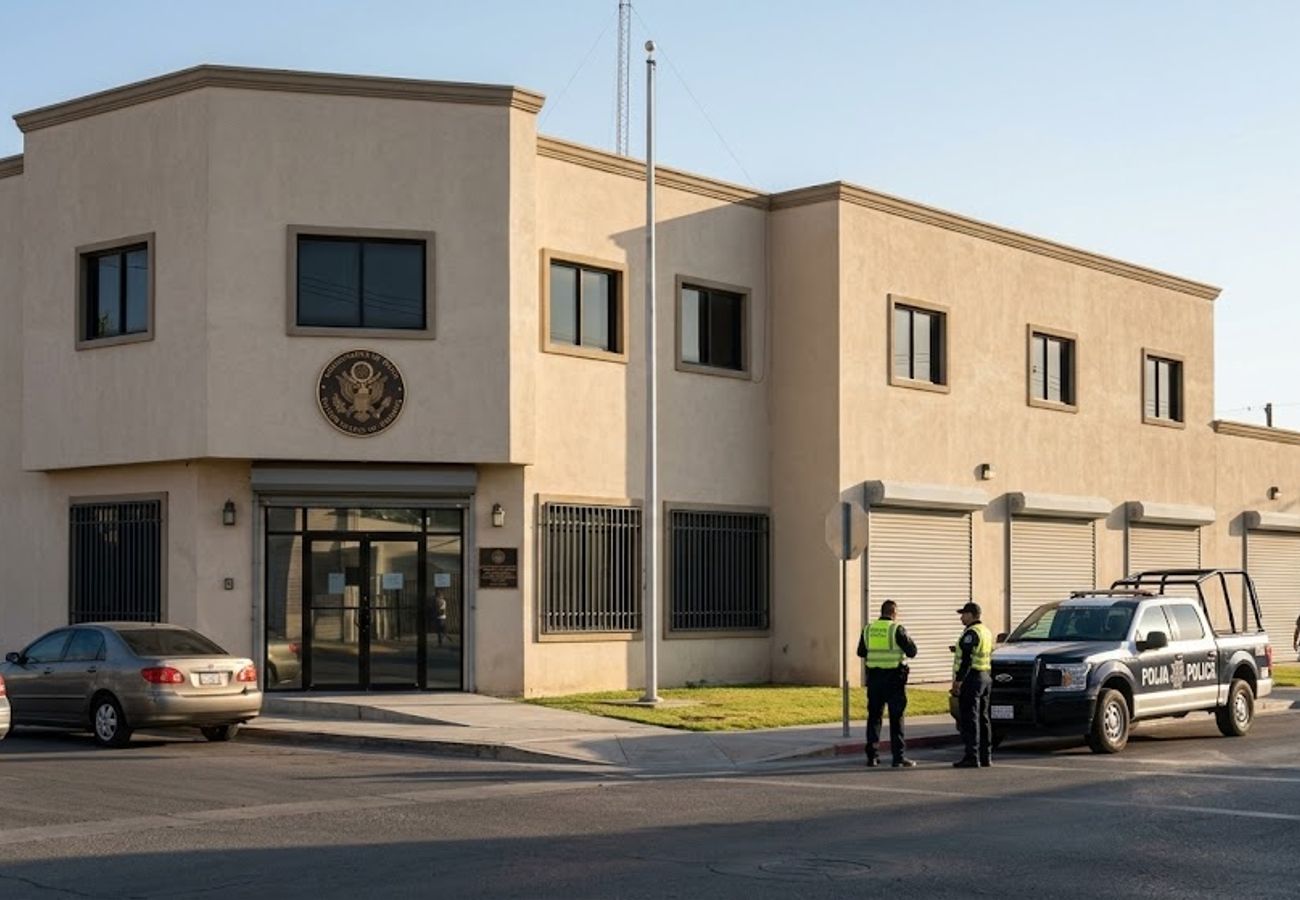
Image generated by AI
[Mexicali, August 27, 2026] — U.S. diplomatic authorities have abruptly suspended all government travel and consular activities in Mexicali, the capital of Baja California, following the receipt of specific threat intelligence. This emergency measure, enacted on August 25, warns U.S. citizens to avoid the city and exercise extreme caution due to a potential targeted security risk.
The sudden halt of official operations indicates a shift from monitoring general crime trends to reacting to a concrete, time-sensitive threat. While the U.S. government has not released the full classified details, the move has sparked immediate scrutiny of the security environment in the border region.
Intercepted Communications and Organized Crime Targets
The August 25 security alert was circulated via the U.S. diplomatic mission in Mexico, instructing personnel to cease all movements in and out of the city for a limited evaluation period. While the public-facing alert described the threat as "possible" or "potential," the decision to shutter consular services suggests a high level of concern regarding the immediacy of the danger.
Industry reports and security correspondents indicate that the alert was triggered by the interception of communications linked to organized crime. Specifically, intelligence suggests that a local criminal faction known as Los Rusos may have been coordinating a strike. According to these reports, the intercepted communications pointed toward attacks on high-profile government installations, including facilities operated by the federal Attorney General’s Office and municipal police headquarters in Mexicali.
This pattern of targeting law enforcement and judicial infrastructure is a recurring characteristic of cartel conflicts in northern Mexico. In this instance, the risk to the general public is primarily collateral; the threat is not directed at tourists or civilians specifically, but the proximity of such attacks to public spaces creates a significant safety hazard for anyone in the vicinity of government buildings.
Baja California Security Profile and Level 3 Status
The acute warning for Mexicali exists within a broader, chronic state of instability in Baja California. The U.S. State Department currently maintains a Level 3 "Reconsider Travel" advisory for the entire state. This standing warning is based on systemic issues including kidnapping, homicide, and violent territorial disputes between rival cartels over smuggling corridors.
While Mexicali has historically been perceived as more stable than the urban centers of Tijuana, it remains a critical node for cross-border trafficking. Official guidelines have long cautioned against entering the rural Mexicali Valley, where U.S. government personnel already face strict movement restrictions. Travelers are consistently advised to remain on primary highways and avoid isolated rural areas.
The current crisis illustrates how a localized intelligence "spike" can override general trends. Even though the state's overall risk level remains at Level 3, the specific threat of a targeted attack in the capital city creates a momentary but severe escalation in risk for those on the ground.
Divergent Responses Between U.S. and Mexican Authorities
There is a notable discrepancy in how the U.S. and Mexican governments are communicating this threat to the public. While the U.S. mission opted for a cautious, preventative shutdown of services, Mexican federal and state officials have sought to minimize the perceived crisis.
Reports from Spanish-language media indicate that Mexico's federal security cabinet has stated there is no evidence of an "imminent" threat to the general population. Furthermore, the governor of Baja California has used social media platforms to urge calm, asserting that daily life in Mexicali continues without disruption and that state forces are in full coordination with federal agencies.
This divergence highlights two different philosophies of risk management. The Mexican government's priority is often the maintenance of social order and the prevention of economic panic. Conversely, the U.S. State Department operates on a "fail-safe" principle, issuing warnings and suspending operations whenever credible intelligence surfaces, regardless of whether the threat eventually materializes.
Critical Implications for Border Travelers
For those planning travel to Mexicali, this incident serves as a reminder that security conditions in border cities can deteriorate in a matter of hours. The suspension of consular services is a rare and serious step, signaling that the U.S. government views the risk as too high to maintain a physical presence in the city.
Travelers should be aware that while most cartel violence is highly targeted, the resulting chaos—such as shootouts or explosions—often occurs in public areas. The current situation emphasizes the need for extreme vigilance when near government or police installations.
From a logistical standpoint, the temporary loss of consular services means that U.S. citizens in the area may lack immediate access to emergency diplomatic assistance, passport replacements, or legal guidance from their embassy during a crisis.
Why This Matters: The Impact on the Modern Traveler
For the traveler or expatriate, this event reveals the invisible layer of "threat intelligence" that governs international movement. Most tourists rely on the static Level 1-4 maps provided by the State Department, but as seen in Mexicali, the real danger often lies in the "micro-alerts"—short-term, high-intensity warnings based on intercepted calls or informant tips.
From a legal and safety perspective, this creates a precarious environment. If a traveler ignores a short-term alert and is caught in a targeted attack, they may find that their travel insurance is voided due to "willful entry" into a warned zone. Furthermore, the lack of consular support during these windows means the traveler is entirely dependent on local authorities, who may be the very targets of the planned attacks.
The Mexicali incident underscores that in 2026, "safe" travel in border regions requires more than just checking a map; it requires real-time monitoring of diplomatic communications and a willingness to pivot plans instantly when government services are suspended.
The volatility of the Baja California border remains a critical variable for any international itinerary.
Related Travel Guides
Disclaimer
This article is for informational and educational purposes only. It does not constitute legal, financial, or professional advice. While we strive to provide accurate and up-to-date information, travel policies, regulations, and conditions change rapidly. Always verify information with official sources before making travel decisions. Nomad Lawyer makes no representations about the accuracy, reliability, completeness, or suitability of the information provided. Readers should consult qualified professionals for advice specific to their circumstances. The views expressed in this article are those of the author and do not necessarily reflect the views of Nomad Lawyer.
Preeti Gunjan
Contributor & Community Manager
A passionate traveller and community builder. Preeti helps grow the Nomad Lawyer community, fostering engagement and bringing the reader experience to life.
Learn more about our team →