
Flights Cancelled Across Asia As 165 Cancellations And 3,258 Delays Disrupted Kuala Lumpur, Dubai, And 20 Other Major Airports
Over 3,400 flight disruptions swept across Asia on September 14, 2026, impacting Tokyo Haneda, Guangzhou, Jakarta, Delhi, Kuala Lumpur, and Dubai.

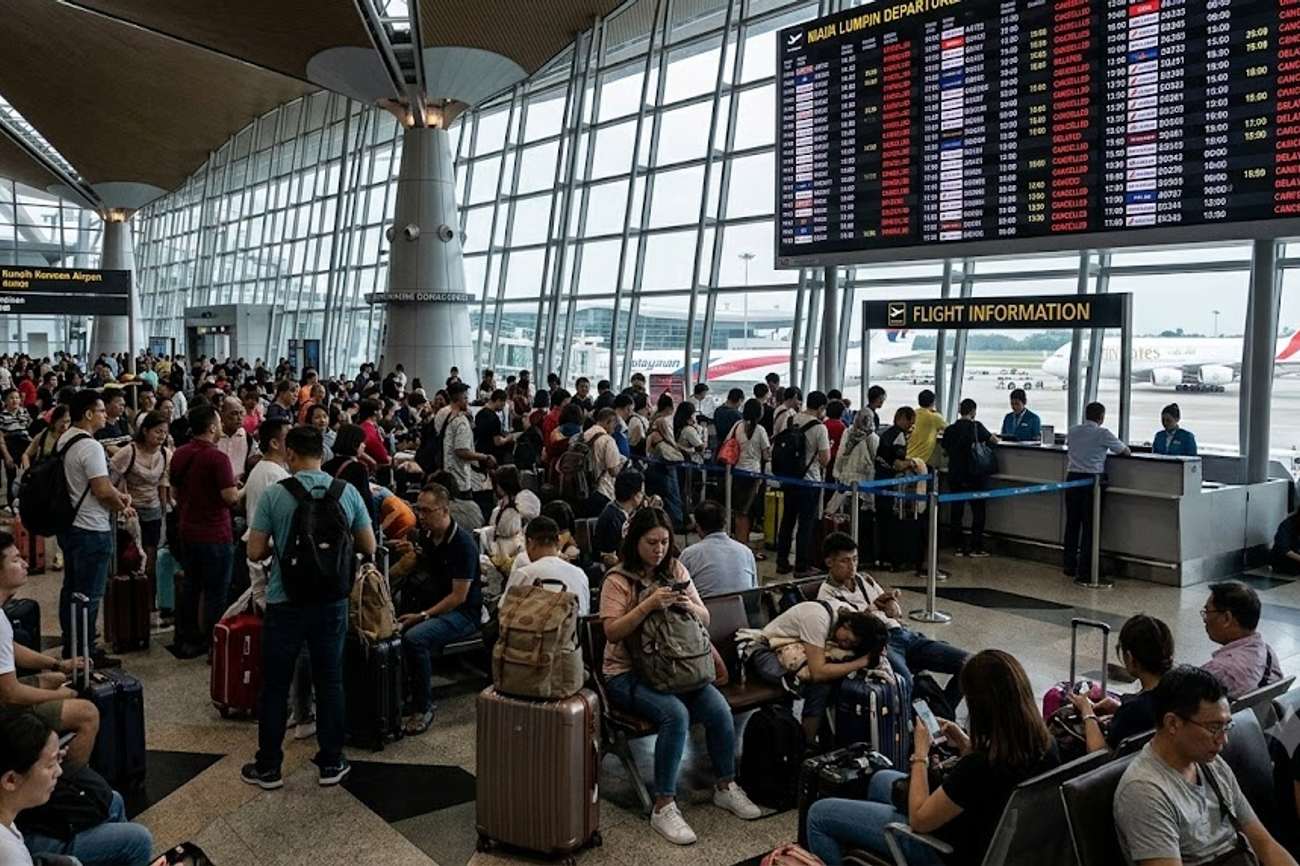
Image generated by AI
While Tokyo Haneda is celebrated worldwide for clockwork punctuality, sudden operational gridlock drove its destination delay rate to an astonishing 39%, anchoring a single-day cascade of 561 delays on September 14, 2026. Verified aviation logs captured at 1:40 pm ET (11:10 pm GMT) through FlightAware revealed sweeping schedule modifications across eight primary nations: Japan, Malaysia, China, Vietnam, India, Indonesia, Saudi Arabia, and the United Arab Emirates. Across key routes, carriers logged 3,258 delays and 165 outright cancellations, turning normally seamless intercontinental transfers into tests of passenger patience. As aircraft availability, crew duty limits, scheduled maintenance requirements, and airspace congestion compounded, travelers moving between Tokyo, Guangzhou, Shanghai, Jakarta, Hanoi, Delhi, Kuala Lumpur, and Dubai encountered rolling gate revisions.
Asian Megahubs Under Pressure: Analyzing 3,423 Flight Disruptions
The operational friction across the Asia-Pacific basin highlights how tightly interlinked modern flight banks have become. Leading the continent in raw delays was Tokyo Haneda, which recorded 561 delays, 1 cancellation, and 17 U.S.-related delays, alongside a 39% destination delay rate. Elsewhere in Japan, Fukuoka recorded 149 delays and 3 cancellations (a 33% destination delay rate), which combined with schedule revisions at Naha to strain regional connections.
In mainland China, dual aviation hubs absorbed heavy volume shifts:
- Guangzhou Baiyun: Handled 419 delays and 12 cancellations, documenting a 20% origin delay rate and a 30% destination delay rate.
- Shanghai Pudong: Logged 269 delays and 6 cancellations, alongside 9 U.S.-related delays and a 14% destination delay rate.
South and Southeast Asian gateways navigated comparable operational friction:
- Jakarta Soekarno-Hatta: Recorded 257 delays and 27 cancellations, posting a 2% origin cancellation rate, 20% origin delay rate, 1% destination cancellation rate, and 22% destination delay rate.
- Delhi Indira Gandhi: Handled 296 delays and 4 cancellations, registering a 1% origin cancellation rate, 20% origin delay rate, and 19% destination delay rate.
- Hanoi Noi Bai: Serving Vietnam's capital, the terminal documented 171 delays and 5 cancellations, with a 25% destination delay rate.
- Kuala Lumpur: Malaysia's main gateway recorded 153 delays and 2 cancellations, operating with a 16% destination delay rate.
- Dubai International: The primary Gulf link posted 132 delays and 11 cancellations, reflecting a 1% origin cancellation rate, 11% origin delay rate, and 12% destination delay rate.
Airlines absorbed severe operational strain across their regional rotations. China Eastern logged 302 delays (12% delay rate) and 29 cancellations (1% cancellation rate). Air China documented 140 delays (8% delay rate) alongside 11 cancellations (0% cancellation rate). Batik Air experienced sharp disruption, logging 87 delays and 21 cancellations (a 28% delay rate and 6% cancellation rate). Saudia recorded 54 delays (10% delay rate) and 25 cancellations (4% cancellation rate), among the highest cancellation counts recorded. Vietnam Airlines logged 72 delays and 7 cancellations, matching a 20% delay rate and 2% cancellation rate. Key operational factors cited across carriers included aircraft availability bottlenecks, crew scheduling constraints, scheduled maintenance requirements, airport congestion, localized weather conditions, air traffic control restrictions, and changes to airline operating plans.
What Makes Asian Aviation Megahubs Different
Unlike Western transit terminals that function merely as utilitarian transfer points, major Asian aviation hubs are cultural gateways designed around prolonged dwelling and regional hospitality. At Tokyo Haneda, transiting passengers can stroll through the Edo Market in Terminal 3, where wood-framed merchant shops and paper lanterns recreate historic Edo. Travelers can savor artisan soba, browse handmade washi crafts, or view Mount Fuji rising on the horizon from observation decks, an experience highlighted by the Japan National Tourism Organization.
At Kuala Lumpur International Airport, architect Kisho Kurokawa realized the concept of an "Airport in the Forest, Forest in the Airport." The satellite terminal encloses a living section of preserved tropical rainforest with canopy boardwalks, letting travelers experience native biodiversity and birdsong, mirrored in destination initiatives by Tourism Malaysia.
In Delhi, Indira Gandhi International Airport transforms Terminal 3 into an artistic tribute to Indian heritage. Towering copper mudra sculptures depicting classical Natya Shastra dance gestures greet arriving travelers with symbols of peace and welcome. Linked directly to the capital via the high-speed Airport Express metro line, the airport provides rapid access to historic Mughal architecture celebrated by the UNESCO World Heritage Centre, including Humayun's Tomb and the Red Fort.
Visitor Insider Tips
Navigating sweeping schedule changes across Asian airports requires local knowledge, strategic timing, and a calm approach to terminal logistics.
- Expand Layover Cushions: Steer clear of ninety-minute connections when flying through high-density hubs like Tokyo Haneda, Guangzhou Baiyun, or Jakarta Soekarno-Hatta. Aim for at least three and a half to four hours. With destination delay rates reaching 39% at Haneda and 30% at Guangzhou, an extended cushion prevents missed onward long-haul flights.
- The Haneda Rooftop Onsen: If facing an extended delay at Tokyo Haneda Terminal 3, visit Izumi Tenku no Yu inside the connected Haneda Airport Garden. This natural hot spring onsen overlooks Tokyo Bay and active runways, letting travelers soak in mineral waters while watching aircraft take flight.
- The KL Sentral Street Food Detour: During layovers exceeding six hours at Kuala Lumpur, take the non-stop KLIA Ekspres train to KL Sentral in twenty-eight minutes. A quick monorail ride brings you to Jalan Alor in Bukit Bintang for chicken satay, sambal stingray, and sugarcane juice before returning smoothly via automated immigration.
- Counter Etiquette: When handling cancellations—like the 27 grounded departures at Jakarta Soekarno-Hatta or 29 at China Eastern—approach service desks with calm patience. In Indonesian culture, maintaining kesopanan (politeness) yields far better assistance from gate agents. Similarly, showing respect at Chinese transfer desks preserves mianzi (face), encouraging supervisors to provide transit hotel rooms, meal vouchers, or priority rerouting.
- Digital Tracking and Baggage: Terminal monitors frequently lag behind operations during mass disruption events. Track your incoming aircraft directly via flight monitoring apps. If your journey involves multiple carriers or domestic-to-international transfers, ask ground agents to verify whether your bags are checked through or require manual collection at intermediate hubs.
Cultural and Environmental Context
The swift growth of aviation across East, South, and Southeast Asia represents both an economic milestone and an environmental responsibility. Rising incomes have turned commercial flights into everyday transport for millions. Yet this surging connectivity places immense demands on air corridors and regional ecosystems.
When delays strike hubs like Guangzhou Baiyun or Tokyo Haneda, wide-body jets circle in airborne holding stacks, burning excess fuel and elevating urban emissions. In response, regional transport authorities are pioneering environmental solutions. Tokyo Haneda integrates extensive solar canopies across cargo structures, while Delhi's Indira Gandhi International Airport operates as a certified net-zero carbon facility through solar generation and electric airside service fleets.
At the community level, flight disruptions highlight the balance between mass transit and local heritage. Extended layovers present opportunities to disperse tourism benefits beyond commercial duty-free arcades into authentic neighborhoods. Whether travelers discover traditional noodle shops in Ota City outside Haneda, taste Javanese cuisine near Tangerang, or patronize craft stalls along Malaysian rail corridors, conscious transit tourism empowers local communities while honoring the fragile skies that connect them.
FAQ: Visiting Asian Hubs 2026
What caused the flight cancellations and delays across Asia on September 14, 2026? Disruptions stemmed from compounding operational factors including aircraft availability bottlenecks, crew duty time constraints, maintenance requirements, terminal congestion, weather patterns, air traffic restrictions, and emergency schedule adjustments by airlines.
Which Asian airport experienced the highest flight delays? Tokyo Haneda recorded the continent's highest total with 561 delays, accompanied by 1 cancellation, 17 U.S.-related delays, and a destination delay rate of 39%.
Can passengers leave the airport during extended layovers in Kuala Lumpur or Tokyo? Yes, eligible passport holders can clear immigration during long delays. In Kuala Lumpur, the non-stop KLIA Ekspres reaches downtown in 28 minutes, while Haneda links directly to central Tokyo via train and monorail.
What steps should travelers take if an Asian flight is canceled? Check flight status digitally before departing, contact the carrier immediately for rebooking options, retain all boarding passes and receipts, review cancellation compensation rules, and verify baggage transfer arrangements with ground staff.
Across the expansive skies of Asia, every unexpected delay offers a patient traveler the chance to turn an airport layover into an unforgettable cultural discovery.
Related Travel Guides
Disclaimer
This article is for informational and educational purposes only. It does not constitute legal, financial, or professional advice. While we strive to provide accurate and up-to-date information, travel policies, regulations, and conditions change rapidly. Always verify information with official sources before making travel decisions. Nomad Lawyer makes no representations about the accuracy, reliability, completeness, or suitability of the information provided. Readers should consult qualified professionals for advice specific to their circumstances. The views expressed in this article are those of the author and do not necessarily reflect the views of Nomad Lawyer.
Naina Thakur
Contributor & Travel Specialist
Travel enthusiast and legal writer covering visa regulations, responsible tourism, and cultural journeys across global destinations.
Learn more about our team →