
Flight delays hide $18 billion annual cost as 2026 bookings surge
New analysis reveals flight delays hide an $18 billion yearly burden on U.S. travelers in 2026 as operational strain intensifies amid record booking surge and staffing shortages.

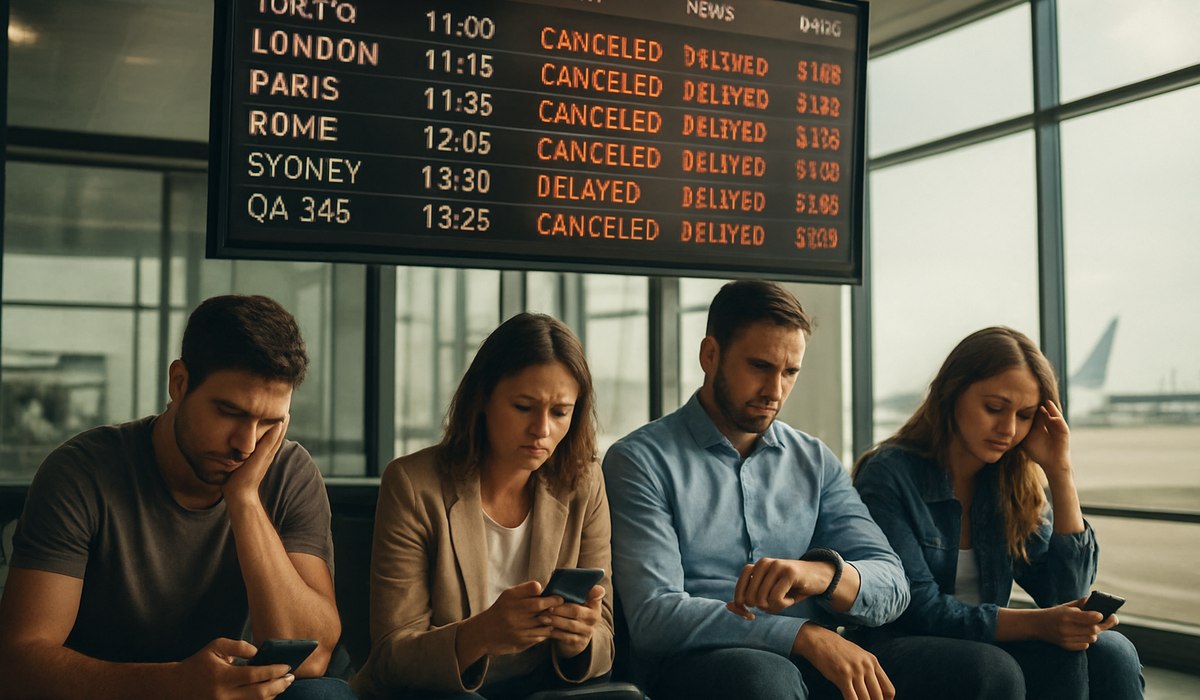
Image generated by AI
Flight Delays Hide $18 Billion Annual Cost as U.S. Airways Struggle
United States aviation system is quietly extracting approximately $18 billion yearly from passenger wallets through operational disruptions, missed connections, and extended airport waits. This 2026 surge in flight delays coincides with record booking volumes and lingering staffing constraints across major hubs including Atlanta, Chicago, New York, and Los Angeles. The emerging cost analysis paints a troubling picture for the 900+ million annual U.S. air travelers navigating an increasingly strained transportation network.
The Hidden $18 Billion Cost Behind Flight Delays
When passengers book flights, they see headline fares but rarely understand the total economic burden flight delays hide from their travel budgets. Economic research and transportation industry modeling reveal that delay-related expenses extend far beyond published ticket prices. These costs encompass missed connection rebook fees, unplanned meals at airport restaurants, rideshare surges to alternative transportation, and involuntary hotel accommodations when connections fail.
Researchers calculate delay costs using time valuation methodologies aligned with prevailing wage averages. Each hour of delay receives an assigned dollar value, which multiplies across millions of disrupted journeys. Recent Bureau of Transportation Statistics data indicates roughly one in four U.S. passengers experienced delays or cancellations in 2025. When extrapolated across 900+ million annual trips, even modest average delays generate enormous aggregate costs that flight delays hide from conventional accounting.
Industry benchmarking studies suggest total delay costs—including airline operations and broader economic consequences—exceed $30 billion annually nationwide. The $18 billion figure represents passenger-specific burdens only, underscoring how structural inefficiencies have become embedded in modern air travel.
How Airlines and Researchers Calculate Delay Expenses
Transportation economists employ standardized methodologies to quantify what flight delays hide from public discourse. The primary technique assigns hourly economic values to passenger time based on median wage data, opportunity costs, and productivity losses. Airlines contribute proprietary operational cost data reflecting fuel consumption during holds, crew overtime, and maintenance scheduling disruptions.
The Federal Reserve's late-2025 analysis of aviation disruptions highlighted how sensitivity to federal service variations amplifies delay costs. Government shutdowns in 2025 and 2026 created cascading effects through security screening backlogs and air traffic control staffing shortages. These findings appear on FAA operational dashboards and inform U.S. DOT consumer reports published quarterly.
Passenger rights organizations survey travelers to capture out-of-pocket expenses flight delays hide from airlines' financial reporting. Survey data reveals unexpected costs including premium meal purchases, taxi fare surcharges, rental car upgrades, and rebooking penalties averaging $200-400 per disrupted journey.
2026 Outlook: Why Operational Strain Is Worsening
Early 2026 weather patterns and aggressive scheduling have exposed structural weaknesses throughout North American aviation infrastructure. Late winter and spring storms produced waves of cancellations across major hubs, with tracking data from FlightAware documenting single days exceeding 7,000 delayed flights domestically. March 2026 disruptions affected tens of thousands of additional flights across the Caribbean and Canada.
Airlines amplified operational stress by deploying aggressive spring break and Easter schedules while air traffic control staffing remained constrained in high-traffic markets. Ground handling resources at secondary airports continued operating below optimal capacity. Extended government funding gaps persisted through early 2026, preventing staffing augmentation and facility upgrades needed to handle peak-season volume.
Transportation analysts tracking real-time performance dashboards report that airline-controlled factors—crew scheduling, maintenance delays, late-arriving aircraft—account for larger disruption shares than weather events. This trend continued from 2025 into 2026 despite industry promises to improve reliability. Federal Reserve research indicates that dependency on federal aviation services has become dangerously pronounced, with modest staffing fluctuations triggering cascading delays across multi-state regions.
What This Means for Nomadic Professionals and Remote Workers
Digital nomads and location-independent professionals face particular vulnerability to flight delays hide-related disruptions. Irregular travel patterns and tight scheduling windows magnify the cost impact of operational delays. Remote workers relying on time-specific commitments—client meetings, team standups, visa runs—cannot absorb multi-hour disruptions without productivity consequences.
The $18 billion annual burden translates to approximately $20 per passenger journey when distributed across the traveling public. Frequent fliers experience substantially higher per-trip costs through cumulative delay exposure. Delay-tracking analytics reveal that regular business travelers accumulate dozens of hours annually in unproductive airport time, representing income losses substantially exceeding the base fare discount they negotiated.
For nomadic lifestyles dependent on reliable airport operations, 2026 projections suggest increasing reliance on travel insurance covering delay-related rebooking and accommodation costs. Strategic route selection favoring primary hub connections over connecting flights reduces exposure to cascade delays where flight delays hide in hub-and-spoke network vulnerabilities.
Traveler Action Checklist
- Purchase comprehensive travel insurance covering delay-specific rebooking and accommodation expenses before booking 2026 flights
- Monitor FlightAware real-time tracking 72 hours before departure to identify emerging operational issues at your departure and connection airports
- Book direct flights on primary routes when possible to minimize cascade delay vulnerability
- Request written confirmation of airline delay policies and rebooking procedures before traveling, particularly during peak seasons
- Document all delay-related out-of-pocket expenses with receipts for potential compensation claims under DOT regulations
- File formal delay complaints with U.S. Department of Transportation when delays exceed three hours for domestic flights
- Join airline loyalty programs to access priority rebooking queues when operational delays occur
- Schedule non-critical commitments with 4+ hour buffers following international connections to accommodate probable delays
Key Data Table: Flight Delay Impact Analysis
| Metric | 2025 Value | 2026 Projection | Impact Category |
|---|---|---|---|
| Annual passenger cost (flight delays hide) | $18 billion | $18.5-19.2 billion | Direct traveler burden |
| Total system delay cost | $30+ billion | $31-33 billion | Economy-wide impact |
| U.S. annual passenger trips | 900+ million | 920+ million | Market volume |
| Passengers experiencing delays annually | 25% | 26-28% | Disruption prevalence |
| Average delay-related out-of-pocket expense | $200-400 | $225-450 | Individual cost |
| Hourly economic value per traveler | $20-35 | $22-38 | Time valuation |
| Peak delay days (7,000+ flights) | 3-4 per quarter | 4-5 per quarter | System stress events |
FAQ: Flight Delays and Hidden Costs
Q: How do researchers calculate the $18 billion figure that flight delays hide?
A: Economists assign hourly dollar values to passenger time based on median wage data and opportunity costs. This value multiplies across millions of disrupted journeys, incorporating out-of-pocket expenses like rebooking fees, meals, and accommodation. The methodology appears in Bureau of Transportation Statistics reports and Federal Reserve analyses examining aviation system economics.
Q: Which airlines contribute most to delay statistics in 2026?
A: Major carriers operating extensive hub networks—Delta (Atlanta), American (Dallas/Charlotte), United (Chicago/Houston), and Southwest (Denver/Las Vegas)—show highest absolute delay counts due to volume. However, delay rates (percentage of flights delayed) vary significantly by carrier and route. Consult [FlightAware carrier rankings](
Disclaimer
This article is for informational and educational purposes only. It does not constitute legal, financial, or professional advice. While we strive to provide accurate and up-to-date information, travel policies, regulations, and conditions change rapidly. Always verify information with official sources before making travel decisions. Nomad Lawyer makes no representations about the accuracy, reliability, completeness, or suitability of the information provided. Readers should consult qualified professionals for advice specific to their circumstances. The views expressed in this article are those of the author and do not necessarily reflect the views of Nomad Lawyer.
Kunal K Choudhary
Co-Founder & Contributor
A passionate traveller and tech enthusiast. Kunal contributes to the vision and growth of Nomad Lawyer, bringing fresh perspectives and driving the community forward.
Learn more about our team →