
Flight Delays Draining $18 Billion From U.S. Travelers Annually in 2026
Flight delays are draining an estimated $18 billion from U.S. travelers annually through hidden expenses. New research reveals the true cost of missed connections, hotel stays, and lost productivity in 2026.

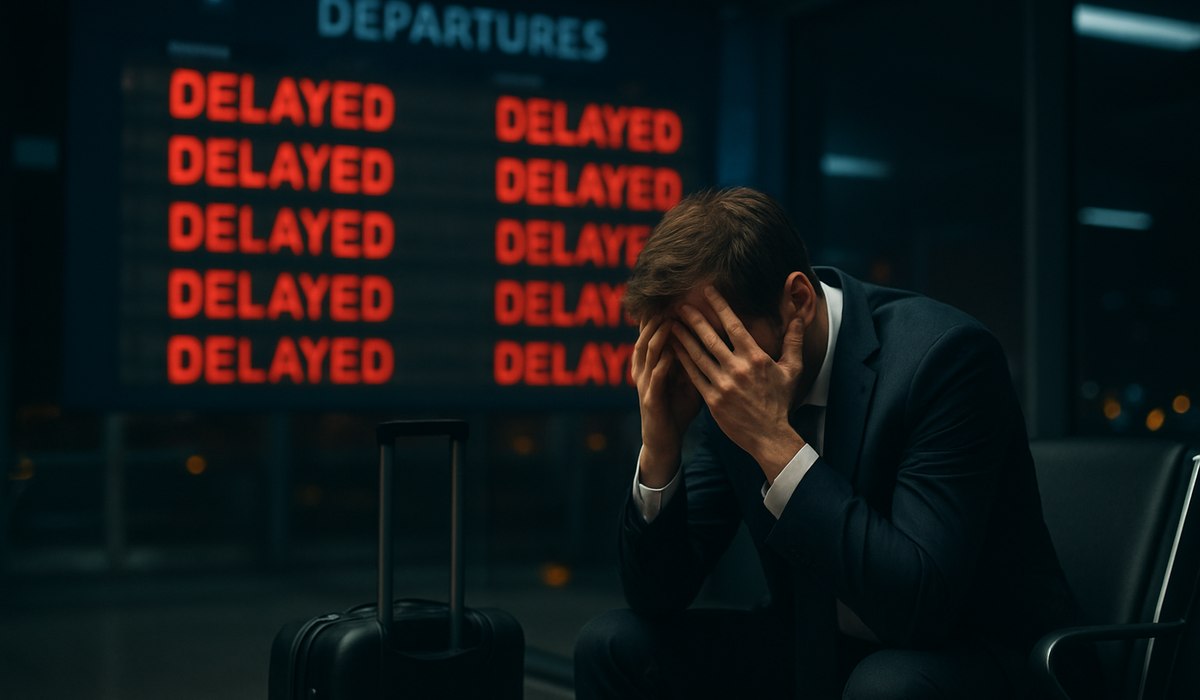
Image generated by AI
Flight Delays Draining $18 Billion Annually From American Travelers
U.S. air travel is quietly hemorrhaging an estimated $18 billion per year through disruptions that extend far beyond missed flights. Flight delays draining passenger wallets through unexpected hotel stays, rental cars, meals, and lost work hours have become a persistent hidden tax on American travelers throughout 2026. New research synthesizing federal data, academic studies, and industry records reveals that the true financial impact of aviation disruptions reaches well beyond airline compensation policies—affecting millions of passengers who absorb costs airlines refuse to reimburse.
The $18 billion figure represents passenger-specific expenses alone, not including broader economic losses from canceled business meetings, forfeited contracts, and diminished airline revenue. When economists factor in cascading effects across the entire economy, total delay costs may exceed $30 billion annually. As domestic flight volumes approach record highs with approximately 40 million flights scheduled in 2026, even marginal reductions in on-time performance translate into billions of dollars in additional traveler losses.
The $18 Billion Hidden Cost of Flight Delays
Aviation economists have spent more than a decade developing detailed accounting frameworks to quantify delay expenses. These models integrate airline schedule data, delay minutes reported through systems like FlightAware, passenger itineraries, and survey-based time valuations to calculate per-traveler costs.
Federal research centers commissioned by the FAA established benchmark studies valuing passenger delay time at tens of dollars per hour. By multiplying this value across millions of travelers experiencing hundreds of millions of delay hours annually, researchers calculated passenger costs exceeding $15 billion before recent traffic growth.
Contemporary models incorporate inflation adjustments, changing wage levels, and evolving trip patterns. Today's travelers increasingly combine work and leisure activities or maintain rigid same-day itineraries, making disruptions exponentially costlier. A missed connection no longer means just rebooking—it means forfeited client meetings, canceled vacation days, and compromised business relationships. Updated technical summaries circulated through 2026 confirm passenger delay impacts now cluster around $18.1 billion annually in the United States alone.
Breaking Down Where Travelers Lose Money
Passengers absorb costs across multiple categories when disruptions occur. Hotel accommodations represent the largest out-of-pocket expense, particularly for overnight delays affecting long-haul or international connections. Ground transportation—including rideshare services, rental cars, and airport shuttles—compounds these bills rapidly.
Meal expenses accumulate during extended waits, especially when airlines provide limited or no meal vouchers. Replacement ticket purchases occur when travelers choose alternative routing rather than wait for rebooking. Lost productivity costs—the value of missed work hours—often dwarf direct expenses, particularly for business travelers whose hourly rates substantially exceed typical reimbursement amounts.
Travel insurance claims data shows disruption-related claims have increased by double-digit percentages compared with pre-pandemic years. This surge reflects both more frequent delays and heightened traveler awareness of uncompensated losses. Unlike European regulations mandating fixed cash compensation for long delays or cancellations, U.S. policy remains fragmented. Airlines operate under voluntary commitment frameworks with case-by-case voucher programs rather than standardized passenger protections. A proposed rule requiring mandatory cash compensation was shelved in 2025, leaving existing airline policies largely unchanged.
Rising Delays as Air Traffic Surges to Record Levels
Domestic demand continues climbing toward historical peaks throughout 2026. Global aviation bodies project more than five billion air passengers worldwide with approximately 40 million scheduled flights annually. U.S. carriers alone manage unprecedented passenger volumes while contending with staffing pressures, aging infrastructure, and weather volatility.
As congestion intensifies at major hub airports, even minor operational disruptions cascade into system-wide delays affecting hundreds of thousands of passengers daily. Airport infrastructure struggles to accommodate peak-hour traffic, creating bottlenecks in taxiway operations, gate availability, and air traffic control sequencing. Weather-related delays remain unpredictable and increasingly severe, with climate volatility generating longer disruption windows and more widespread cancellations.
The FAA's system modernization efforts continue progressing, yet operational constraints persist across the national airspace system. Airlines report staffing shortages in pilot, flight attendant, and ground operations roles, reducing schedule flexibility and recovery capacity when disruptions occur. These systemic pressures virtually guarantee that delays will remain a significant feature of American air travel throughout 2026 and beyond.
What Airlines Aren't Reimbursing Passengers For
U.S. carriers have considerable discretion in determining which passenger expenses they'll cover following delays or cancellations. Airlines routinely decline reimbursement claims for hotel stays unless the airline explicitly caused the delay—placing burden of proof on passengers to demonstrate controllable versus uncontrollable factors.
Meals receive partial or no compensation depending on airline policy and disruption severity. Rideshare and ground transportation expenses are rarely reimbursed unless explicitly promised during rebooking conversations. Lost wages and productivity losses receive no compensation whatsoever, despite representing travelers' largest financial burden. Replacement ticket purchases through competitor airlines are typically denied unless the original airline cannot rebook passengers within specific timeframes.
The U.S. Department of Transportation has clarified that carriers bear no responsibility for passenger expenses when delays stem from aircraft safety recalls or certain mechanical groundings. This regulatory position effectively shifts financial burden entirely to travelers, despite these being events beyond passenger control. High-profile disruptions—including technology outages, staffing crises, and severe weather events—have exposed how quickly stranded flyers accumulate thousands of dollars in uncompensated expenses while awaiting rebooking.
| Delay Cause | Typical Passenger Cost | Airlines Reimburse? | Frequency in 2026 |
|---|---|---|---|
| Weather | $150–$800 | Rarely | 35% of delays |
| Mechanical Issues | $100–$500 | Sometimes | 20% of delays |
| Crew Scheduling | $200–$600 | Occasionally | 15% of delays |
| Air Traffic Control | $120–$450 | Never | 18% of delays |
| Technology Failures | $250–$1,200 | Case-by-case | 8% of delays |
| Overbooking | $100–$400 | Sometimes | 4% of delays |
Traveler Action Checklist
Protect yourself financially when facing flight delays:
-
Document all disruption details — Record delay duration, reason provided, announcements made, and specific times. Take screenshots of airport information displays and boarding pass timestamps.
-
Retain every receipt — Save hotel bills, meal purchases, transportation fares, and phone records from rebooking attempts. Digital and paper receipts both strengthen reimbursement claims.
-
File written claims promptly — Submit compensation requests within 30 days using airline websites or certified mail. Reference specific delay times and policy sections supporting your claim.
-
Reference DOT regulations — Cite U.S. Department of Transportation airline customer service rules and dispute resolution procedures in your claim correspondence.
-
Check real-time flight status — Use FlightAware to monitor delays before they escalate, enabling proactive rebooking or alternative routing decisions.
-
Purchase comprehensive travel insurance — Coverage addressing flight delays, missed connections, and emergency accommodations significantly reduces personal financial exposure.
-
Request supervisor review — When airline representatives deny claims, escalate to supervisory staff with documented justification for appeal consideration.
-
Consult aviation rights organizations — Groups specializing in passenger rights can advise on additional remedies, including small claims court filings for significant uncompensated losses.
What This Means for
Disclaimer
This article is for informational and educational purposes only. It does not constitute legal, financial, or professional advice. While we strive to provide accurate and up-to-date information, travel policies, regulations, and conditions change rapidly. Always verify information with official sources before making travel decisions. Nomad Lawyer makes no representations about the accuracy, reliability, completeness, or suitability of the information provided. Readers should consult qualified professionals for advice specific to their circumstances. The views expressed in this article are those of the author and do not necessarily reflect the views of Nomad Lawyer.
Preeti Gunjan
Contributor & Community Manager
A passionate traveller and community builder. Preeti helps grow the Nomad Lawyer community, fostering engagement and bringing the reader experience to life.
Learn more about our team →