
Flight Delays Hide $18 Billion Annual Cost for U.S. Travelers in 2026
New economic analysis reveals flight delays cost U.S. travelers $18 billion annually in 2026, with systemic costs exceeding $30 billion when broader economic impacts are included. One in five domestic flights arrives late.

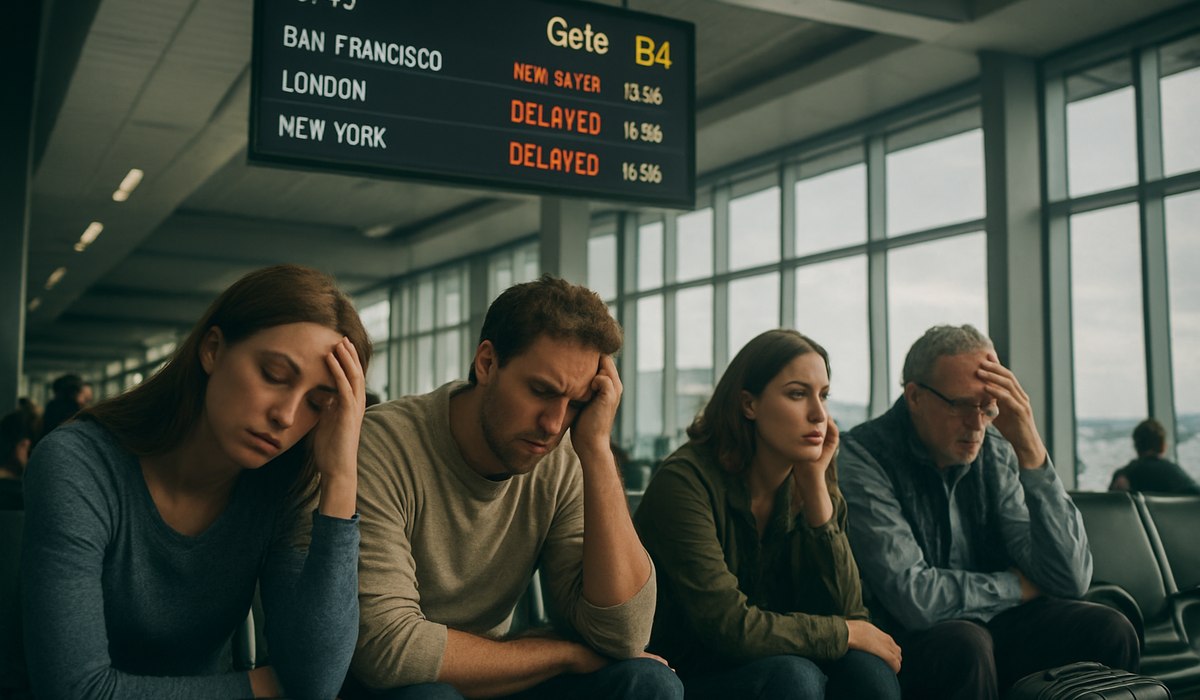
Image generated by AI
The $18 Billion Cost of Waiting: How Flight Delays Hide Massive Expenses from Traveler Wallets
U.S. air travelers silently absorb approximately $18 billion annually in direct costs stemming from flight delays, according to 2026 economic analyses examining the hidden price tag of America's busiest airports and major carriers. This staggering figure captures wasted hours spent in terminals, cascading missed connections, and unexpected accommodation expenses—all compounding across a system where more than one in five domestic flights arrives 15 minutes or longer past schedule. When broader economic ripple effects are factored in, total delay-related costs to the U.S. economy potentially exceed $30 billion yearly, representing a burden that touches business travelers, leisure passengers, and tourism-dependent communities nationwide.
The financial drain persists despite sustained aviation recovery following the pandemic, with Bureau of Transportation Statistics data confirming that delays remain entrenched across major hubs including Northeast gateways and Texas aviation centers, where on-time performance frequently hovers near 70 percent.
Beyond Passenger Time: The Broader Economic Impact of U.S. Flight Disruptions
When airlines, the FAA, and independent researchers calculate total systemic costs, the picture grows significantly darker than passenger-facing figures alone suggest. Airlines for America reports that incorporating lost demand, reduced operational efficiency, and indirect multiplier effects across ground transportation, hospitality, and tourism sectors can push annual delay costs beyond $30 to $34 billion.
Business travelers face compounded losses: missed productivity during delays translates into canceled meetings and lost revenue for corporations. Leisure travelers forfeit vacation days and experience shortened getaways when single delays cascade into rerouted itineraries spanning multiple days. Destination communities lose tourism spending when travelers miss arrival windows or abandon trips entirely.
Researchers quantify this using standardized hourly valuations—typically $47 to $50 per traveler hour—applied across approximately 300 million hours of cumulative passenger delays annually. This methodology, employed by the FAA in precedent studies dating to 2007, reveals that delay costs have remained persistently elevated even before the current travel surge. The most comprehensive estimates suggest that each delayed flight creates exponential costs through its knock-on effects: one late arrival invalidates entire itineraries for dozens of connecting passengers, dramatically multiplying the per-minute disruption cost.
Decades of Disruption: Why Delay Costs Keep Climbing with Travel Demand
Historical perspective underscores how flight delays have extracted mounting economic costs across two decades. Federal Aviation Administration-commissioned research from 2007 documented passenger delay costs of $16.7 to $18 billion annually—figures that have remained stubbornly stable or worsened despite technological advances. The persistence of these costs reflects systemic capacity constraints at major airports rather than isolated incidents or temporary disruptions.
Domestic travel volume continues accelerating in 2026, with record passenger numbers flowing through constrained airport infrastructure designed for earlier-era traffic levels. Northeast airports, major Texas hubs, and California gateways consistently report on-time performance below 75 percent, meaning travelers face near-certain disruption exposure. Airlines operating multiple daily frequencies through congested slots experience unavoidable compounding delays when earlier flights run behind schedule.
The structural mismatch between demand and capacity shows no signs of automatic resolution. Runway expansion, terminal renovations, and air traffic control modernization projects advance incrementally while passenger volumes grow exponentially. Consequently, flight delays hide deteriorating economics for both travelers and the aviation system itself, with costs likely accelerating alongside continued travel growth.
What This Means for Business Travelers and Tourism
Business travelers bear disproportionate delay costs through lost productivity, missed client meetings, and forfeited revenue-generating hours. A single three-hour delay for a business traveler carrying $500 hourly value represents $1,500 in direct lost productivity—entirely separate from meal, hotel, and rescheduling expenses. Extended itineraries force executives to sacrifice additional workdays, compounding organizational costs.
Tourism economies face distinct challenges when flight delays hide visitor losses. Travelers arriving late to multi-day destination visits lose irreplaceable time at attractions, restaurants, and hospitality venues. Shortened vacations due to delay-extended travel time reduce spending at destinations averaging $200+ daily per visitor. Communities dependent on tourism—Caribbean gateways, Florida resort cities, Western ski destinations—lose measurable economic activity when delays compress travel windows.
Airlines themselves absorb operational costs through crew repositioning, fuel consumption from extended tarmac periods, and customer service expenses. These airline-side costs accumulate separately from the $18 billion passenger burden, explaining how comprehensive delay cost estimates exceed $30 billion annually. For nomadic professionals and remote workers, delays disrupt schedules that often involve tight connections between business destinations.
Flight Delay Data: Key Statistics and Trends
| Metric | 2023-2026 Data | Impact |
|---|---|---|
| Passenger-Facing Annual Cost | $18 billion | Direct traveler losses through time, expenses |
| Total Systemic Costs | $30-34 billion | Includes airlines, tourism, economy-wide effects |
| Domestic Flights Delayed 15+ Minutes | 21% | Roughly one in five flights arrives late |
| Annual Passenger Wait Time | 300 million hours | Cumulative delay exposure at U.S. airports |
| Average Hourly Traveler Value | $47-50 | Standard economic valuation used by FAA |
| Northeast Hub On-Time Performance | ~70% | One in three flights delayed at major gateways |
| Texas Hub On-Time Performance | ~70% | Consistent delay challenges at busy centers |
| Connecting Passenger Cost Multiplier | 2-3× | Missed connections amplify per-minute disruption cost |
What This Means for Travelers: Action Checklist
-
Monitor departure status continuously: Check FlightAware 24 hours before travel and again 3 hours before departure. Flight delays hide true status until final gate assignments.
-
Build buffer time into connections: Allow minimum 2-3 hours between flights at major hubs (Northeast, Texas, California) where on-time performance averages 70% or lower.
-
Document all delay-related expenses: Retain receipts for meals, hotels, ground transportation, and rebooking fees. These substantiate compensation claims under U.S. Department of Transportation passenger rights regulations.
-
Know your airline's compensation policy: Review specific carrier guidelines before booking. Some airlines offer more generous delay accommodations than minimum DOT requirements.
-
Register with airline apps for real-time alerts: Push notifications often provide earlier delay confirmation than airport monitors, enabling faster rebooking or ground transportation pivots.
-
Consider travel insurance with delay coverage: Premium options covering 3+ hour delays offset potential hotel, meal, and rebooking costs.
-
File DOT complaints for significant disruptions: Report delays exceeding 3 hours to FAA consumer relations to contribute to official statistics and pressure systemic improvements.
FAQ: Understanding Flight Delays and Your Rights
What defines a flight delay for compensation purposes? U.S. Department of Transportation regulations require airline compensation for delays exceeding 3 hours at domestic destinations. Flight delays hide in official data when they're under 15 minutes, but compensation standards differ—some carriers provide meals/hotels at 2 hours, others at 3. Check your specific airline's policy before travel.
Why do flight delays hide costs beyond direct passenger losses? When one delay cascades through a hub airport, it invalidates connections for dozens of downstream passengers, reduces airline operational efficiency, and disrupts ground transportation networks. These multiplier effects—captured in the $30+ billion systemic cost estimate—ripple
Disclaimer
This article is for informational and educational purposes only. It does not constitute legal, financial, or professional advice. While we strive to provide accurate and up-to-date information, travel policies, regulations, and conditions change rapidly. Always verify information with official sources before making travel decisions. Nomad Lawyer makes no representations about the accuracy, reliability, completeness, or suitability of the information provided. Readers should consult qualified professionals for advice specific to their circumstances. The views expressed in this article are those of the author and do not necessarily reflect the views of Nomad Lawyer.
Raushan Kumar
Founder & Lead Developer
Full-stack developer with 11+ years of experience and a passionate traveller. Raushan built Nomad Lawyer from the ground up with a vision to create the best travel and law experience on the web.
Learn more about our team →