
Flight Delays Draining $18 Billion Annually From U.S. Travelers
New analysis reveals flight delays are draining $18 billion yearly from American travelers through hidden expenses, lost time, and missed connections in 2026. The real cost of air travel disruption extends far beyond ticket prices.

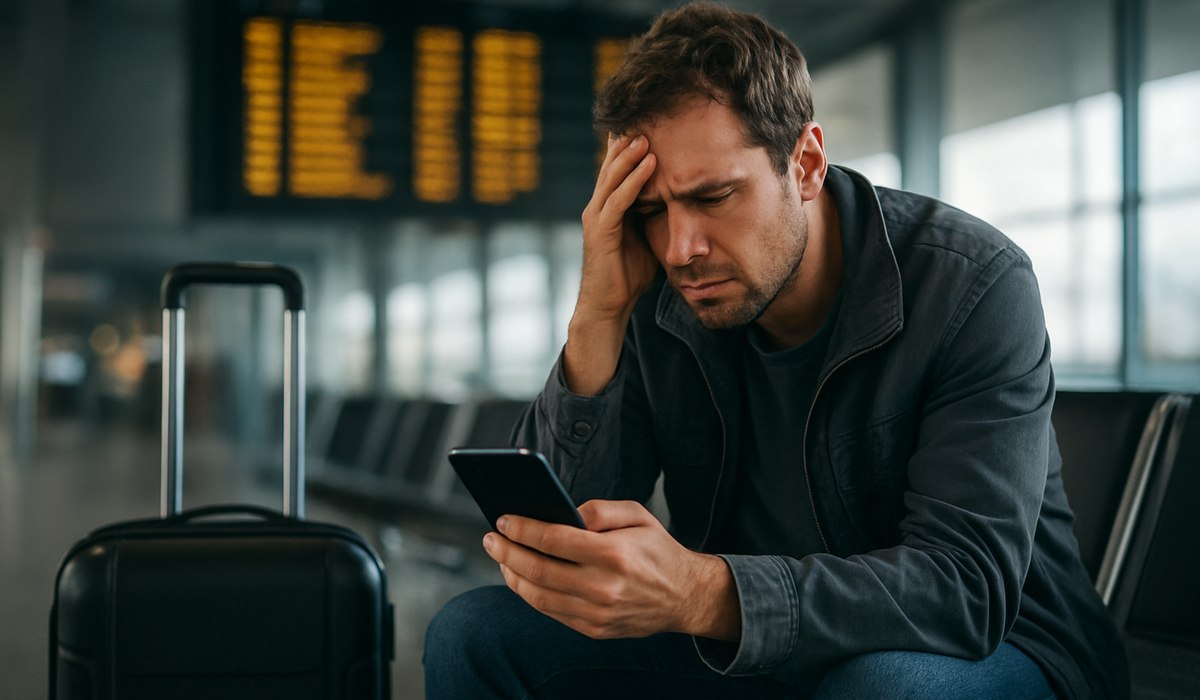
Image generated by AI
Silent Drain: How Flight Delays Cost Americans $18 Billion Yearly
U.S. air travel is quietly costing passengers $18 billion annually through a constellation of hidden expenses that never appear on ticket confirmations. Flight delays draining this staggering sum represents far more than schedule disruptions—it's a systematic transfer of time and money from travelers to systemic inefficiencies across the aviation network. From missed connections and unplanned hotel stays to lost working hours and cascading childcare costs, the true expense of delayed flights extends well beyond what airlines report on their balance sheets. This mounting burden continues to reshape travel economics throughout 2026, affecting hundreds of millions of passenger journeys nationwide.
The $18 Billion Hidden Cost of Flight Delays
The $18 billion annual figure emerged from combined analyses by Federal Aviation Administration researchers, industry economists, and transportation policy experts who systematically quantified passenger-side costs. This calculation transcends simple operating expenses—it reflects the genuine economic value of lost time, out-of-pocket spending, and life disruptions that accumulate invisibly across millions of delayed journeys.
Government assessments tracking air traffic delay trends confirm that passengers now absorb roughly half of the total delay cost burden in the broader U.S. economy. While airlines face their own operational consequences, travelers shoulder an estimated $18 billion share annually through mechanisms largely invisible during booking. This includes compensation for lost working hours (valued using standard economic models), unexpected ground transportation fees, emergency meal purchases, and the cascading need for replacement accommodations when connections fail.
The Federal Aviation Administration's historical research placed total system-wide delay costs at over $30 billion during pre-pandemic years. Current 2026 data suggests this pattern persists despite partial post-pandemic recovery in on-time performance metrics. Even marginal improvements in punctuality haven't substantially reduced passenger financial burden, as modest delays multiplied across hundreds of millions of annual travelers create enormous aggregate costs. Visit the FAA's official delay statistics for real-time performance tracking.
Beyond the Airline Balance Sheet: What Passengers Really Pay
Flight delays draining billions from travelers manifest through diverse, often-overlooked expense categories that accumulate quickly. Consumer research and travel insurance data reveal that substantially delayed passengers consistently incur unplanned costs ranging from $50 to several hundred dollars per disruption event.
These hidden expenses break into predictable patterns. Passengers purchase emergency meals and beverages while waiting for rescheduled flights. Extended airport stays trigger parking fees, ground transportation surcharges, and ride-sharing charges far exceeding normal travel budgets. When delays cascade into missed connections, travelers face hotel bookings near major hubs, sometimes multiple nights, while rebooking on future flights. Business travelers experience lost productivity and missed client meetings. Shift workers face wage penalties or overtime complications. Parents scramble to arrange emergency childcare while stranded at airports.
The cumulative effect proves staggering: with domestic U.S. airports processing hundreds of millions of departing passengers annually, even $25 in average incremental spending per affected traveler multiplies to billions of dollars company-wide. This calculation excludes the less-quantifiable cost of passengers' time—yet federal economic models assign substantial hourly value to this lost time, often exceeding direct spending impacts when calculated properly. FlightAware's delay tracking platform helps travelers monitor real-time disruption patterns affecting their routes.
Lost Hours, Missed Connections, and Cascading Expenses
The time-value component of flight delays draining resources represents the largest single category in the $18 billion annual calculation. Academic researchers and federal agencies consistently value passengers' time using hourly rates derived from labor economics and productivity studies, typically ranging from $15 to $50 per hour depending on traveler demographic and employment status.
When multiplied across hundreds of millions of hours of delay recorded annually at U.S. airports, this time-value calculation alone often exceeds billions of dollars. Business travelers conducting revenue-generating work face the highest per-hour losses. Connecting passengers experience particularly severe impacts when initial delays trigger missed downstream flights, forcing rebooking delays that compound waiting times. Meanwhile, leisure travelers—while perhaps not losing direct wages—face disrupted vacation schedules and reduced destination time, which consumers increasingly value in economic analyses.
Infrastructure bottlenecks amplify these cascading delays. Major hub airports consistently report double-digit percentages of delayed departures during peak travel periods. Air traffic control constraints, late-arriving aircraft positioning, and gate availability issues create domino effects throughout networks. When one delayed flight misses a connection for dozens of passengers, those individuals face multi-hour waits, alternative routing complications, and compounding expenses as they rework travel plans entirely.
Delay Costs Persist Despite Pandemic Recovery
Although on-time performance metrics have improved since the pandemic-era operational chaos of 2020-2022, current 2026 data demonstrates that flight delays draining resources continues at historically elevated levels. The system hasn't fundamentally resolved the structural issues creating delays—it's merely adapted to them.
Staffing pressures remain acute throughout the aviation sector. The 2025 federal government shutdown produced marked increases in delays as critical air traffic control facilities experienced reduced staffing, forcing the FAA to temporarily restrict traffic in several high-volume markets. Separate technical outages at individual carriers in 2024 and 2025 sparked multi-day disruptions affecting entire networks, generating hundreds of millions in direct costs while stranding hundreds of thousands of passengers simultaneously.
Climate change amplifies weather-related delay risks. Severe meteorological events force strategic ground stops and route changes with increasing frequency, requiring schedule planners to build larger operational buffers that indirectly increase routine delay duration. Infrastructure at aging major hubs struggles with capacity demands, particularly at airports like Atlanta Hartsfield-Jackson, Dallas-Fort Worth, and Chicago O'Hare, which collectively process over 300 million passengers annually.
Recent industry analyses suggest that even with incremental staffing improvements and technology investments, structural capacity constraints will persist throughout 2026 and beyond. Passenger costs remain proportionally stable with delay prevalence, meaning that systemic solutions require fundamental infrastructure expansion—a multi-year, multi-billion-dollar proposition that most stakeholders expect to unfold gradually. Consult the U.S. Department of Transportation's airline consumer information for official delay data and passenger rights resources.
What This Means for Travelers: Actionable Responses
Understanding that flight delays draining resources affects you directly empowers smarter travel decisions and better financial protection strategies.
Traveler Action Checklist:
-
Book flights with built-in connection buffers—Allow minimum 2 hours for domestic connections, 3 hours for international transfers, reducing personal cascade-delay risk substantially.
-
Purchase comprehensive travel insurance—Select policies explicitly covering delay-related expenses (meals, hotels, ground transportation), which offset 30-50% of typical hidden costs from moderately delayed flights.
-
Monitor real-time delay patterns—Check FlightAware 24-48 hours before travel to identify historically problematic routes and airports, then adjust departure timing accordingly.
-
Maintain detailed expense documentation—Photograph receipts for all unplanned purchases triggered by delays, supporting reimbursement claims with airlines and insurance providers.
-
Understand your rights—Review U.S. DOT airline consumer protection rules, which mandate specific compensation levels for weather-independent delays exceeding three hours.
-
Select carriers with strong reliability records—Research on-time performance data for your specific route; airlines vary significantly in delay frequency and severity.
-
Avoid peak travel periods when feasible—Fly mid-week and non-peak hours (early morning/late evening) to reduce exposure to cumulative delay effects affecting popular travel windows.
-
Join frequent flyer programs strategically—Premium members often
Disclaimer
This article is for informational and educational purposes only. It does not constitute legal, financial, or professional advice. While we strive to provide accurate and up-to-date information, travel policies, regulations, and conditions change rapidly. Always verify information with official sources before making travel decisions. Nomad Lawyer makes no representations about the accuracy, reliability, completeness, or suitability of the information provided. Readers should consult qualified professionals for advice specific to their circumstances. The views expressed in this article are those of the author and do not necessarily reflect the views of Nomad Lawyer.
Preeti Gunjan
Contributor & Community Manager
A passionate traveller and community builder. Preeti helps grow the Nomad Lawyer community, fostering engagement and bringing the reader experience to life.
Learn more about our team →