
Dorset Eco-Tourism Surge: Lulworth Cove and Durdle Door Lead Sustainable Travel Growth in 2026
Dorset is experiencing a massive eco-tourism boom, centering on the geological wonders of Lulworth Cove and Durdle Door as the region transforms into England's premier sustainable travel destination.

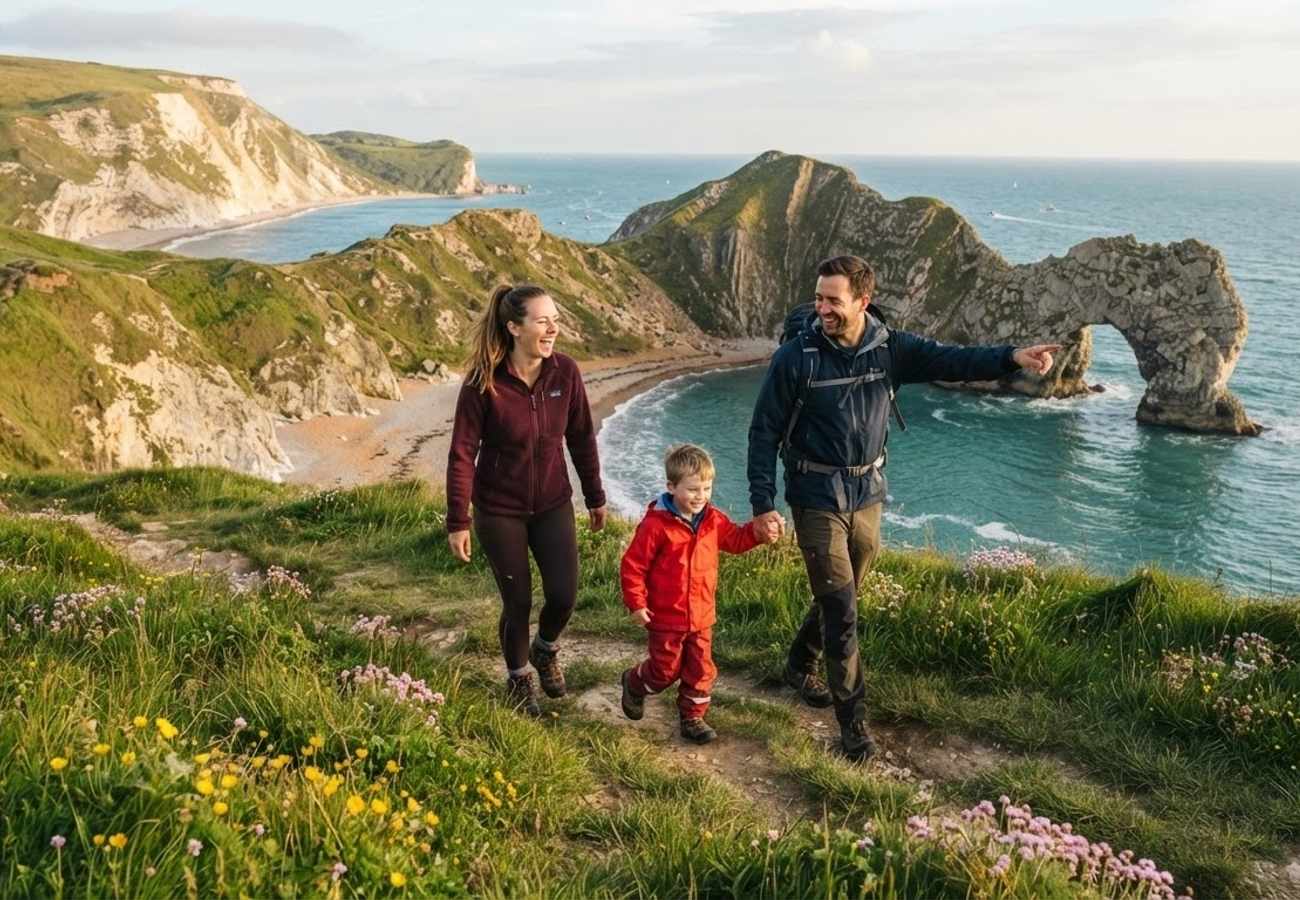
Image generated by AI
Dorset is currently seeing a surge in eco-tourism, positioning the ancient geological formations of Lulworth Cove as a primary hub for sustainable travel in England.
Industry observers note that the region's growth is driven by a combination of private land stewardship and a growing global demand for low-impact, educational travel. To maintain the integrity of these sites, tourism professionals recommend visiting during the spring or autumn to avoid the peak summer congestion.
The Core Development: Sustainable Management and Heritage
The preservation of this coastline is largely attributed to the Lulworth Estate. Since 1641, the Weld family has maintained private ownership of 12,000 acres, a strategy that has effectively blocked the urban sprawl and aggressive commercialization seen in other high-traffic natural landmarks.
Beyond the landscape, the area serves as a scientific archive. The coastline was a focal point for paleontological research in the 1830s, most notably for Mary Anning, whose fossil discoveries redefined the understanding of prehistoric life. The region also holds military significance; the deserted Tyneham Village remains a ghost settlement, evacuated during World War II to serve as an armored combat training ground.
Key Site Specifications
- Durdle Door: Accessible via a 30-minute walk across the Hambury Tout chalk ridge.
- Lulworth Information Center: Located at postcode BH20 5RQ.
- The Fossil Forest: Contains 140-million-year-old fossilized algal burrs (calcium carbonate casts) rather than petrified wood.
- Stair Hole: An "embryonic cove" featuring the Lulworth Crumple, where rock layers were bent by the Alpine Orogeny.
Geological Composition and Erosion Data
The unique symmetry of Lulworth Cove is the result of "differential erosion," where different rock types react variedly to marine pressure.
| Geological Layer | Position | Structural Durability | Role in Landscape |
|---|---|---|---|
| Portland Limestone | Outermost | Very High | Primary defensive shield against the sea |
| Purbeck Beds | Intermediate | Moderate | Secondary layer of resilience |
| Wealden Clays/Greensand | Inner | Very Low | Rapidly eroded to create the cove basin |
| Chalk | Rear Boundary | High | Vertical bulkhead preventing landward ocean advance |
Why This Matters: Industry Analysis
The "Dorset Model" provides a critical case study in the intersection of private land ownership and public eco-tourism. By limiting commercial development through the Lulworth Estate's stewardship, the region has avoided the "tourist trap" cycle, increasing the long-term value of the destination.
From a geological perspective, the site is an outdoor laboratory. The presence of the Lulworth Crumple links local Dorset geography to the same tectonic forces that created the European Alps. This connectivity allows the region to market itself not just as a scenic destination, but as a high-value educational asset for international travelers.
The transition of Lulworth Cove into a sustainable travel destination suggests a shift in traveler preferences: moving away from high-density resorts toward "slow travel" and geological heritage.
Forward Outlook
Expect continued investment in educational infrastructure around the BH20 5RQ hub. As climate change impacts coastal erosion, the monitoring of the Portland Limestone barrier will become a central point of scientific and tourism interest. Market trends suggest that "off-peak" seasonal marketing will intensify to spread visitor loads more evenly across the year.
A masterclass in the balance between ancestral preservation and modern sustainable tourism.
Related Travel Guides
Disclaimer
This article is for informational and educational purposes only. It does not constitute legal, financial, or professional advice. While we strive to provide accurate and up-to-date information, travel policies, regulations, and conditions change rapidly. Always verify information with official sources before making travel decisions. Nomad Lawyer makes no representations about the accuracy, reliability, completeness, or suitability of the information provided. Readers should consult qualified professionals for advice specific to their circumstances. The views expressed in this article are those of the author and do not necessarily reflect the views of Nomad Lawyer.
Preeti Gunjan
Contributor & Community Manager
A passionate traveller and community builder. Preeti helps grow the Nomad Lawyer community, fostering engagement and bringing the reader experience to life.
Learn more about our team →