
Delta Air Lines Lagos-Atlanta Flight DL9895 Cancellations Leave Passengers Stranded in 2026
Consecutive cancellations on Delta's Lagos-Atlanta route in August 2026 highlight critical gaps in passenger support and the complexities of international aviation rights.

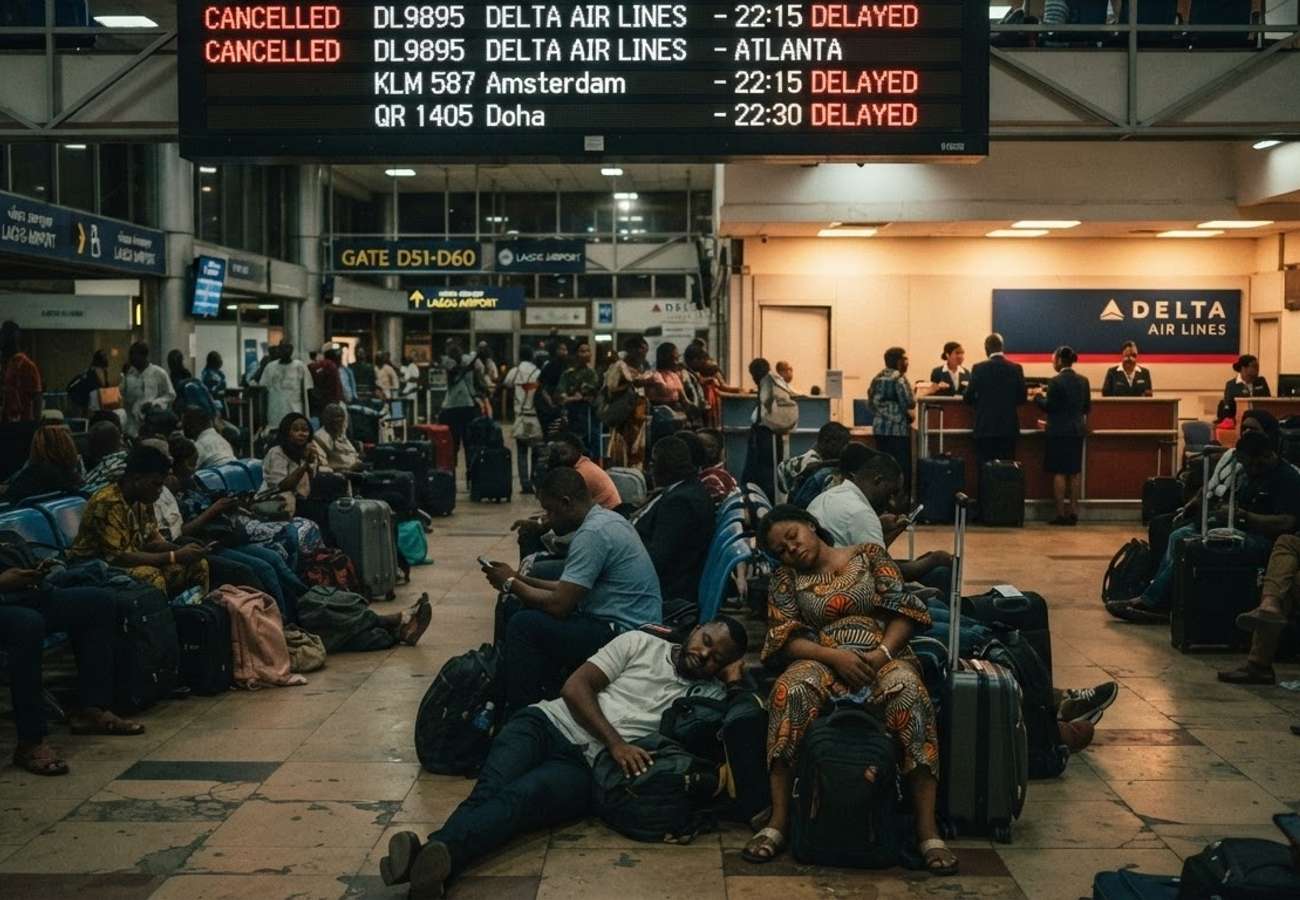
Image generated by AI
Consecutive cancellations on Delta’s Lagos-Atlanta route have left scores of travelers stranded at Murtala Muhammed International Airport, exposing significant gaps in disruption management on a primary West African transatlantic corridor.
Operational Collapse on the Lagos-Atlanta Corridor
The reliability of the strategic link between Lagos and the United States faced a severe test in late August 2026. Reports indicate a cascade of failures affecting flight DL9895, originally scheduled to depart Murtala Muhammed International Airport for Hartsfield–Jackson Atlanta International Airport on Sunday, August 23, 2026.
The initial cancellation triggered a domino effect. Many passengers were rebooked for a subsequent service on Tuesday, August 25, only for that flight to also suffer a disruption. This sequence of events left travelers effectively stranded for days, forced to navigate a lack of clear communication and dwindling options for reaching the United States.
Operational data suggests these failures were not isolated incidents but symptoms of broader systemic pressure. While Delta typically maintains near-daily nonstop services on this route, the late-August window saw a volatile mix of performance. Beyond the DL9895 cancellations, other Lagos-to-Atlanta arrivals were recorded with delays exceeding five hours.
The Root of the Disruption: Crew and Maintenance
The uncertainty surrounding these cancellations was compounded by conflicting explanations. Some passengers were informed that crew-availability constraints—where pilots or flight attendants hit regulated duty limits—were the primary cause. Simultaneously, other reports pointed toward maintenance-related issues with the aircraft assigned to the Lagos-Atlanta leg.
For the traveler, the impact was a total breakdown in trust. Many reported receiving automated notifications of new departure dates, only to arrive at the airport and discover the replacement flights were not operating. This reliance on on-the-day updates rather than proactive communication turned the terminal into a waiting room for an indefinite period.
The Gap in Passenger Care and Support
The human cost of these operational failures became evident in the reports of stranded passengers. Despite the length of the delays, many travelers claimed they received no hotel accommodations or meal vouchers from the airline. This forced passengers to sleep in airport seating areas and utilize personal funds for basic necessities.
While Delta’s official customer-service documentation states that hotel and meal vouchers are provided for disruptions within the carrier's control, the application of this policy in Lagos appeared inconsistent. The distinction between a "controllable" disruption (like maintenance or crew scheduling) and an "uncontrollable" one (like weather) remains a point of contention and confusion for international passengers.
Navigating Passenger Rights and Nigerian Regulations
The Lagos-Atlanta situation has reignited a debate among legal experts regarding the enforcement of passenger rights in Nigeria. Travelers departing from Nigerian airports are protected under the Nigeria Civil Aviation Regulations, which mandate specific care and compensation for cancellations and long delays on international services.
These regulations cover:
- Duty of Care: Provision of meals and hotel accommodation based on the length of the delay.
- Financial Redress: Rights to refunds or rerouting to the final destination.
- Compensation: Potential payouts if the cancellation occurred without sufficient notice and was not due to extraordinary circumstances.
For those seeking redress, the burden of proof lies with the traveler. Experts advise maintaining a rigorous paper trail, including original boarding passes, booking confirmations, and any written notices of cancellation provided by the airline.
Tourism Outlook and Regional Connectivity
Delta continues to operate approximately seven weekly nonstop services between Atlanta and Lagos, confirming that Nigeria remains a cornerstone of its African network. For the vast majority of travelers, this direct route is preferred over European hubs to avoid additional connection risks.
However, the August disruptions serve as a warning. Long-term confidence in this corridor depends on the airline's ability to synchronize its contingency plans with on-the-ground support. If operational reliability continues to fluctuate, the strategic advantage of the nonstop service may be overshadowed by the risk of systemic failure.
Visitor Insider Tips for West African Transatlantic Travel
Navigating major hubs like Murtala Muhammed International Airport during disruptions requires a specific strategy:
- Documentation Strategy: Always take a timestamped photo of the departure board when a flight is cancelled. This serves as primary evidence for insurance and regulatory claims.
- Alternative Hubs: If a direct US flight is cancelled, check availability through Accra (ACC) or Addis Ababa (ADD) as secondary gateways, though these often require separate ticketing.
- Local Support: Engage with the airport's information desk early; they often have more immediate knowledge of crew rotations than the airline's global app.
- Currency Readiness: Always carry a reserve of USD or local Naira in cash. During systemic airline failures, digital voucher systems often crash or are not honored by local vendors.
Reliability is the only true currency in transatlantic travel.
Related Travel Guides
Disclaimer
This article is for informational and educational purposes only. It does not constitute legal, financial, or professional advice. While we strive to provide accurate and up-to-date information, travel policies, regulations, and conditions change rapidly. Always verify information with official sources before making travel decisions. Nomad Lawyer makes no representations about the accuracy, reliability, completeness, or suitability of the information provided. Readers should consult qualified professionals for advice specific to their circumstances. The views expressed in this article are those of the author and do not necessarily reflect the views of Nomad Lawyer.
Raushan Kumar
Founder & Lead Developer
Full-stack developer with 11+ years of experience and a passionate traveller. Raushan built Nomad Lawyer from the ground up with a vision to create the best travel and law experience on the web.
Learn more about our team →